




Tara Povey visits two vastly different parts of China in one trip: the ethereal 'Ice City' Harbin in the North and Fujian, the colourful and vibrant tea capital in the Southeast.
When I booked my trip to Harbin and Fujian in China earlier this year, I was simultaneously thrilled and utterly overwhelmed.
I've explored a lot of Asia in the past, but recently I’ve mostly travelled through Europe and North America. While I was perfectly fine navigating Hong Kong solo back in 2017, mainland China felt like a much bigger adventure.
After much research and an equal measure of procrastination, I packed my bags and boarded my flight to the other side of the world.

Harbin
Harbin is China's northernmost provincial capital and is known as "Ice City". The Harbin Snow and Ice World opens in late December until late February and has been on my bucket list for years.
This winter wonderland is built using 220 million cubic feet of ice taken from the Songhua River. Though I’m not entirely convinced they didn’t just build a door directly into Narnia.

Every step I took felt like I’d stumbled into a snowglobe; towering icy castles, frozen slides that launch you into frosty oblivion, enormous snowmen, apres-ski style raves and snow much more.
Harbin is as harsh as it is beautiful; temperatures plummet to -30C at night. Disposable hand and feet warmers were a lifesaver, and I’ve even been using them to survive the endless winter we’ve been experiencing here lately, too.
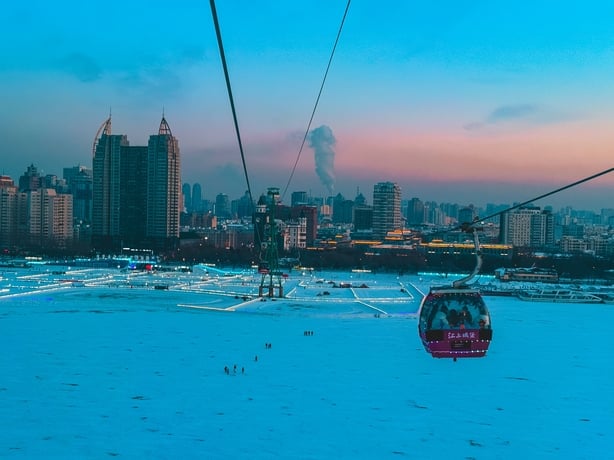
Of course, there's more to Harbin than the Snow and Ice World. The cable car connecting Sun Island to Downtown Harbin is a great way to see the frozen Songhua River as you travel back to the city. The terminal buildings are built like castles and have all sorts of whimsical restaurants and shops inside.
Try the famous Madie’er ice pops on Zhongyang Street, which are nearly impossible to eat in the freezing temperatures. Naively, I attempted to eat my ice pop outside, resulting in a serious loss of skin from my lips. Dangerous but delicious.

Harbin is a UNESCO "City of Music", the first of its kind in Asia. Music performances take place across the city, from the Grand Theatre to a hotel balcony on Zhongyang Street. I was lucky to catch a Peking Opera performance in the Chinese Baroque Area of Harbin. However, I didn’t feel lucky when they dragged me on stage to sing opera. Though perhaps the audience was more unlucky?
Fujian
After four nights in the punishing temperatures of Harbin, I was happy to move on to warmer climes. Fujian, in the Southeast of China, offers a very different experience from Harbin in both temperature and tradition.
In the fishing village of Xunpu, just outside downtown Quanzhou, women wear flower crowns called Zanhuawei. This tradition has been alive for centuries, and locals believe that wearing one ensures you will be beautiful in the afterlife.
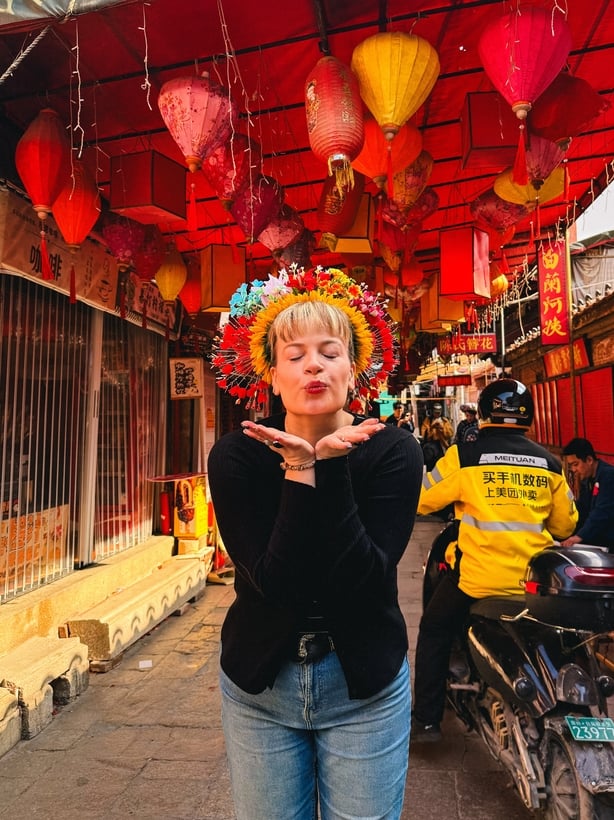
I visited Aunty Bailan’s flower shop. She brushed my hair and whipped it up into a bun in the blink of an eye. She then adorned my head with a flower halo that made me feel like a princess. It was clear that Aunty Bailan got great joy from sharing her traditions and culture.
Never heard of a Tulou? Neither had I. Tulous are large fortified dwellings that can house entire villages and protect them from siege. They are unique to the Hakka and Minnan people in the mountains of Southwestern Fujian.
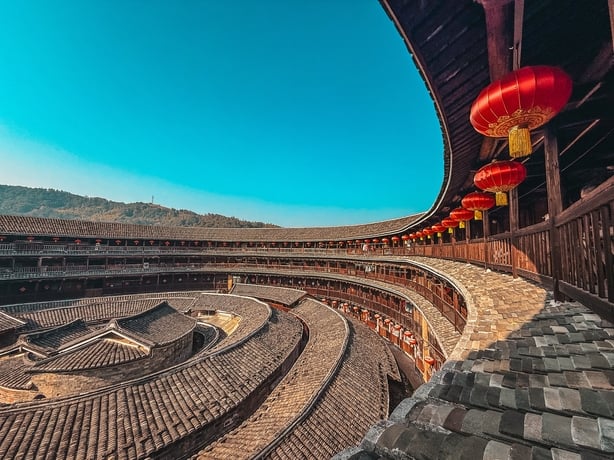
I visited the Tianluokeng Tulou Cluster viewpoint, which gave an aerial view of the Tulous. I also visited the Yongding Tulou, where I was given a glimpse into how the community co-exist there, sharing living spaces, a freshwater well and food supplies.
The Wuyi Mountains area of Fujian is known as China’s tea capital; it is the birthplace of black and Oolong tea. At Shijiamingyuan Tea Estate, I was whisked up into the fields, given a crash course in tea leaf picking and treated to a traditional tea-serving ritual.

It’s not only about tea in the Wuyi Mountains. If you’re adventurous, then you’ll love bamboo rafting on the 9-bend stream, where fish launch themselves out of the water in search of a snack, or a tourist's loosely held phone. The views as you meander through the mountains are unlike anything I’ve ever seen.

Tips for Travel in China
The Great Chinese Firewall is what most tourists are worried about circumventing, but it’s not as complicated as you may think.
You need an e-sim so that your phone works in China and you can access apps like Gmail and WhatsApp. Airalo is affordable and easy to activate. Once installed, the e-sim will automatically activate when in China. E-sims have their own VPN, so there’s no need for a separate VPN app.
To communicate with locals or your guide, you need WeChat (their version of WhatsApp). WeChat is also a payment app, like AliPay. You’ll need to go through verification steps when setting these apps up for payment.

I recommend doing the verification before landing in China. However, AliPay has a final step that can only be done in China - the app scans your face. Once your payment app is set up, you simply scan the seller's barcode, or they scan yours - done!
Google/Apple Pay, cash and card aren’t widely used in China. I brought cash with me for remote areas, but often they didn’t have change available; apps are definitely king.
Google Maps is inaccurate in China, while Apple Maps works fine. AMAP Global is their alternative to Google Maps, so make sure to download that if you’re navigating without a guide. Bring your passport with you everywhere. It is often necessary for ticket collection or checking in at attractions or on trains.
While the thought of visiting China can be overwhelming, I urge you to jump in with both feet. You’ll figure it out as you go, and you’ll be rewarded with a truly unique and memorable travel experience, not to mention an overweight suitcase full of souvenirs if you’re anything like me.
The views expressed here are those of the author and do not represent or reflect the views of RTÉ.
