


If you've ever jetted off on your holidays to a sunny, far-off destination, only to while away the hours looking at photos of your cat or dog at home, you've probably considered travelling with your beloved pet by now.
But what are the logistics of planning such a trip, and what are the best ways to ensure your cherished pooch or kitty gets as much out of it as you do?
Vet Sarah Boland joined Today with David McCullagh to talk through the do's and don't of travelling with your pet.
"For some people, it's certainly part of the process of travel now for them. [For] others maybe a pet has joined the family recently and they can't bear the thought of leaving them behind, [for] other people, their pets don't tolerate travel well so they've got to source kennelling", Boland said.
Different animals will react to travel differently, and that's before you even consider each pet's personality. Cats, for instance, get stressed easily by being moved. "Sometimes cats just don't tolerate the change quite as well", Boland said, even when it comes to putting them in a cattery. Symptoms to look out for are urinary issues or bladder problems.
Dogs, meanwhile, tend to be more "happy-go-lucky" once they're with their people, so are more adaptable.
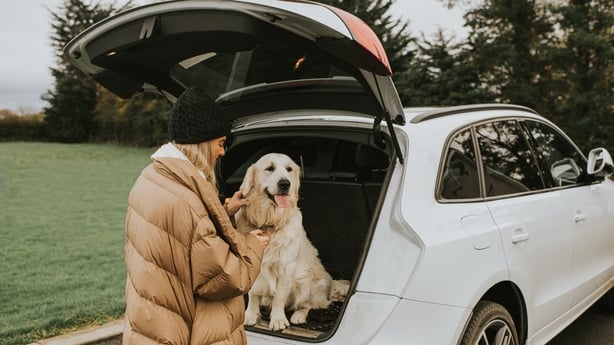
When it comes to making the journey itself, such as on a long drive around the country, Boland suggested taking breaks and "make sure that your long journey is not your first journey", meaning that your pet has some experience with travelling in a car.
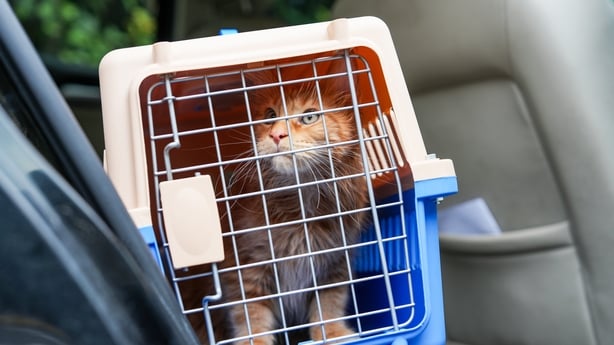
Ensure the pet is secured in the car and not loose on your lap; Boland suggested investing in harnesses that buckle to the seatbelt to make them extra safe. Cats can be safely placed in a carrier while travelling.
With travelling overseas, before you step foot on a plane or a ferry, your pet needs their own passport if they are to travel within the EU.
"Outside of Ireland there's health certificates and things, but we're very lucky we have the EU pet passport scheme, and thankfully Ireland is Echinococcus-free which means we don't have a particular type of tapeworm that they're trying to control the spread of."
Pets need a rabies vaccine to travel, however, which must be recorded in their passport. Pets must be at least 12 weeks of age before getting this vaccine, and once they are vaccinated they must wait a minimum of 21 days before travelling, and often 30 days depending on the product.
Pet passports can be gotten from your vet, and can take anywhere from a few minutes to a few days depending on the paperwork needed and resources. "It is generally much speedier than the human process", Boland added.
After your pet has enjoyed their trip abroad, however, they will need a tapeworm treatment once they're back home, Boland noted, adding that there's a "strict timeline" for it, needing to be administered between five days and 24 hours before you travel home.
This includes travel through Britain, Boland noted, and treatment must be administered by a vet and certified by a vet, down to the time of the treatment, in your pet's passport.
To ensure you and your pet are completely covered for travel, Boland suggested reaching out to a pet in your destination to double-check about requirements.
Travelling by plane, however, requires even more steps. Boland explains that while travelling by plane with your pet, you can choose to put them in the hold or in the cabin with you, depending on the airline. Travellers will have to pay for the service, with prices differing across airlines.
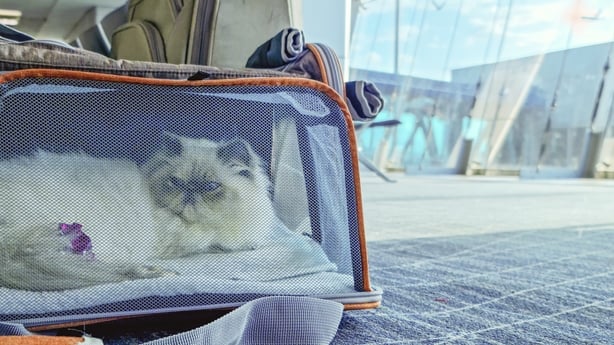
Boland explained that for pets in the cabin, there is usually a weight limit - generally around 8kg including the carrier. This must be booked in advance, too. Bigger dogs would have to go in the hold, and there are separate weight limits for that.
Not all breeds are allowed to travel by plane, depending on the plane, however, such as dogs with flat faces, such as pugs, mastiffs and more.
"Because of their shorter face, they cannot control their body temperature as efficiently, and because of - particularly with the hold - it's not as thermo-regulated in there, and they can overheat quite easily", Boland explained.
Travelling by sea is much easier, Boland finds. There will be inspection points at the port and each ferry line will have their own requirements, but on the whole, Boland said it's "pretty close to travelling with your car".
For shorter journeys. animals can stay in your car, while for longer journeys, there is a kennelling option.
For more tips on travelling with your pets, click the link above to listen back to the full interview.
