


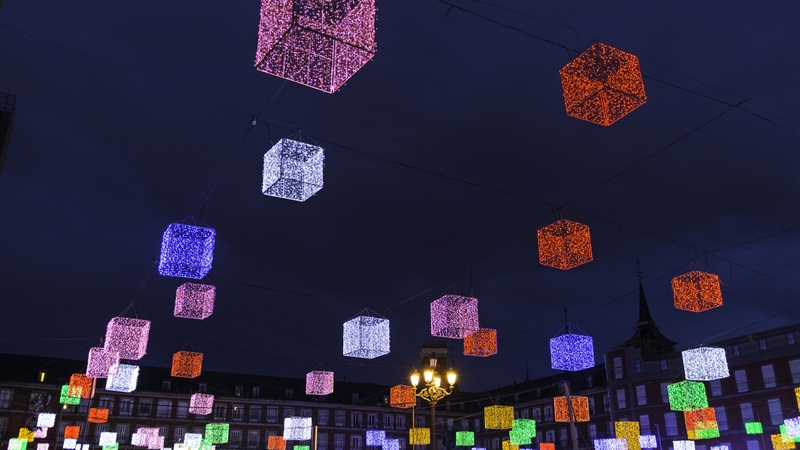
Madrid is often overshadowed by its sister Barcelona. Everyone knows Barcelona has the Templo de la Sagrada Familia, a beach, and Gaudi's architecture, but what is Madrid famous for? The Prado, the Royal Palace, the Reina Sofia Museum and...for most people, their Madrid reference points end there. But in reality, Madrid has all the culture, the food, the beauty, the bohemian life, the architecture and twice the nightlife that its Catalonian cousin has to offer. You just need to know where to go.
The Barrios
Madrid is divided into barrios, each one with different distinguishing characteristics. And although it is an enormous city (the third largest in the EU, after London and Berlin) it is remarkably easy to get around the centre on foot. The best way to get to know the city is by traipsing around its cobblestones (with frequent tapas breaks, of course), so comfortable shoes are a must. All the walking makes the post-lunch siesta that much sweeter, and so well deserved.
Centro
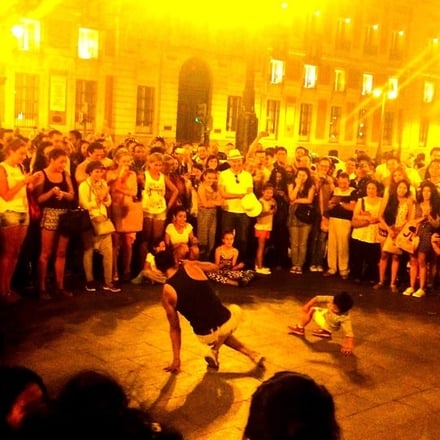
Impromptu break dancing in Puerta del Sol - photo credit @madridnofilter on Instagram
The Puerta del Sol is Madrid's most central plaza, and is also the radial centre of all Spain's road networks. The metro station Vodafone Sol is right in the centre and a good point to start exploring Madrid. The Puerta del Sol is important for many reasons; historically, it has always been a focal point of government and public activity, and contains the office of the President of Madrid. Traditionally, it has also been the site of many protests and rallies, with the square being occupied for several weeks by protesters as part of 2011's 15th May movement. Puerta del Sol is a commercial hub of the city, with all the main shopping within a stone's throw. It also hosts all the busiest tourist traps. Calle Preciados and Calle Carmen connect the square to Gran Vía to the north and contain all of Madrid's most popular high street stores and the Corte Inglés department store. If you take Calle Espoz y Mina to the south, you get into hen and stag party territory, with Dubliners and O'Connell, S.T. (yes, that's how they spell it) being popular haunts for tourists seeking buckets of beer and cheap shots. But wander a little further down to Plaza Santa Ana and you'll find a pleasant area to wander about with tapas bars and cocktails and even a playground. Lateral (www.lateral.com) is well worth checking out - its elegant but economic take on tapas and big terrace make it very popular, and busy. All their food is excellent, but the pinchos are small bites that allow you try a lot and leave room for later. Try the salmon rolls, the pork sirloin, the croquetas and the pincho de tortilla. Calle de las Huertas is known for its bares de copas, late night bars. There are several options, but for an excellent caipirinha and good atmosphere, try La Trocha (Calle de las Huertas 55).
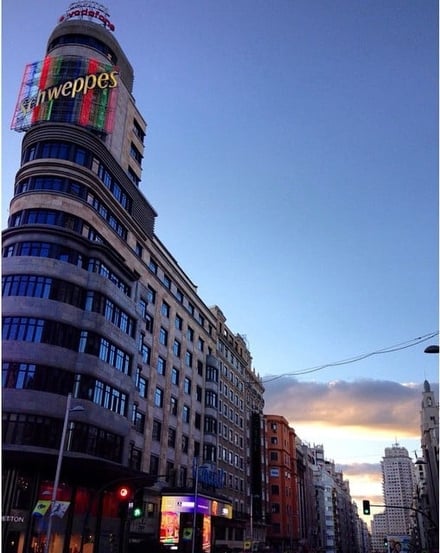
Gran Vía - photo credit Pablo Foley Elias
Starting again from Puerta del Sol, you can take Calle Mayor to the Plaza Mayor, a beautiful square with street performers, markets, and lots of terraces for people watching. Traditionally, Plaza Mayor is where you come to get a bocadillo de calamares, a squid roll with mayo for about €4. There are many exits out of this square, but if you take the NW exit by Casa Rúa it will lead you directly to the fabulous Mercado de San Miguel, one of Madrid's oldest and most beautiful markets. Every stall specialises in something, be it hand-sliced acorn-fed aged jamón ibérico, freshly steamed or preserved seafood, cured cheeses, béchamel croquetas of varying flavours, sherry, oysters, fruit and vegetables or wine. If you're lucky enough to get a seat, hold on to it and send a scout to bring back delicacies. Most likely you'll find a spot to perch your plate or glass on while you think about what nibble to try next.
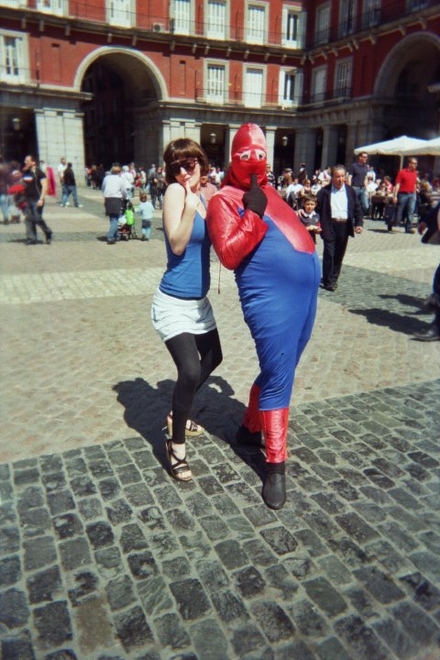
Plaza Mayor - photo credit Kate Murphy
La Latina
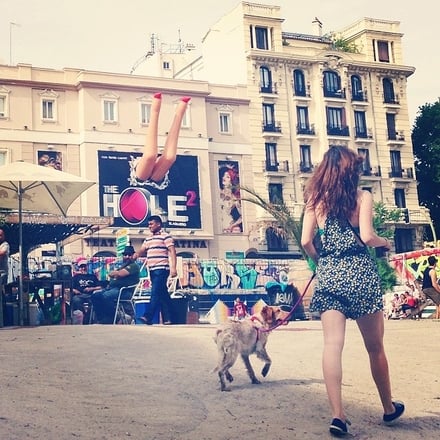
La Latina - photo credit Pablo Foley Elias
If you continue down the hill from the aforementioned Mercado de San Miguel, the cobblestoned streets will lead you directly to La Latina, the oldest section of the city and the place to be on Sundays. Follow Calle Cuchilleros and cross over to Calle Cava Baja, where many more bars and restaurants may tempt you (there are several Basque pintxos bars – try Taberna Txakolina, Calle Cava Baja, 26). This route will bring you down to La Latina metro station, where you'll find the Campo de la Cebada, a community-generated space that holds everything from basketball games to concerts to salsa dancing to cookouts to protests and meetings. Cold beers and sodas are sold for €1 and it's a nice spot to join in a basketball game or chat with locals. Projects like these have popped up all over Madrid, and there are now several occupied spaces that hold free events and host community gardens and the like.
Juana la Loca (www.juanalalocamadrid.com) is situated just off Plaza del Humilladero in the centre of La Latina and serves (among other treats) the most amazing pincho de tortilla, a slice of moist potato omelette made with carmelized onions. Once you're there it's only a five-minute walk to the Royal Basilica of San Francisco el Grande, a domed neoclassical Roman Catholic church with impressive frescos by Goya and Zurbarán. (Tuesday to Friday: 11:00 to 12:30 and 16:00 to 18:30, Saturday: 11:00 to 13:30)
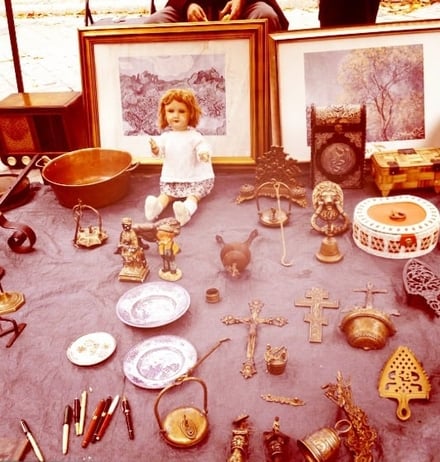
El Rastro - photo credit Kate Murphy
Sunday is perhaps the most important day in Madrid city centre for wandering, seeing and eating. Madrid is not a sedentary city – streets are often filled with families of all ages going for a vuelta, a stroll. And of course, all vueltas must include breaks for tapas and cañas (fresh little glasses of whatever beer they have on tap, typically Mahou in Madrid). The best barrio on Sundays is La Latina, where every Sunday the market El Rastro is held from 9am-3pm, though typically stalls start packing up from 1pm. El Rastro is jam-packed with every type of good imaginable, from second-hand fur coats to artwork to furniture to make-up that has probably fallen off the back of some unfortunate truck. It is big, packed and easy to get lost in, and, as in any crowded area, there are lots of pickpockets. There are also lots of police about, and it's not a dangerous place. Start at metro La Latina and just dive in – if you keep going downhill you'll arrive at the bottom end at Puerta de Toledo, from where you can easily catch a metro back up to La Latina, Gran Via or Sol.
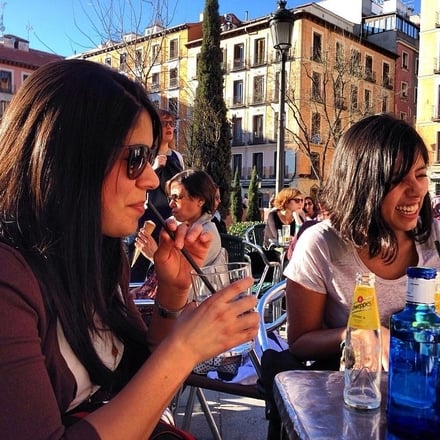
Sunday drinks on a terrace - photo credit Pablo Foley Elias
Chueca/Justicia
Chueca used to be a dirty, dodgy, run-down area. Then along came the gay community and spruced it up no end. Now the old squares and buildings of Chueca are maintained and lively, and there are great bars, boutiques, restaurants, and nightclubs. Take the metro to the Plaza de Chueca and go for a wander through its cobblestoned streets. While there are drunks and beggars around, Chueca remains a popular place for old, young, couples, groups and families.
The three levels of the Mercado de San Antón market offer different delights – on the ground floor, there are vendors selling high-quality fruit, vegetables, cured and fresh meats, cheeses, bread, oils, preserves and more. The first floor has little stalls where you can try small portions of local and regional food, along with wine, cider, vermouth or beer. The top floor has an excellent restaurant (you can even buy your meat or fish downstairs and have them cook it for you upstairs) and an open air roof terrace, perfect for enjoying a drink and resting your legs.
Plaza Vázquez de Mella is a busy, family-friendly square filled with local kids playing football in the evenings and people hanging around.
Plaza del Rey is a square in the quieter, less tourist-y end of Chueca and has several terraces where you can people watch the well-heeled madrileñas, skater teens, hipsters and homeless to your heart's desire.
Malasaña
Malasaña is a vibrant, creative neighbourhood of large cultural significance to Madrid. After General Franco's death in 1975, a movement that became known as the movida madrileña pulled the country out of the repression and taboo that defined the dictatorship. Music, art, theatre and film blossomed, and Malasaña was the hub for all that. It still has many art galleries, boutiques, second-hand shops, live music and craft markets and is always lively and interesting, if a little run-down in places. The Plaza Dos de Mayo is a central hangout spot, with a dog park and children's playgrounds. J&J's Books and Coffee (Calle Espiritu Santo, 47) is a charming bar with English-speaking staff and a second-hand bookshop downstairs where you can take a break from the noise and hustle of the streets. They also host quiz nights and language exchange nights, and it’s a great place to make friends to enjoy the city with. Nearby, on Calle San Vicente Ferrer 29, the 35-year old Café Manuela has excellent speciality coffees and a selection of board games to while away an afternoon. Malasaña is busy with revellers all night long, with plenty of clubs open until 6am.
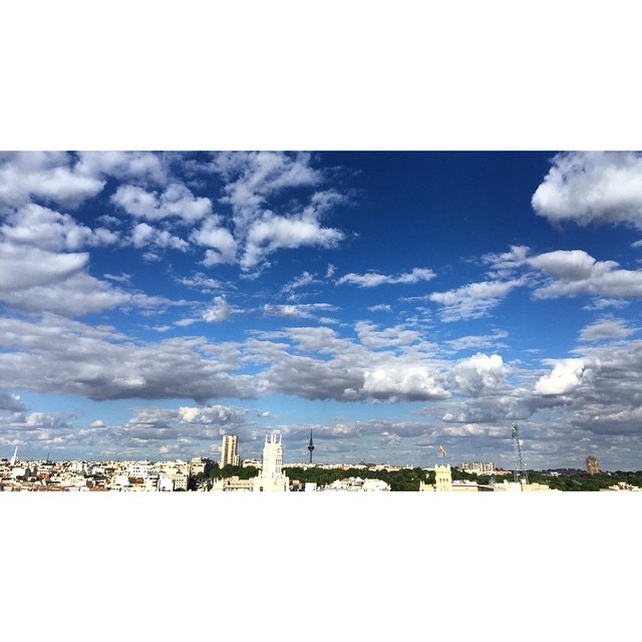
Clouds over the Madrid skyline - photo credit Pablo Foley Elias
Parque del Buen Retiro
More commonly known as Parque el Retiro, this oasis is fundamental to the city and its inhabitants. It belonged to the Spanish monarchy from the 1600s until the late 1800s, and since then has belonged to the public. Retiro park is beautifully maintained, filled with classical statues and fountains, including El Angel Caído, inspired by a passage from Milton's Paradise Lost, and (probably falsely) reputed to be the only statue of that time dedicated to the Devil. The estanque, or man-made pond is watched over by a magnificent monument to King Alfonso XII, which you can admire from a rented 4-man row boat (€5.80-€7.50 for an hour). Retiro also hosts book fairs, rollerbladers, cyclists, has an impressive rose garden and the beautiful Los Jardines de Cecilio Rodríguez, where peacocks stroll freely.
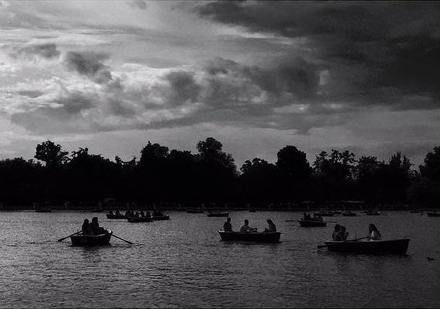
Rowboats in Retiro - photo credit Pablo Foley Elias
Getting Around
Transport from the airport:
Public transport is very good in Madrid, and a little bit of research can save you a lot of money as far as airport transfers are concerned. In 2014, the price of a taxi from the airport to inside the M30 (the ring road around Madrid city) was fixed at €30, which resulted in an increase for most fares.
The simplest route is the Airport Express bus. You pay €5 on board, and drivers will change up to €20. It operates 24 hours a day, every 13-20 mins from 6:00 to 23:30, and every 35 mins throughout the night. It goes through all the airport terminals and the final stop is Atocha Renfe station by day, and Cibeles by night.
The Madrid metro is easily navigable and also goes to the airport, although there is an airport supplement added on when entering or exiting the airport. For €12.20 you can buy a 10-journey Metrobus ticket, to be used within the central Zone A on any metro or bus. The airport supplement can be added on to this ticket or bought separately, and the ticket machines in the metro stations work in English. Buses are a little more complicated to figure out, but are frequent and there are maps at all the bus stops.
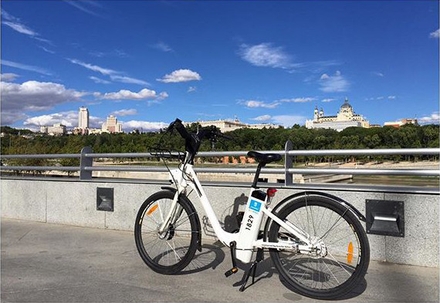
BiciMad - photo credit Pablo Foley Elias
BiciMad is a public electric bicycle service with stations all over the city. You can subscribe for a year, or with a €150 hold on your credit card, for one, three or five days. The touchscreen computers at each station will allow you to get your one, three or five day pass without pre-registration. While they are convenient, bikes are not always available when you need them if you're in a hurry. However, there are several other options for bike rentals, including electric and tandem bikes, and a great place to start is Retiro Park. There are more challenging routes through the enormous Casa de Campo, or family-friendly ones throughout the city, but the ones mentioned here are a good place to start:
http://www.nakedmadrid.com/2014/07/12/4-best-city-biking-routes-for-tourists-in-madrid/.
The Art
The Museo del Prado hosts the world's most impressive collection of Spanish art from the 12th to the 19th century. Francisco de Goya's and Diego Velázquez's work stand out, but there are a multitude of artists and special exhibitions to see (https://www.museodelprado.es/en/).
The Museo Nacional Centro de Arte Reina Sofia houses a collection of 19th and 20th century art, with many surrealist works by Picasso (including Guernica), Miró and Dali. Other international artists such as Hirst, Man Ray and Bacon also feature, and exhibitions change regularly (http://www.museoreinasofia.es/en).
The Museo Thyssen-Bornemisza features a vast collection of impressionist, post-impressionist, expressionist, baroque and cubist work that fills in any gaps left by the Prado or the Reina Sofia (http://www.museothyssen.org/en/thyssen/home).
Also worth checking out are:
- The Museo Sorolla
- The National Archaeological Museum
- Conde Duque Cultural Centre (especially in the summer when the open air cinema and hammock areas are open)
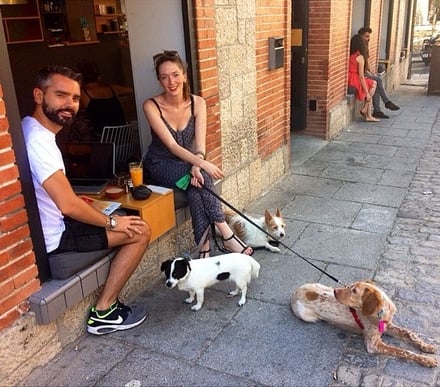
The dog-friendly Conde Duque - photo credit Pablo Foley Elias
- The Royal Palace
- The Almudena Cathedral
- The Círculo de Bellas Artes (an art museum with a beautiful rooftop terrace)
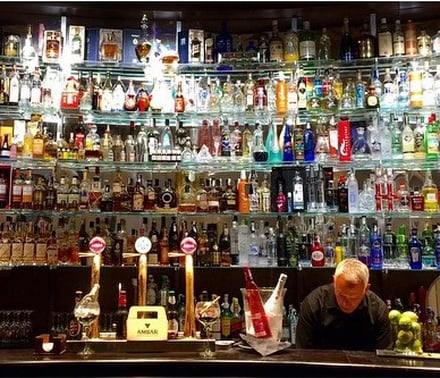
Círculo de Bellas Artes - photo credit Pablo Foley Elias
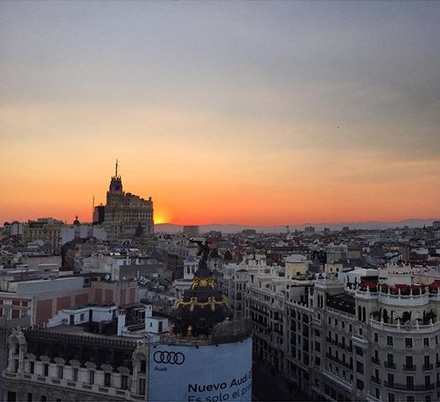
The view from the rooftop of Círculo de Bellas Artes - photo credit Pablo Foley Elias
Kids in Madrid
The aforementioned Retiro Park is great for a family day out, and Madrid in general is a family-friendly city; kids are welcome in restaurants and play freely on terraces while parents enjoy an evening caña.
- Parque de Atracciones, a 20-hectare amusement park in Casa de Campo, the King's old hunting grounds (http://parquedeatracciones.es/en).
- The Teleférico de Madrid is a cable car that goes from to Casa de Campo, with beautiful views of the city along the way. The journey is only 11 minutes each way, €5.90 return, and if you ask for an English narration, the main sights will be pointed out to you along the way by a friendly (if a little odd) recording. The starting point is on Paseo del Pintor Rosales where it meets Calle de Marqués de Urquijo, near to metro Argüelles. Once you get off the cable car in Casa de Campo, you can take as long as you want to wander around or get a bite to eat in the canteen there.
- Parque Warner is much the same as Six Flags amusement parks and has some excellent rollercoasters and areas for young kids. Though it's a bit outside of the city, it is accessible by public transport (http://parquewarner.com/en).
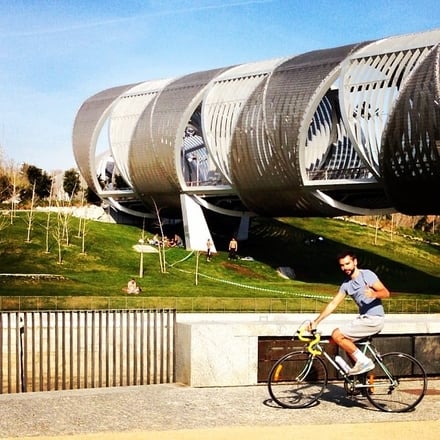
Cycling in Madrid Río - photo credit Pablo Foley Elias
- Madrid Río not only has bicycle tracks and a playground, but in the summer months the chlorinated water fountains are fun, safe and so refreshing to play in. Bring a picnic, lie on the grass, or eat at a concession stand and run through the water jets. More information on Madrid Río's amenities can be downloaded here: http://www.gomadrid.com/beach/madrid-rio.pdf.
- Parque del Templo de Debod is certainly not just for families, but rather is the most popular place to watch the sun go down over the Royal Palace. Technically, it is the vast Parque del Oeste, but if you enter from the Plaza de España end you will find an ancient Egyptian Temple gifted to the Spanish government in the 1960s. There is plenty of open space, stunning views and a playground.
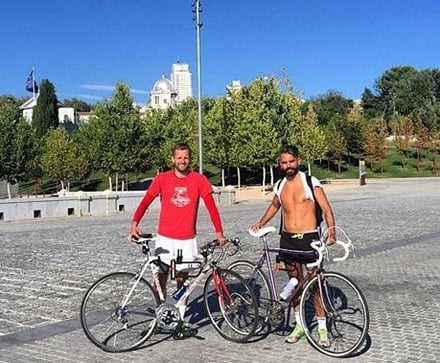
Cycling in Madrid Río - photo credit Pablo Foley Elias
Venturing Out
Madrid city has so much to offer that you could spend a week there without ever leaving the centre, but if you venture outside, you won't regret it. In the Comunidad de Madrid there are endless lakes, castles, mountains, vineyards, pueblos, festivals and artisanal crafts and food. While the roads are good, navigation is not always easy, especially to the smaller towns.
Winebus is one tour that fits in culture, food, wine, history and sightseeing in one day – all you have to do is let them lead. Every Saturday they offer a different trip, leaving in the morning and returning in time for dinner (8pm). Trips typically include a visit to a vineyard, wine and food tasting, and a trip to a castle or place of interest. It's not recommended for children. The whole day costs €79 + €15 for lunch, with a €5 per person discount for groups of four or more.
The Sierra de Madrid is a mountain range to the north of the city with lakes, rivers, hikes, hostels, skiing and stunning views. Worth visiting is Manzanares el Real; an easy 45-minute drive from Madrid city centre, it has an excellently preserved 15th century castle, and is at the foot of the Pedriza, a lower part of the Guardarrama mountain range with various hikes.
Food
Breakfast: Every average bar serves a cheap (less than €3) breakfast consisting of coffee, a slice of omelette or the delicious pan tumaca – freshly toasted baguette with grated tomato and olive oil. There are more sweet and savoury options available but try the pan tumaca (aka barrita con tomate) at least once.
Menú del día: Every bar and almost every restaurant has a lunchtime menú del día, ranging from €8-15 for a 3-course meal with a drink. It is a great opportunity to try high-end restaurants and also the most basic Spanish dishes of beans and meat.
- Krachai, Calle Fernando VI 11 is a Michelin-recommended Thai restaurant with an excellent tasting menu and reasonable menú del día.
- Albur, Calle Mañuela Malasaña 15 uses excellent, regional ingredients to create traditional dishes of high quality. Their tuna and meats are excellent, and I recommend trying the morcilla, or blood sausage. Their menu del día is less than €12, but it’s worth going for dinner to really try the full range of their menu.
- At least once, you should try the cocido madrileño, a chickpea and meat stew that is cooked together, then separated out into a noodle broth, vegetables, legumes and meats (generally chorizo, chicken, beef). It is a heavy meal, only eaten in the middle of the day and preferably followed by a siesta. It is served everywhere, and just because a bar looks run-down does not mean their cocido won’t be incredible!
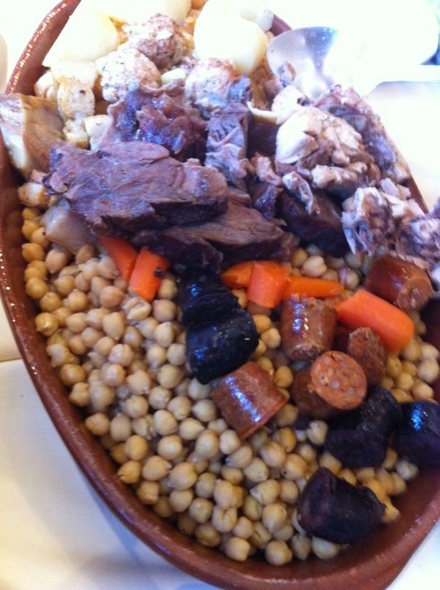
Cocido madrileño - photo credit Kate Murphy
Evening/à la carte dining
Prices vary hugely in Madrid, and while in some restaurants you’ll fill yourself on free tapas alone, in others you can run up a large bill. Compared to other European cities, it remains cheap to eat out. Expect to spend anything upwards of €30 for a meal for two with a bottle of wine.
- For a family-run, traditional, slightly rough-and-ready seafood experience, the Marisqueria Ribeira Domino, Calle Santa Brigida 1 is simple and delicious. Their steamed seafood platter is heaped with all sorts of shellfish and served with lemon and mayonnaise (the €35 platter for 2 will happily feed 3 people). Pair it with a bottle of Albariño and dig in!
- Baco y Beto, Calle Pelayo 24, has tasty, interesting and reasonably priced sharing dishes and small bites.
- Mercado de la Reina, Gran Via 12, does breakfast, lunch and dinner and never disappoints. The Gin Club at the back is also great for an after-dinner cocktail.
- El Rincón de Jaén offers Andalusian dishes with a focus on fried seafood and cured meats – try the baby octopus (chopitos). It has several locations in the Barrio Salamanca, and after your meal they serve you a little bottle of Crema de Orujo or Licor de Hierbas, with mini magnum ice-creams. Popular with locals, you sit around beer barrels or basic tables and wait at the bar if there’s no availability (http://www.elrincondejaen.es/).
- Entre Cáceres y Badajoz is also in Barrio Salamanca, and will fill you up with delicious tapas if you just order a drink, though you can also order off the menu. Often with standing room only, this is a lively, popular and cheap haunt. You’ll find it near Manuel Becerra metro, on Calle de Don Ramón de la Cruz 109.
Free tapas
Terraces and tapas - photo credit Pablo Foley Elias
- While it’s economical to eat for free, it’s also a great way to taste different dishes and just go with the flow. You order a drink and take whatever food you get – portions and quality vary, but here is a great run-down of the best options around: http://madridnofilter.com/11-great-bars-for-free-tapas-in-madrid
Accommodation
Luxury: The ME Madrid Reina Victoria boasts a perfect location in Plaza Santa Ana, and an amazing rooftop terrace with unbeatable views. Prices start at €225/night.
Mid-range: The Hotel Lusso on Calle Infantas is in a great location, provides breakfast and has clean and reasonably-sized rooms. Prices start at €115 for double rooms.
Central, basic and clean: The Hostal San Lorenzo (Calle Clavel, 8) is excellently located in Chueca beside Gran Via and offers (small) double rooms starting at €65/night. Be aware that Chueca is a party area and some night-time noise could drift in.
Social, budget hostel: Cat’s Hostel is well-known for being a clean, social, cheap hostel where partying is likely. Shared dorms start from €12. Calle Cañizares, 6.
Airbnb: There are lots of small studios to rent for as little as €30 a night in the city centre, and for around €100 a night there are centrally-located 2 and 3 bedroom apartments. It’s best not to go further north than metro Iglesia, further south than metro Atocha, further west than metro Principe Pío, or further east than metro Ibiza, simply because if you stay in that central block, you can walk almost everywhere, and transport links are great.
Flights
Ryanair and Aer Lingus both fly directly from Dublin to Madrid, with flights starting from €60/return.
Useful links
www.madridnofilter.com is a blog run by CJ, a Spanish-American expert on all things Madrid. Keep an eye on the blog to see upcoming festivals and events, and CJ also organises her own nights out, wine tastings and food trails.
http://www.metromadrid.es/en/ to help you plan your routes around the city.
http://madridfree.com/ is only in Spanish, but has constantly updated information about festivals, exhibitions, free and once-off events, so is worth a wade through with Google Translate.
Kate Murphy
