


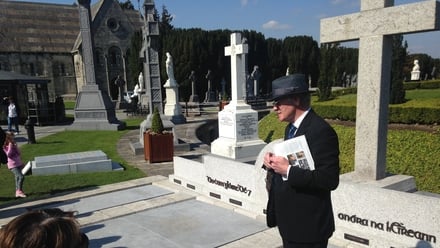
“The fools, the fools, the fools. They have left us our Fenian dead, and while Ireland holds these graves, Ireland unfree shall never be at peace.”
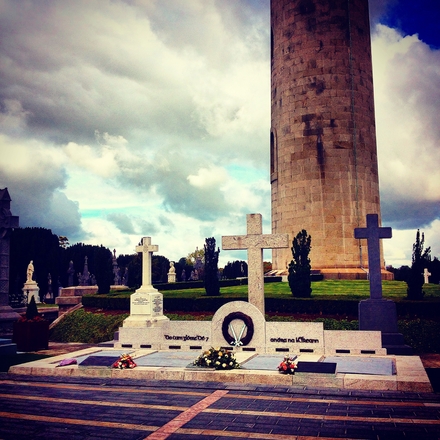
The actor stood where Patrick Pearse stood, by the grave of the dead Fenian Jeremiah O’Donovan Rossa and delivered a pitch perfect oration, finishing with those chilling and prophetic words of one of the most famous moments in Irish history.
The funeral of O’Donovan Rossa took place on 1 August 1915 and was used by the Irish Republican Brotherhood as a propaganda tool, which mobilised the Republican movement and set the wheels in motion for the rebellion the following Easter.
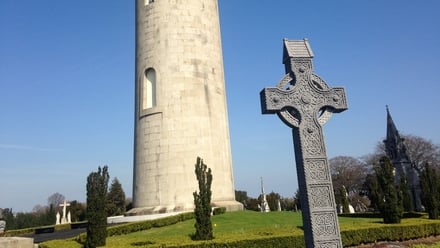
The actor exits, grave left, and Paddy the tour guide takes over as we begin a two-hour ramble about Dublin’s Glasnevin Cemetery for a veritable political history of Ireland since the early 19th century, told through a marble medium, as cold as stone, yet heart-warming nonetheless.
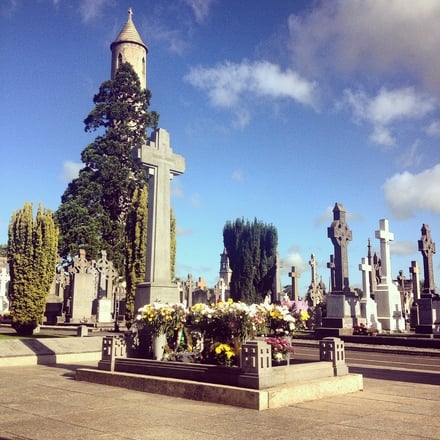
The cemetery dates back to Dublin in the 1830s when the great Liberator, Daniel O’Connell, campaigned for, and succeeded in securing a burial ground for Catholics, who were still restricted from such activities under the penal laws.
In fact, O’Connell ensured that the cemetery was for people of all creeds, or none, as he advocated that Irish people should be buried together, irrespective of their beliefs.
And since the cemetery’s opening, the tombstones dotted about the hills of north Dublin read like a who’s who of Irish history with many of the major players, involved in the lead up to and establishment of the Irish state, buried here.
In fact, one of the cemetery’s many interesting attributes is that more people are buried in these vast lands (1.5 million) than are currently living in the capital city (1.3 million).
The tour begins with that O’Donovan Ross graveside oration and, being Easter Week, continues with a revolutionary theme as we pause for a moment at the graveside of Kevin Barry, an 18-year-old medical student and the first Republican to be executed by the British during the subsequent War of Independence, alongside the other Forgotten Ten.
The guide possesses a wealth of interesting information and every story leads seamlessly into another, whether Roger Casement arriving by German U-Boat to the shores of Banna Strand or Erskine Childers and his wife sailing nonchalantly into Howth Harbour with their Asgard yacht packed full of German munitions.
Needless to say, as the years progress, civil war politics make their way into the lay out of the graveyard as the Long Fella (Eamon de Valera) and the Big Fella (Michael Collins) are a respectful distance away from each other.
The tour is a mere snapshot of the plethora of interesting angles that could be taken on cemetery tours as many famous Irish writers including Brendan Behan, Gerard Manley Hopkins and James Clarence Mangan lie amongst the resident faithful departed.
Famous Dubliner and balladeer Luke Kelly was also buried here, as was local boy, turned Manchester United star Liam Whelan who died tragically in the Munich Air Disaster in 1958.
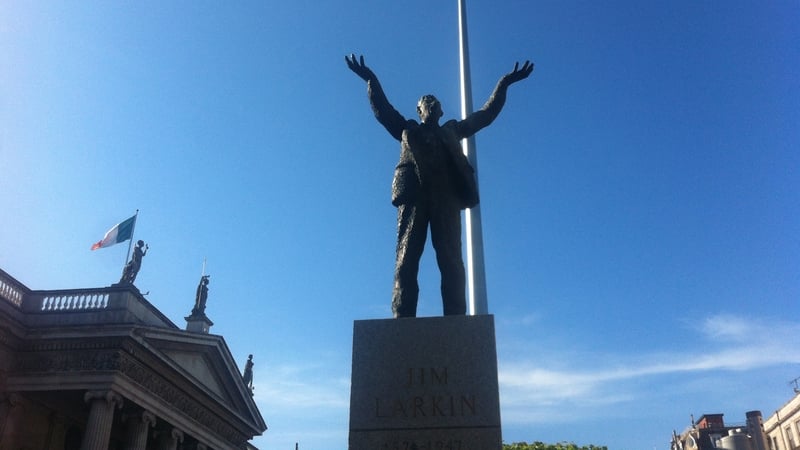
Leader of the workers, Jim Larkin, is also buried here and the 1913 Lockout was essentially the beginning of a decade of disturbance in Dublin as the rising followed three years later.
A moment’s reflection at the stunning, yet simple grave of Charles Stewart Parnell, which is a boulder of Wicklow granite on a grassy bank, ended my visit.
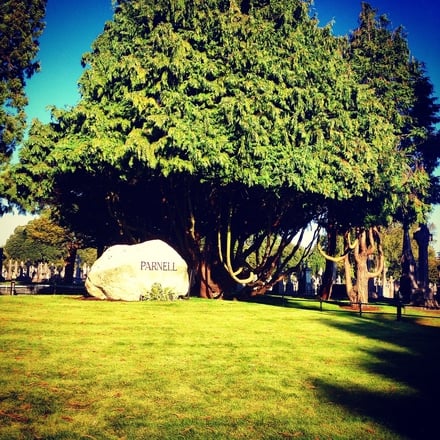
The solitary name, Parnell, is all that is inscribed here but the former leader of the Irish Parliamentary Park is, in fact, buried alongside the 12,000-odd cholera victims from the Dublin outbreak in the 1840s.
The 1916 centenary commemorations will begin officially on 1 August when the O’Donovan Rossa funeral will be recreated at Glasnevin, however, most focus will centre around Dublin’s Revolutionary Quarter, O’Connell Street and its surrounds.
Glasnevin Cemetery runs adjacent to the beautiful Botanic Gardens and a walkway now exists between the two, which proved the perfect setting to begin my ramble about Dublin’s revolutionary landmarks.
A twenty-minute stroll will take you downhill from the cemetery into the heart of the Dublin battlefield, which centres around the capital’s sometimes majestic avenue, O’Connell Street, and down to the GPO, which was the rebel headquarters and the location where Pearse read out the Proclamation, signed by the seven signatories.
All roads from O’Connell Street lead to significant landmarks of the Rising, none more so than neighbouring Moore Street, where the leaders eventually surrendered, or the nearby Liberty Hall, which was the base for the James Connolly-led Citizen’s Army and the location where the aforementioned Proclamation was written and printed.
Several 1916-themed tours are now available, which will take you in greater detail around some of the most important sites, like Bolands Mill, where Eamon de Valera led a band of rebels, Kilmainham Gaol, where the leaders were executed, or up around St Stephen’s Green, where Countess Markievicz led the fight from the upper floors of the Shelbourne Hotel and around to the Royal College of Surgeons.
From the GPO, I took the short stroll back up to the Garden of Remembrance, one of the most tranquil and contemplative locations in the city, which is dedicated to all those who gave their life to the cause of Irish freedom, before continuing up North King Street and to Collins Barracks on Arbour Hill.
Conspicuous by their absence amongst the patriots of Glasnevin Cemetery, the executed leaders of the 1916 Rising are buried here at Arbour Hill Cemetery.
The walk back into the city takes you past more war memorials and places of battle, whether the Croppies Acre, commemorating the Croppy Boys of the 1798 rebellion or the battle-worn Four Courts, where the badly wounded Cathal Brugha was found singing ‘God Save Ireland’ during the Easter Week retreat.
Of course, the 1916 Rising was a rebellion and not a revolution, but in the words of WB Yeats, ‘all changed, changed utterly’.
Indeed, a terrible beauty was born.
For more information about Glasnevin Cemetery tours, visit: www.glasnevintrust.ie.
Ed Leahy
