


It was a shucking masterclass; the local lad was giving the portly Pensylvanian a schooling in the art of opening oysters.
The Hillsborough International Oyster Festival had reached its main event, and the historic Georgian village was thronged as the main street and square were bathed in warm September sunshine.
Aside from the festivities, the main reason for taking the short detour off the Dublin to Belfast road was to pay a visit to one of Ulster’s most historic properties, Hillsborough Castle.
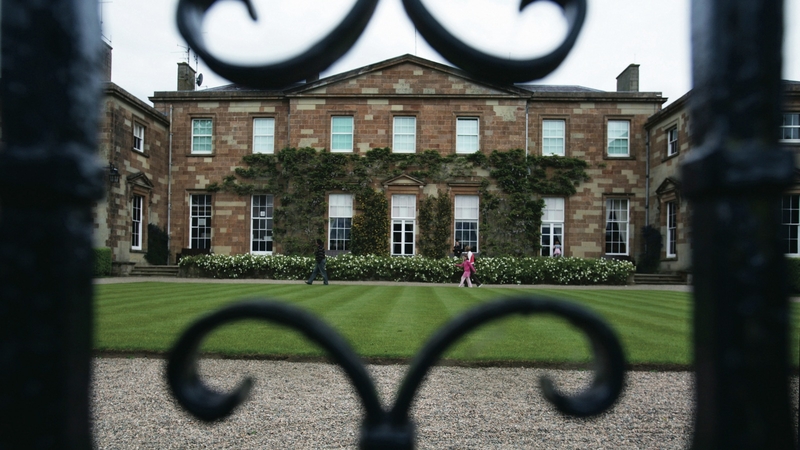
The madness of the main street was replaced by a sobering silence as I entered the castle grounds, the impressive entrance dominated by a beautiful multicoloured sandstone exterior.
Hillsborough Castle is a Georgian mansion dating back to the 1770s, which was built by Wils Hill, the first Marquis of Downshire, and remodelled in the 19th and early 20th centuries.
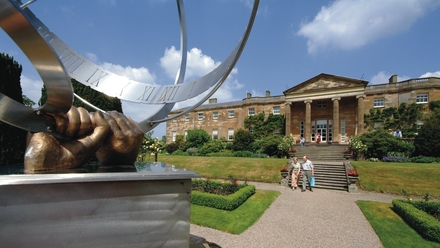
The guided tour of the interior gives you a great insight into the castle’s history, which still functions as the official residence of the English royal family in Northern Ireland.
Above the hall door, sits a set of the broadest and most impressive Irish deer antlers, and the grandeur continues as you pass through the State Drawing Room, the Red Dining Room and the Staircase Hall.
Amongst all the exquisite furniture and finest portrait paintings, there is a fine collection of the best Irish crafts including colourful Portadown carpets and Irish silver exhibits.
Republican or royalist, you will enjoy this tour and the most intriguing aspect, from my own perspective, was the sense of history that abounds within these walls, none more so than the signing of the Anglo Irish Agreement in 1985 as well as many rounds of talks leading up to the Good Friday Agreement.
Heated affairs, no doubt, and the 98-odd acres of gardens must certainly have been utilised by all involved throughout such historic gatherings.
The sprawling gardens should be explored at your own leisure with several signposted walks taking you out and around this fine stretch of Irish countryside.
The Castle Walk will take you on a 30-minute stroll, while the Glen Walk can be completed in just under an hour.
But it is worth your while to take an afternoon and set out on the Lake Walk, which actually combines the aforementioned rambles and adds a lap of the lake.
You will head off from the castle and the views of the impressive building get better as you saunter down the Yew Tree Walk, before making your way round to the Lady Alice Temple, a domed temple dating back to 1880.
A moss path leads you along the Lime Tree Walk before arriving at Cromlyn Ruin, which represents an early Christian church dating back to the seventh century.
Impressive pines, spruces and firs take you down to the lake before you arrive back around to a large rustic arched entrance of rounded sandstone known as the Ice House.
Making your way back around through the castle gardens, you will finish at the Jubilee Garden, which includes an impressive sundial and an adjacent Greek Temple.
Arriving back through the afternoon shadows of the great castle, it got me thinking about the fantastic and colourful history of this green and pleasant land.
I found a park bench to rest awhile and aptly enough, the simple wooden seat was dedicated to the late Mo Mowlam, who worked tirelessly and thanklessly for peace on this island.
Amidst all the grandeur and splendour of the great rooms and finery within the castle walls, it was here I felt most at home.
Other Castles Around Ireland’s Northern Counties
Belfast Castle: Located on the slopes of Cave Hill and offering stunning views over the city and Belfast Lough, Belfast Castle was built in the Scottish baronial style for the third Marquis of Donegall and completed in 1870. Explore the landscaped gardens and adventurous playground, go for a brisk walk in the surrounding Cave Hill Country Park, then head indoors and enjoy a bite in the cosy Cellar Restaurant.
Dunluce Castle: Dating from the 14th to the 17th centuries, the iconic Dunluce Castle is strikingly perched on rocky cliffs overlooking the North Atlantic, and was the headquarters of the MacDonnell Clan. Constantly fought over, it eventually succumbed to the power of nature, when part of it fell into the sea one stormy night in 1639.
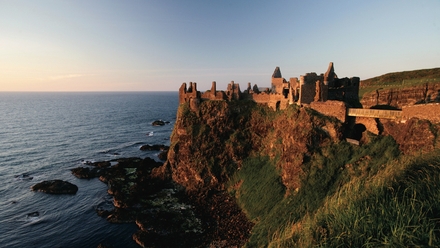
It was abandoned shortly afterwards. The castle and its magical setting are said to have inspired Cair Paravel in CS Lewis' Chronicles of Narnia. There is archaeological evidence of a village that surrounded the castle, which was destroyed by fire in 1641.
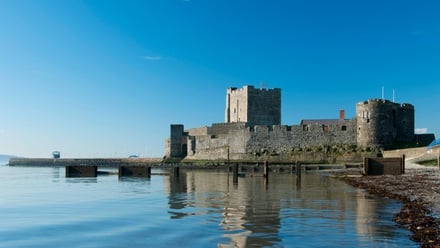
Carrickfergus Castle: A striking monument from land, sea and air, Carrickfergus Castle represents over 800 years of military might, strategically located on the northern shore of Belfast Lough. Originally built in 1177 by John de Courcy, this Norman castle has been altered throughout the centuries and has been in use as a garrisoned property until as late as 1928. The castle now houses historical and other displays as well as cannons from the 17th to 19th centuries.
Dundrum Castle: Dundrum Castle was a central fortification in the Anglo-Norman conquest of Ulster in the 12th century. It features a tall circular keep at its centre, an inner and outer bailey and the ruins of the 17th century Blundell House. Other castles in the once strategically important South Down area include Greencastle Royal Castle and Narrow Water Castle.
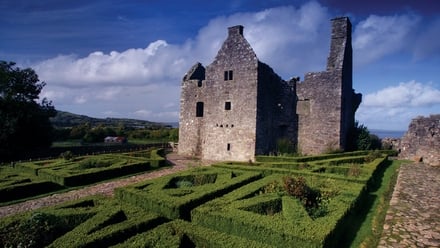
Tully Castle: Head off the beaten track and discover the beauty of Tully Castle, located on the shores of Lower Lough Erne between Enniskillen and Belleek. This fortified house and bawn was built for John Hume in 1619, who occupied the house until 1641 when it was attacked and burned. The site includes a recreated 17th century style garden. Nearby Monea Castle also dates to the Plantation of Ulster.
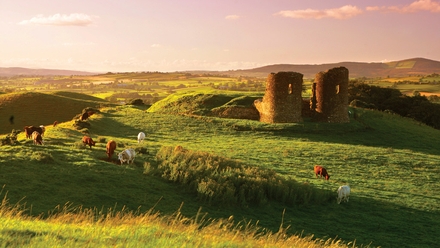
Harry Avery O'Neill's Castle: Situated amid the foothills of the Sperrin Mountains near Newtownstewart, this castle is thought to have been built around 1320 by a local chieftain of the O’Neill clan. This is unusual in that Irish chieftains of the time rarely built stone castles. The main surviving features are the huge D-shaped twin towers and a large mound behind which formed the courtyard. Nearby Newtownstewart Castle, dating to the early 17th century, is also worth visiting.
Getting to Hillsborough Castle
Located just outside the city of Lisburn, Hillsborough Castle is minutes from the main Dublin to Belfast road, 15 kilometres south of Belfast.
Where to Stay
I stayed at the Ramada Encore Hotel in Belfast’s Cathedral Quarter, which is located in the heart of the city’s thriving restaurant and nightlife scene and only ten minutes’ walk from the Titanic Quarter and Odyssey Arena as well as Waterfront Hall and Victoria Square Shopping Centre. www.encorebelfast.co.uk
For more information, visit www.discovernorthernireland.com.
