


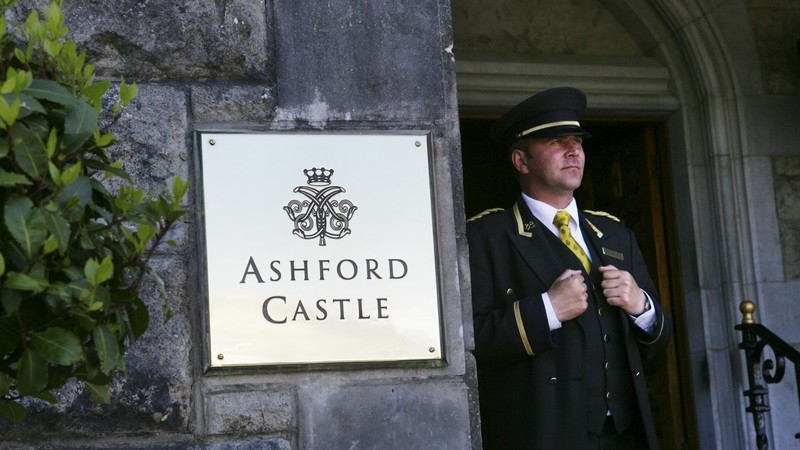
It now takes less than two hours to drive from Dublin to Galway on Ireland’s slowly evolving road network. Add another thirty minutes and you’ll find yourself further afield, way back in the early years of the thirteenth century.
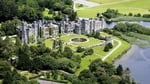 Just a few miles over the county border in the land of Green and Red, the village of Cong sits pretty on the banks of Lough Corrib. And dominating this rural but ancient outpost is the former stronghold of the De Burgo clan, Ashford Castle.
On the outskirts of Cong, the fortified walls announce your arrival and the winding drive through the estate’s parklands – or nine-hole golf course, in its current guise – sets you up for a breathtaking first glimpse of Ashford and an effortless entrance across the water’s edge through the main gate of this five-star historical residence.
Ashford Castle was built in 1228 by the conquering De Burgo clan following the defeat of the native O’Connor’s of Connaught. The family remained for three and a half centuries before Ashford passed into the hands of Lord Bingham, the Governor of Connaught, following a fierce battle between the De Burgo clan and the English forces of Bingham.
The castle was extended in the 1700s and 1800s and was then retained by the Iveagh Trust in 1915 on behalf of the Guinness family until 1939, when it was transformed into a first class hotel.
The weary winter weather was quickly forgotten once inside as a friendly céad míle fáilte and glass of mulled wine were dispensed by the front-of-house staff.
A short tour of the castle finished up in the Drawing Room, which looks out over the castle’s gardens and beyond to the picture postcard waters of Lough Corrib.
As good as it looked outside, the super-sized sofas and imposing armchairs of the Drawing Room tempted me in for my first sample of Ashford’s creative cuisine.
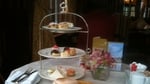
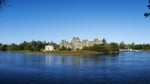 The Afternoon Tea was a triple-decker of tiny treats with the scone, jam and fresh cream combo the best in show. My Afternoon Tea debut sparked off a trip down memory lane to my tea-leaf drinking trips to my granny’s house. This time, however, the plastic tea strainer was replaced by a stainless steel equivalent and by the time the second pot was consumed, I was a convert to this almost obsolete tea drinking tradition.
With only an hour of light to play with, I didn’t stray too far down the castle’s endless avenues, instead taking a wander around the water’s edge and back through the hidden gardens that lie adjacent. Being the middle of December, the gardens were not sporting too much in the way of foliage but I can imagine that they must be a joy on a warm summer’s afternoon.
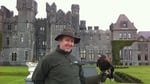 Back indoors, the welcoming warmth of the castle was enhanced by the sweet scent of mulled wine diffusing throughout. And wandering the narrow corridors or marvelling at the high ceilings makes you forget that you are actually in a hotel as you become immersed in the historical aspects of the castle.
Curiosity led me up a winding staircase, on through battle-proof doors, around by the gallery of artist in residence Rick Lewis, before a stroll along the Hall of Fame, a corridor jam-packed with photos of the many famous guests who have stayed over the years.
There was still time for a game of chess before dinner.
Renowned cook, Stefan Matz is the executive chef at Ashford Castle and his innovative gastronomy was very well received over a couple of leisurely hours dining at the classic George V restaurant.
 An amuse bouche of potato soup and smoked salmon kicked off proceedings, followed by a very rich but tasty foie gras. The smoked gubbeen cheese soup was an unexpected delight, served with dainty homemade oatcakes that crumbled upon impact.
An organic French merlot was well matched with the filet of beef, just leaving enough room for the plum crumble and petit fours to finish.
The jacket and tie dress code proved my only grumble and may leave some guests unhappily dining outside in the Drawing Room, looking in.
An activity-filled day was planned once the very impressive breakfast was negotiated. A Lough Corrib ferry cruise departs from the hotel every morning. Fishing, archery and clay pigeon shooting, amongst a host of other outdoor pursuits are also available, but I was booked in for a school tour with a difference.
Ireland’s School of Falconry is located in the grounds of Ashford Castle and following a brief tour of the facilities, a short lesson in falconry and an introduction to the birds of prey in residence, including a wise old owl, I set off on a hawk walk around the Ashford estate.
 Kitted out in my falconry hat and matching arm-length leather glove, I was introduced to my feathered friend, Killary. The medium-sized hawk hopped onto my arm and waited patiently until I followed the rehearsed manoeuvre and set the bird off into the wintery sky.
Some food, in the form of a chicken foot, was slid into the palm of my glove and when I gave the signal, Killary would swoop down at pace and gracefully land on my outstretched arm for a well-deserved feed.
This routine was repeated throughout the hour-long country ramble and to watch the bird in full flight, negotiating narrow gaps in trees and gauging distances for landing was just as spectacular as those first sights of Ashford Castle itself. And that is praise indeed.
For more information about Ashford Castle, visit www.ashford.ie.
Ed Leahy
RTÉ is not responsible for content on external websites.
