


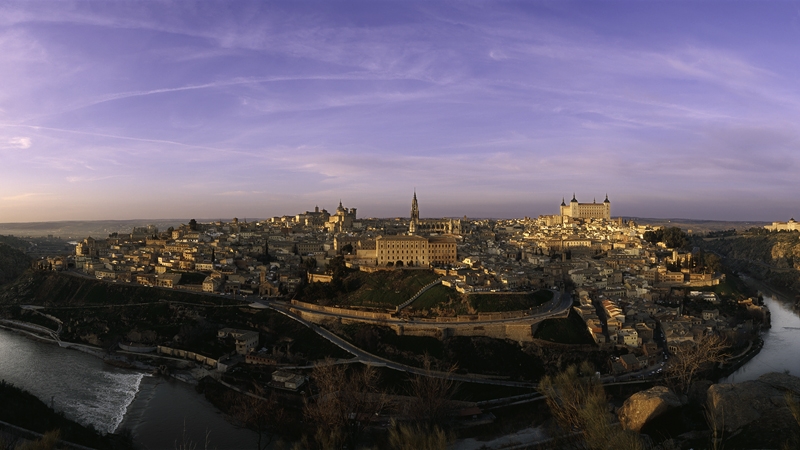
The streets of Toledo had filled up not long after breakfast. And not only with townsfolk, who had come for the Corpus Christi celebrations, but with amazing aromas of rosemary and thyme that wafted around every corner and whistled through the narrow, winding streets of this once capital city of the Spanish Empire.
 Toledo is located 70km south of Madrid and was named a UNESCO World Heritage Site in 1986 thanks to its rich history, which saw leadership change hands between the Romans, Visigoths and Moors. When under the rule of the Caliphate of Córdoba, Toledo became a cosmopolitan city where Jews, Muslims and Christians lived in relative harmony.
The city is now, however, overwhelmingly Catholic, and the main feast day of the year arrives nine weeks after Easter, when Toledans come out to celebrate the feast of Corpus Christi and to partake in the very traditional procession of the Eucharist through the streets of the old town.
The streets surrounding the cathedral are prepared throughout the night; awnings are assembled to cover the monstrance containing the holy Eucharist and ancient decorative canvases are draped on the cathedral walls.
Fresh herbs are then strewn throughout the cobblestoned streets, thus creating the aforementioned bouquet that lingers between the city walls until nightfall.
The procession kicks off at 11am and the route is lined with kitchen chairs, stools and deckchairs as the locals come out to pay their respects and to support any of their family or friends who may be passing.
Whether of a religious disposition or not, the spectacle of the procession is a visual feast as every element brings with it a unique identity and tradition. There are a variety of brotherhoods in robes that wouldn't look out of place on a West End stage. Also present are communion-making schoolboys, decked out in sailor outfits, the university's martyr scholars with their multicoloured headgear, and bewigged children, who scatter coloured rose petals as they walk.
The whole experience is very cinematic and the two-hour spectacle is well worth the price of a seat along the route as you get a peek into the customs of a town and a people so rich in history and tradition.
 Witnessing the pageantry and the rituals of the procession takes you back in time, and a stroll around the ancient streets of Toledo's town centre keeps you in a bygone era with its narrow, uneven steps and stones leading you around in a maze-like fashion in this most labyrinthine of city centres.
The initial design of the city was Romanesque with straight roads arranged in a grid, but the Islamic influences changed it for the benefit of protecting the city against invading armies who would not be able to fire arrows straight down the street and might get lost amidst the alien layout.
A sense of claustrophobia could kick in while traipsing through these Toledan trails but you are never too far from an indoor patio or courtyard, which are dotted throughout and are a great place to take a break from the hot sun and admire the vegetation or the internal architecture.
A guided tour is probably the best way to truly appreciate this City of Three Cultures with so many different styles of building and design spanning ancient times, through the middle ages and into the modern era.
Many buildings still carry great examples of Mudéjar, which is a mixture of Islamic and Christian styles, while different types of brickwork will also put an age on many of the town's constructions.
The guide will probably break up the tour with some of the famous Toledan legends, although don't expect any fairytale endings as most of the stories conclude with death and destruction. The Noche Toledana story is particularly interesting and is an expression that remains a Spanish colloquialism to this day.
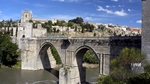 A river walk along the banks of the Tagus River, which loops around the ancient city walls, will get you out of the town centre, and the bridge-to-bridge ramble incorporates some fantastic vistas and offers a great sense of perspective to this most mature city. The panoramic views of the old town from across the river are truly spectacular and explain, in part, the reason the town and its location gained such importance back in the day.
My next stop was to pay a flying visit to Toledo's most cherished adopted son, El Greco, or The Greek as he was known to his friends. The Master painter travelled to Toledo from Greece via Italy and settled in the Spanish capital, which proved a great inspiration for many of his best known works.
The Iglesia Santo Tomé (St Thomas' Church) houses one of El Greco's most famous paintings, the Burial of Count Orgaz. There is a dedicated El Greco museum in Toledo's Jewish Quarter but it is currently undergoing restoration and some of the paintings are temporarily residing at the magnificent Prado museum in Madrid, including the renowned View and Map of Toledo.
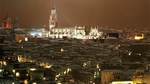 A hearty lunch is recommended before attempting to tackle the magnificent Cathedral of Toledo, the second largest gothic cathedral in the world, and home to the intricate gold and silver monstrance that was carried through the streets earlier.
The cathedral's altarpiece is a good place to start and it could easily hold your attention for an hour or two, but you would need a few days to really appreciate everything that is contained within one of the richest cathedrals in the world.
The choir section is another must-see as it takes up most of the centre area of the church. Each seat, of which there must be around 100, is a work of art in itself, and the statues that border above are an interesting mixture of mannerism and classical.
Elsewhere, the little rooms that sit off the main space are full of many more treasures including a former queen's crown, the bible of St Louis, and some notable gifts from Franco and Mussolini.
The statue of the Smiling Virgin is another gem to be found inside and just when you think you are finished, you pop your head into the priest's changing room, or the sacristy to keep it ecclesiastical, and the walls are haphazardly covered from top to toe with paintings by some of the great Masters - Caravaggio, Raphael, Rubens, Titian and our old friend, El Greco. The ceiling is also a sight to behold; a Sistine Chapel-esque sprawl, complete with a stunning vista of the city of Toledo to finish.
A giant-sized mural of St Christopher points the way to the exit, where you can spend another age appreciating the exterior and the tower that contains the biggest bell in Spain. It must be noted, however, that the powers that be never completed the second tower, which would have been included in the original gothic design.
Maybe, a bit like my visit, they just ran out of time.
Eating Out in Toledo
There is a big emphasis on gastronomy in Toledo and there is a lot of fine food on offer from the classier restaurants to the downtown tapas bars. Toledo is also famous for its marzipan, which can be found in any of the gift shops dotted about the old town. Manchegan cheese, venison, asparagus are all to be recommended, not to mention the ubiquitous but ever so tasty croquette potatoes.
Places to Eat
Hostal del Cardenal: Dining outdoors on my first night, the restaurant of the Hostal del Cardenal was the perfect introduction to Toledo. Located just inside the old city walls, the courtyard setting immediately lets you know what's in store for your visit to Toledo with a relaxing, friendly atmosphere, complemented perfectly by a traditional local menu that didn't disappoint. www.hostaldelcardenal.com
Locum: In the heart of the old town, close to the cathedral, Locum is one of classier options in Toledo. The set menu included about eight courses with cod, salmon, lamb and a very interesting fish-egg amuse bouche to start. Bring your appetite. www.locum.es
Abadía: Located in the lively Plaza de San Nicolás area, Abadía is a great place to get a good overview of traditional tapas and local dishes. A mid-meal lemon sorbet was mistaken for afters, before a bucketful of barbequed meat arrived. Eventually, when the dessert platter did arrive, I almost had to send it back. www.abadiatoledo.com/abadia.html
Where to Stay
I stayed in the old town, at the mid-range Hotel Pintor El Greco, which was in a great location within five minutes walk from the river, the cathedral and the synagogue. The hotel is an old Toledan structure dating from the 17th century, a fully restored and remodelled former bakery, located in the famed Jewish Quarter, one of the most traditional and historic sections of Toledo. www.hotelestoledo.net/pintor/eng/index_eng.html
Getting to Toledo
Toledo is located just south of Madrid and is easily reached by train from Madrid's main Atocha Station, taking just over half-an-hour.
For more information, visit: www.spain.info/ven/provincias/toledo.html.
Ed Leahy
Ed Leahy travelled to Toledo as a guest of the Spanish Tourist Office and Department of Tourism in Toledo.
RTÉ is not responsible for the content of external websites.
