

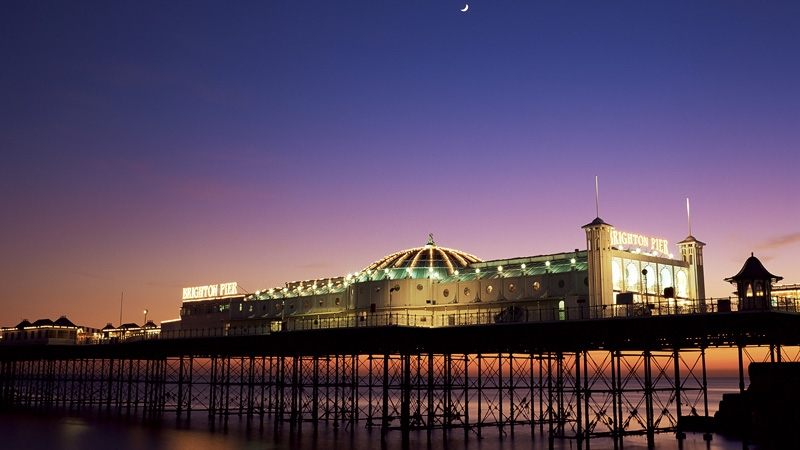
Brighton is a good city break for those who love the trendiness of London but feel intimidated by its massive size.
Nicknamed London-on-Sea, it’s got all the benefits of a city - such as shopping, culture and nightlife - with the added benefit of the coast, making it a very relaxing place to visit. Only a half-an-hour train ride from Gatwick airport, it’s a short journey for Irish tourists.
 Brighton has been a holiday resort since 1840 when a train line was built connecting it to London. The British royal family visited the city to bathe in the salt water, and Brighton quickly became the place to be.
Today it’s still famous for the same things as it was over 200 years ago; seaside location and artistic culture. The city has grown a little grubby since its glory days in the 1800s but this adds to its charm. Its blend of scruffiness and elegance gives new meaning to the term shabby-chic.
Brighton feels more like a big town than a city and it’s easy to navigate. Built along the sea shore, its blue flag, stony pebbled beach gets packed during the summer months. The striped deck chairs and colourful changing huts give it a retro holiday feel. The promenade is lined with funky cafes and bars.
 The pier is Brighton’s most famous landmark. This 19th century gem is packed with amusement-park rides and games and is the place to go to get your fortune told and buy tacky souvenirs or a stick of rock. Dig in to a bag of salty chips or candy floss and you might have flashbacks of family holidays in the 1980s or school tours to Bray or Salthill.
If cafe culture and shopping are your thing then head for Brighton’s lanes; a maze of twisting, winding alleyways. It’s quite an upmarket area and days can be spent window shopping in one of the many antique or jewellery shops, as well as the expensive designer clothes boutiques.
 The Northern Lanes have a much more bohemian feel and are home to a mish-mash of new-age shops and second-hand record and clothes stores. Funky dress designers make and sell their wares in their own shops, which make for a very different shopping experience to the traditional high street one. Cafes and bars with al fresco dining line the pedestrianised streets and are the perfect place in Brighton to sip a coffee on a Saturday and watch people go by.
Brighton is home to two big universities, so the city is full of young people and has a lively night life. The Lanes have a great mix of pubs and many of the clubs are nested underneath the Victorian beachfront arches. It’s a great feeling to come out of a hot packed club and be right on the beach. The following clubs can be recommended; Audio, Digital and Ocean Rooms.
The live music scene is big here and in the summer international acts come to play at one of the many festivals like The Great Escape and White Air.
The Brighton Festival is on for three weeks every May and is the largest arts festival in the UK, attracting performers to the streets and venues around the city.
 The Royal Pavilion was once the holiday residence of King George IV and is now open to the public. Its Indian appearance on the outside is strikingly at odds with its surroundings in the middle of Brighton. King George built an elaborate palace with fanciful interior design influenced by Chinese and Indian style. It’s well worth getting the audio tour and slowly meandering through the state rooms and private apartments to see the lavish interiors and furnishings.
Brighton has a reputation for being inclusive and diverse so it comes as no surprise that it has a thriving gay scene and is often referred to as the gay capital of England. Orange-robed Buddhist monks live in a community in the town, and there is also huge interest in alternative medicine in the area. Brighton is also known for being the vegetarian capital of Europe. Even the most hardened of carnivores will come away satisfied from the delicious vegetarian restaurant Terre a Terre.
If you’re a movie buff then you will be familiar with Brighton’s cityscape from films such as 'Mona Lisa', 'Brighton Rock' and 'Wish You Were Here'. But its most famous movie, 'Quadrophenia', is celebrating its 30th anniversary this year. The film chronicles the tale of the brawling Mods and Rockers in the 1960s and culminates in the 'Battle of Brighton', a violent stand off involving about 3,000 youths.
 Quadrophenia Alley is Brighton’s most famous cinematic shrine and is one of the many sights that you can visit on a walking tour of Brighton’s cinematic heritage. The trail is done on foot in your own time armed with an MP3 player and a map. The podcast can be downloaded from the Visit Brighton web page. There are also good ideas on planning a Mod weekend in Brighton.
For more information on Brighton, visit: www.visitbrighton.com.
Deirdre Mullins
RTÉ is not responsible for the content of external websites.
