


"Sometimes," says Jean Claude Conter of the Luxembourg Tourist Office, "we over-emphasise just how small we are."
He has a point. Small is the first thing we think of when we hear the name Luxembourg, apart, that is, from the repressed recall of Eurovision juries in the 1970s.
But its size is magnified by its role in modern life, such as its occasional presidency of the EU.
And its picturesque post card landscape for a post card-sized country, enhanced when visited in the snow which accompanied the cold snap Northern Europe was undergoing, has been ignored in the rush to the citybreak circuit.
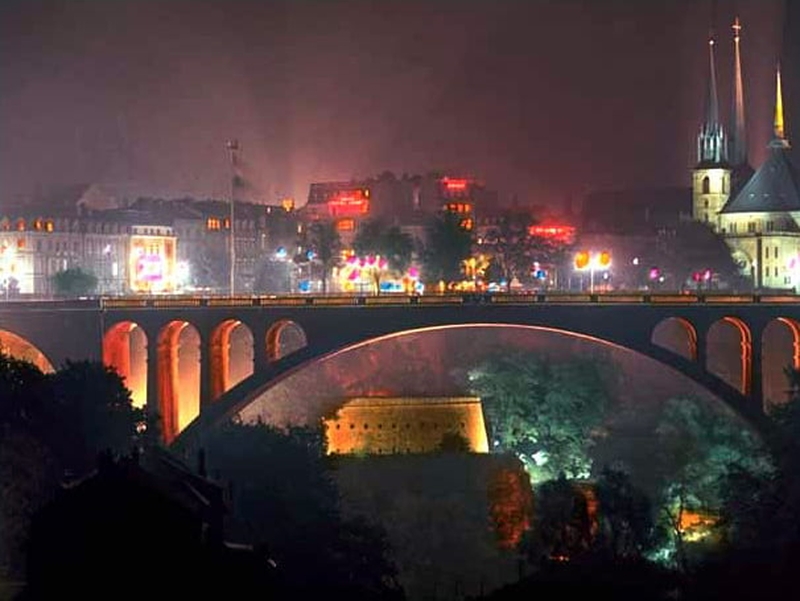
First the city. It has a population of 80,000, similar to Derry or Limerick, and a fairytale aura.
 Its collection of rounded towers with pointy Rapunzel hats clinging precariously to the side of a ravine gives the impression of a nervy existence on the very edge of cataclysm. Rather appropriate, you find, when you learn about its history
And the country: for despite the fact that the border is 20 minutes in each direction, there is a distinctive Luxembourg landscape outside of its city, with rolling rural hills in the north, Hansel and Gretel forests and lush meadows that recline toward the river valley, steel-and-mine-hat south.
Somehow as low fare airlines opened up Europe's citybreaks Luxembourg never got its message across. It was paying too much attention to the bankers and not enough to the tourists.
Now Luxair wants to change that. Its flight which used to go via Manchester now goes direct daily. The €169 network lead-in return fare works on a simple basis: the sooner you book the lower the fare. This is as good as anything from the low cost operators.
The spa product at Mondorf-les-Bains, where you can swim in a steaming outdoor swimming pool while the snow falls on your head, is winging its way into the brochures.
Nicholas Michel, commercial director of the spa complex at Domaine Thermal de Mondorf, says that the business emphasis of the city makes it an ideal stop for cheap weekenders.
The produce of the Moselle vineyards, which rarely makes it further than Belgium, is best sampled on one of the growing number of vineyard tours. And the 12 Michelin star restaurants, one at every corner, are crying out for tourists who prefer to sample their poularde elsewhere. Yes, they have their own distinctive language, and defend it with determination.
Enter the new Luxembourg. Less banking and more massage.
For four centuries armies marched through here. Here were the eggs they used to make Europe's omelettes. Georges Hamen, the manager of the porcelain factory at Villeroy & Boch says his stock having been smashed a few times since its foundation in 1748.
In the 1950s it was Luxembourg who gave the gentle push that founded the coal and steel unions that were to create the gigantic 450m population European Union of today.
Wine-grower Yves Sunnen at Caves Sunnen-Hoffmann in Remerschen pops the corks for visitors, offering a variety of Riesling, Pinot Noir and sparkling Cremant. Luxembourg is proud of its unfairly undervalued wines (for undervalued read better value to the weekender who wants to bring some home).
The family-owned vineyards line the rolling valleys of the south. A bad frost wiped out the grape crop in 1709 and it can still go below minus 16 in winter, so the fruit is as sturdy as the populace.
Wine growers know that the truth is in the tasting.
Luxair now fly direct daily from Dublin to Luxembourg.
For further information see: Luxembourg National Tourist Office122 Regent St London W1B 5SA England Tel +800 2456 4242 Fax +44 (0)20 7734 1205
www.luxair.lu www.luxembourg.ie RTÉ is not responsible for the content of external websites.
Top three attractions: Vianden Castle, Parc Merveilleux, Luxembourg City Casements.
Eoghan Corry
