


If you want to master making your own coffee, where should you start, and what are the most important notes to hit? Should you grind yourself, or buy pre-ground beans?
Founder and CEO of FiXX Coffee, Anne Abberton, offers Brendan her top tips for making great coffee at home, or at work, from what to look out for in your cup of joe to the pros and cons of using a moka pot, French press, aeropress or filter coffee.
A bad cup of coffee is hard to miss, but what makes a great cup of coffee? Abberton says it comes down to "balance".
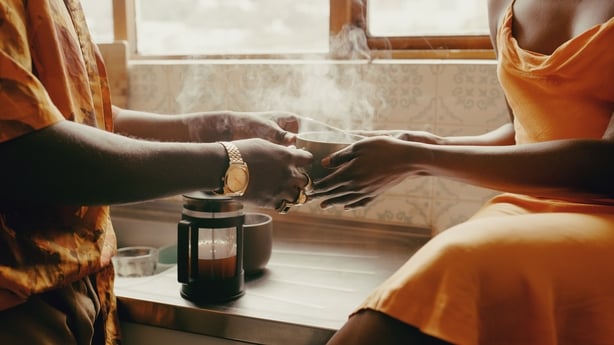
"Balance of sweetness, acidity and even bitterness. You're looking for all of those to behave well together in a cup. You don't want any of those, really, to be dominant."
One way to get more dimension in your coffee is to grind the beans fresh when possible, using either a hand grinder or a machine, but Abberton stresses that that has to suit your lifestyle. If you don't have time to grind the beans all week, she says, save it for the weekend and use pre-ground coffee during weekdays.
The perfect formula for measuring out your grounds, she says, is one litre of water to 60g of ground coffee, which makes four cups - roughly 15g per cup, or two dessertspoons of coffee.
Crucially, she adds, to create that harmony of flavours, do not use boiling water.
"Ideally, if you have a temperature-controlled kettle, that's great. It's about 95 degrees you need it to be. Because if you're using 100 degrees water, you're burning the coffee essentially, and you're making it bitter or you're making it sour."
In the Fixx offices, Abberton's team use an automatic brewer called a Moccamaster, but when she's at home, Abberton will use a Hario V60 - a plastic or ceramic conical coffee dripper that makes one cup of coffee at a time.
"It's very clean because none of the sediment makes its way through", Abberton says.
As for whether it's worth investing in a big, shiny espresso machine at home, she says: "I personally don't think so. I think they take up a lot of space, and a lot of the time they're not used. The simpler your operation is at home, the chances are that you'll use it more frequently."
She herself will pop out to a good local cafe when she wants an espresso, instead of making it at home.
For something truly adaptable, Abberton points to the AeroPress, a device that has a long-standing fanbase in the coffee community. These brewers are made of plastic and use air pressure to pull incredibly smooth espresso.
"There's a durability to them; they don't break easy, they're easy to clean. They make a very clean cup of coffee. You can travel with them. The end result is a nice, robust, rounded-tasting coffee", Abberton says.
"But again, they can be a little antisocial because it's just making the one cup. If you had visitors, you wouldn't take the Aeropress out."
For more tips on brewing your own coffee, listen to the interview above.
