


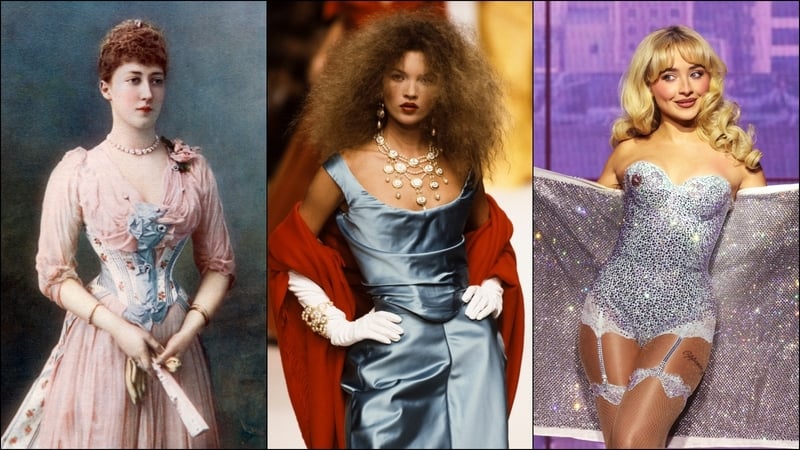

Fashion historian Laura Fitzachary explores why the corset is once again having a moment in fashion, and its long history in Irish design.
Humans have altered their appearances through all sorts of invasive techniques for possibly millennia, but where did our fixation with the hourglass silhouette come from, and why is the corset having yet another resurgence in fashion today?
Although corsets are making headway in replacing the 'nice top' for a night out, and Sabrina Carpenter repeatedly went viral this year thanks to her corset reveals on tour, many myths around corsetry have persisted into the 21st century, and Ireland is no exception to having a history of the practice.
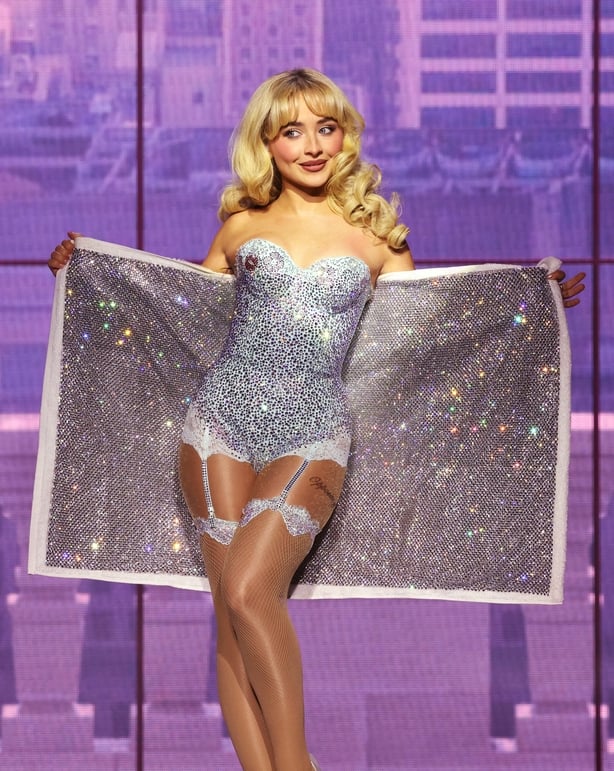
What is a corset, and what isn't?
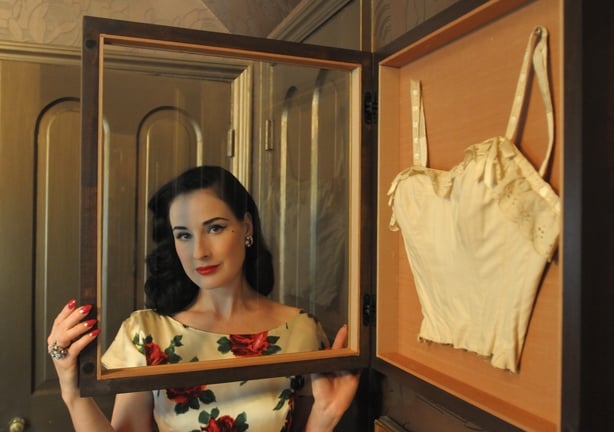
Often mistaken for a corset, early examples of the garment were ‘stays,’ a solid piece of underwear. It was intended to shape the torso, with origins lying in the boned bodices of the 17th century. The waist would look slender against a large volume of skirts, creating a long, conical shape to the body.
Described as ‘full boned,’ the thickness of the bones dictated where they were placed in the stays, their position then creating a silhouette or limiting certain movement. Reeds were a cheaper alternative to what was used as ‘boning’ – with actual bones not even falling into that category. The 'bones' were made of baleen, which is a horn-like substance that comes from a whale's mouth.
Though the role of the stay-maker was a predominantly male-dominated field, women (and historically in some cases men and children, the latter of which would wear lightly-boned stays with boys ceasing to wear them by the age of eight and girls continuing to do so throughout their lives) and their varying silhouettes saw stays being customised and hand-made.
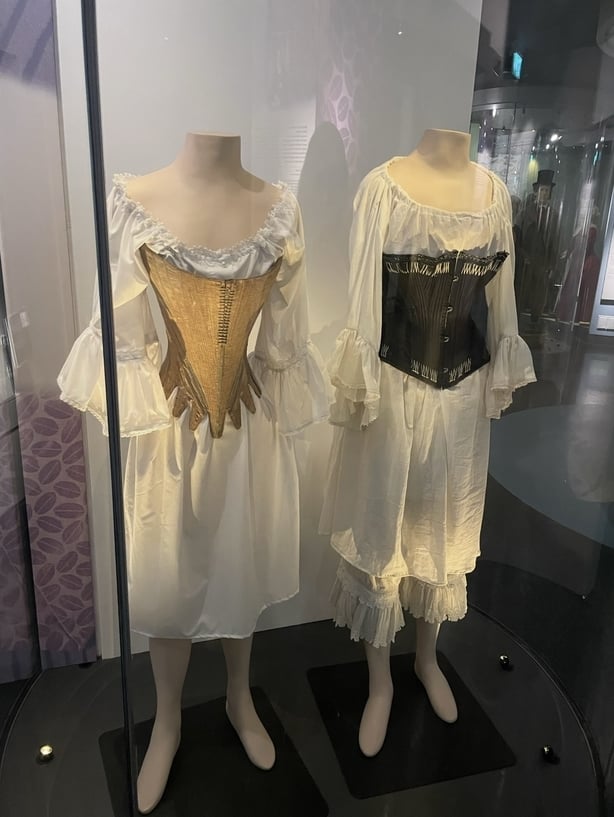
There were over 20 stay-makers working in Dublin city in 1783, two of whom were next door to each other at 36 and 37 Grafton Street.
Every piece of reed or ‘whalebone’ was placed and stitched in intentionally, creating either roundness in the front or straight pieces along the back, depending on a customer’s requirements. The 18th century stay was made in a variety of waist sizes (not as narrow as we may think) and with adjustable straps on the shoulders for comfort.
Fully boned stays did become less common towards the end of the 1700s, and with it, a silhouette that begins to angle forward. Stays got shorter and softer, and as the Regency period approached, the first decades of the 19th century saw more emphasis on the bust.
During this period, we also got the term 'corset', though the word ‘stay’ continued to be used alongside it, eventually being phased out in the 19th century.
What were corsets originally for?
Bodices, stays, and corsets were underwear, supportive garments meant to be worn comfortably beneath other layers of clothing. Stays created a bust support by creating lines for fabric to lay over and create a desired silhouette through bone placement.
The number of actresses complaining about how uncomfortable corsets are while playing historical figures suggests that they are not wearing them correctly!
So, where has such a negative connotation come from, and given this long history of the garment, why are so many corsets badly made nowadays?
The extreme versions of corsets and elements of corsetry may be to blame for that.
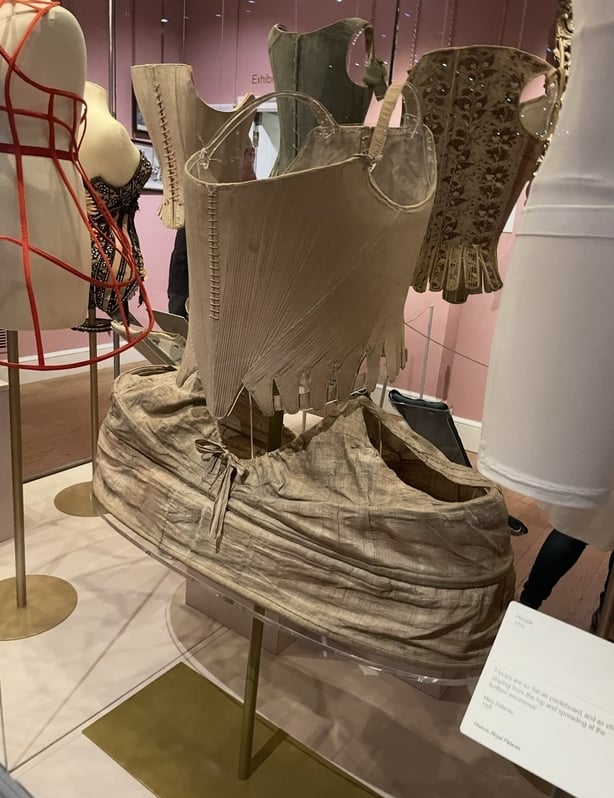
Comfy corsets?
Corsets were stiffened once again as the 19th century progressed, with busks (made of metal or wood) enduring in every iteration of the corset. Put down the front of an undergarment, it was a removable flat-length stay piece that created a straight front angle, to make up for a lack of boning.
From the 1810s to the 1830s, the waistlines on dresses lowered and once again the waist was emphasised, and the hour-glass figure was exaggerated. This would cinch the waist and arch the back slightly.
To create this highly desired ‘S-shape,’ corsetry had to become more constricting, affecting its reputation and still causing debate among historians and physicians today.
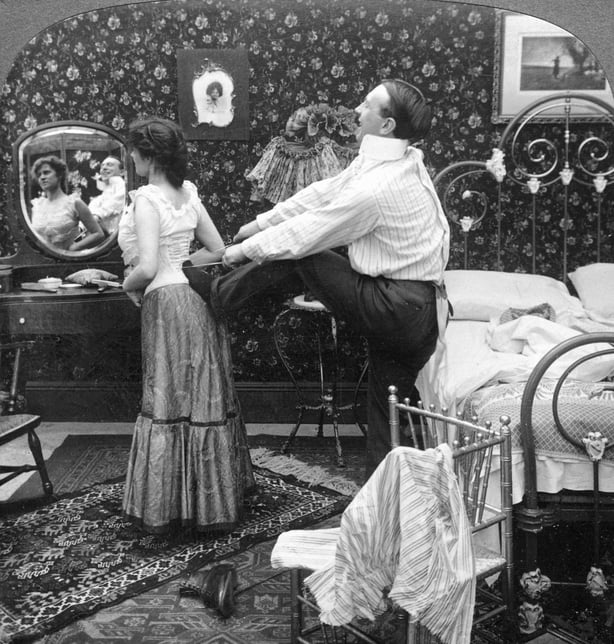
By the 1850s, corsetry changed dramatically, thanks to a front-opening busk, meaning they could be put on without assistance. It was around this time that they became capable of being tight-laced. This was separate to corsetry, but modern and contemporary interpretations of this part of dress have somewhat overlapped, shaping a narrative around the corsets that they were an ‘oppressive’ garment.
To tight-lace, or not to tight-lace
Tight-lacing was very much an optional trend that arose from more durable corsets created in the 1840s-1850s. The Great Industrial Exhibition in Dublin boasted the display of French corsets, emphasising the bust and the Irish Examiner in 1874 noted how you could purchase corsets to suit any figure made from elastic, a boneless option for those who wanted a more breathable alternative.
By the 1910s, what we now consider the modern-day bra had been invented, attributed to one Mary Phelps Jacob in 1914. Though historically, corsetry is itself the wearing of a garment that provides support to the bust.
New innovations in corset design contributed greatly to our shifting desires when it comes to aesthetics.
Metal eyelets and the corsets themselves, thanks to the Industrial Revolution, were by the mid-19th century mass-produced and no longer solely reliant on hand-stitching. The garment became more durable, tougher, and so the silhouettes became more exaggerated, extreme accentuations driven by industrial triumphs.
However, modern negative associations with corsetry and its effects on the body can be traced back to this time.
The 'fainting couches' that are often linked to the idea of the torture of wearing corsets are often just Victorian day beds that have been mislabelled, and the idea of ribs being surgically removed is also very much a modern phenomenon.
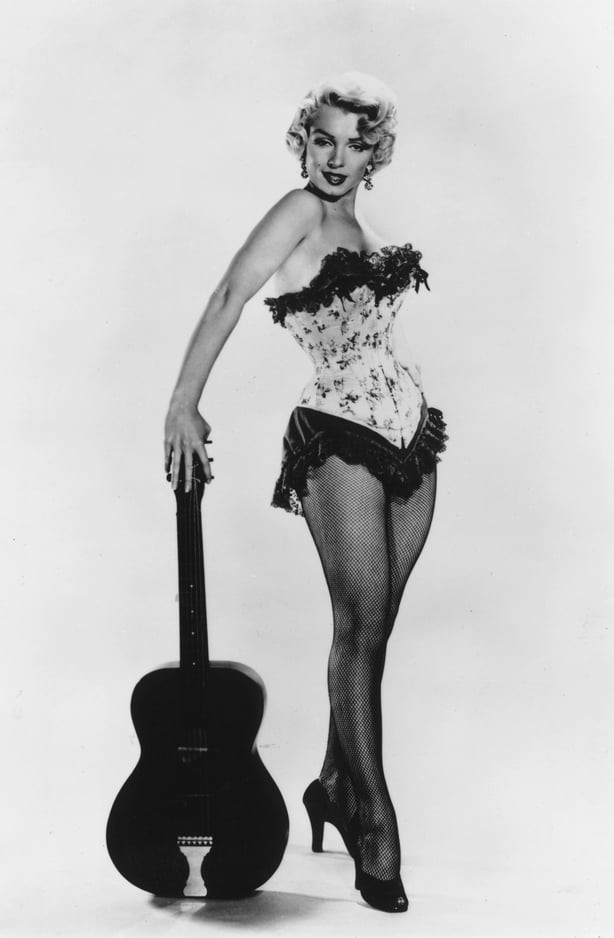
Though it is not possible to state that there were absolutely zero ill-health effects from corsetry practices, there is a lot of myth to debunk. When it comes to strain on the body, tight-lacing is the main culprit, creating an ‘unnatural waist’ by fastening the corset too tightly, thus not carrying out proper corsetry.
As the Dress Reform Movement developed through the 1890s, the corset became a target for those who wanted to liberate women, subsequently aiding in corsetry’s myth-building as the requirement of wearing a corset had eased.
Throughout the 20th century until the 1960s, corsetry remained a part of Irish advertising. Twilfit, a world-famous corset brand manufactured by Leethems, was known for using spiral steel in corsetry boning to allow the wearer to bend in every direction.
They were an underwear company from Portsmouth, but with a branch based in Dublin in 1926 (if anyone recalls Twilfit House that once stood on the junction of Jervis St and Abbey St) and a reflection of Irish-made corsets ‘packed in Irish boxes.’
It boasted elastic fittings, a strong feature of corsetry across the following decades. But to create a far straighter look rather than an hourglass, some corsets still had to have boning.
The great shortage of metal was felt in the 1940s due to World War II, so corsetry started to fade, becoming almost obsolete by the end of the 60s. Until it was flipped from underwear to outerwear…
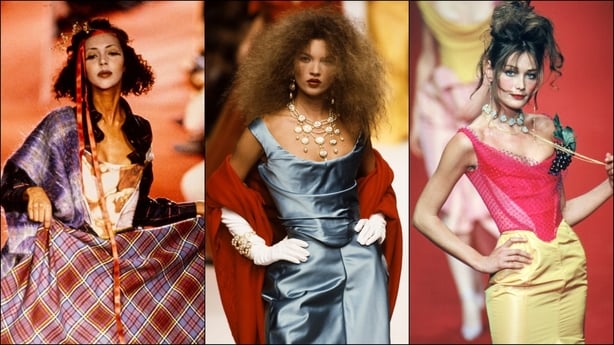
Cue 1987 and Vivienne Westwood unveiling an 18th-century-inspired corset decisively styled as outerwear and named ‘Stature of Liberty,’ ushering a myriad of designers to follow and push the limits of the corset as a fashion staple.
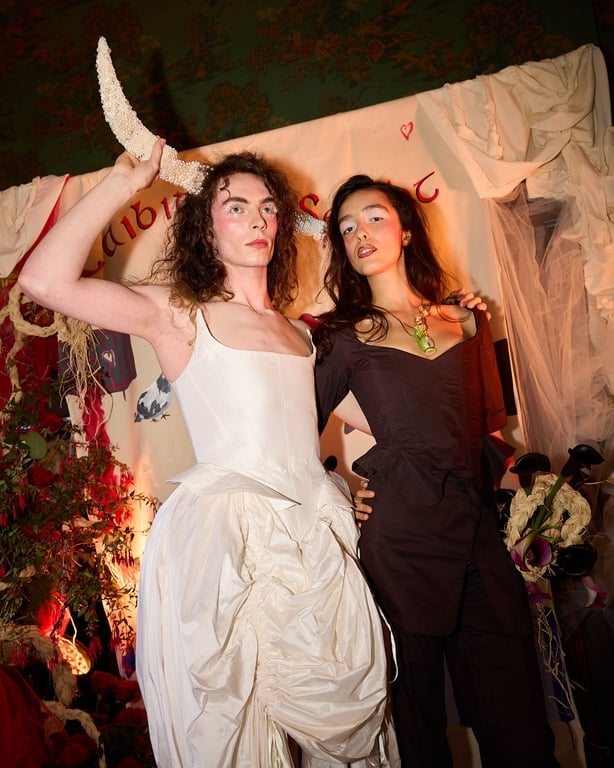
Among Irish designers today, such as Ríon Hannora, Mary O’ Sullivan, Oran Aurelio and The Zerowaster, Irish fabric and iconography adorn their interpretations of the historic garment.
But the stay and later the corset have a much longer history of fitting the wearer than they have of the wearer fitting them…
The views expressed here are those of the author and do not represent or reflect the views of RTÉ.
