


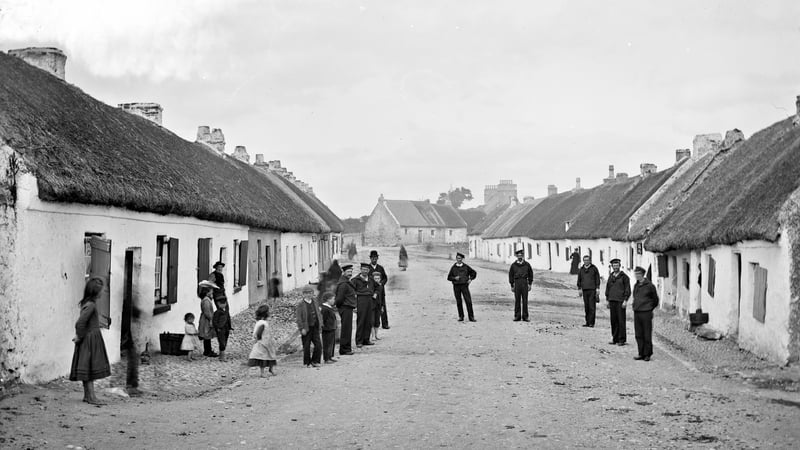


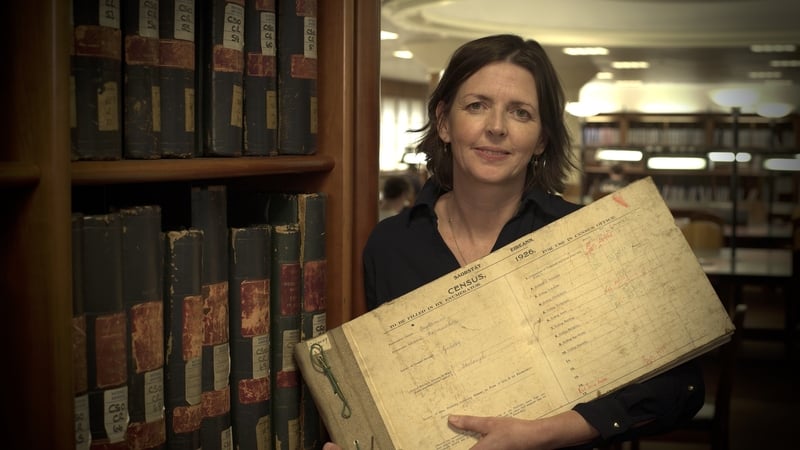
Broadcaster Gormfhlaith Ní Thuairisg invited us to her home place in Connemara, searching the census for traces of her grandparents' generation in the Gaeltacht.
The records reveal crowded households, ill-health and death, families sustained by farming and migration, and communities already shaped by increasing numbers facing emigration overseas.
But the records also show the resilience of the Irish-speaking families who remained rooted to the land and just how important it was for them to declare their native language on the census form.
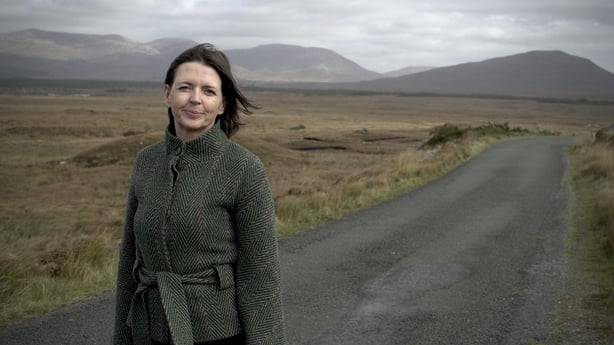
Using the 1926 census - and with a little reflection from her friend, the historian Gearóid Ó Tuathaigh - Gormfhlaith reflects on how life in Connemara has changed over the course of the last century. She finds a way of life that has endured and reveals the emotional impact that tracing her family roots back to the 1926 census had on her:
"Bhi mé drogallach faoi tabhairt faoin gclár Come to Your Census. Bhain sé seo le ábhar nach gcuirim i lár an phobail go hiondúil - scéal agus stair mo theaghlach féin. Is scéal é a bhaineann le go leor daoine eile - an iliomad gaolta atá agam, sa mbaile agus thar lear. Ar chóir domsa a bheith ag cartadh sa stair a bhain leosan chomh maith céanna?
Ach ba é an deis a bhí ann scéal Gaeltachta a chur i láthair mar chuid den scéal náisiúnta a mheall mé.
Cé gur minic a phléitear le cás na Gaeltachta taobh istigh de mheáin na Gaeilge, ní minic a théann an cómhrá amach as an gciorcal dúnta sin.
Agus cé gur minic a déantar plé ar scéal na Gaeilge sna meáin Bhéarla, ní iondúil gurb é glór na Gaeltachta, glór na ndaoine a bhfuil an Ghaeilge ag rith thrína gcuislí - a bhíonn le cloisteáil.
Mar sin, le cúnamh ó fhoireann léiriúcháin den scoth, d'fhiosraigh muid scéal mo mhuintir agus mo bhaile.
Ceard a d’fhoghlaim mé ?
Fuair mé tuiscint ar chomh daingean agus atá nascanna gaoil agus dúchais.
Cé gur scéal é seo a théann siar céad bliain, bhí iontas orm faoi chomh mór agus a chuaigh sé i bhfeidhm orm, nuair a chonaic mé foirm mo sheanathair, líonta amach go cúramach agus go néata i nglan-ghaeilge.
Istigh sa gCartlann Náisiúnta, bhuail maidhm mothúcháin mé agus mé ag féachaint ar thaifid mo mhuintire, mo chomharsana, mo bhaile. Tháinig sé seo go hiomlán aniar aduaidh orm.
Ag féachaint ar an bhfoirm daonáirimh, d’airigh mé go raibh léargas osnádúrtha agam ar na mothúcháin ar fad a bhain leis an lánúin óg seo - mo dhaideo, a bhean agus a gcuid gasúir bheaga - an grá, an briseadh croí, an fulaingt, an dóchas. Bhí mé mar a bheadh bean feasa. Bhí eolas agamsa, céad bliain dar gcionn, ar na rudaí nach mba léir dóibhsean fós i 1926 nuair a bhí siad ag breacadh síos an taifid seo - an bás a thiocfadh, na gasúir a d’fhásfadh suas agus a d’fhágfadh an tír - agus na cosáin dhifriúla a bheadh ag a sliocht sna blianta ina dhiadh sin, thar sáile agus sa mbaile.
Céard eile?
Baineadh siar asam nuair a thug mé faoi deara chomh haineolach agus a bhí mé féin faoin dream a chuaigh romham. Agus mé ag fiosrú scéal na clainne, bhi iontas- agus beagán náire orm - faoin laghad eolais a bhi agamsa agus faoin méid eolais a bhí ag daoine i mo thimpeall, gaolta agus comharsana liom - faoi mo shinsir agus an saol mar a bhí san áit inár tógadh mé.
Bhí an oiread fuadair orm ag féachaint chun cinn i gcónaí nár bhac mé breathnú i mo dhiadh.
Sin í an deis a bheas ag pobal na tíre ar fad le foilsiú Daonáireamh 1926: tógadh muid ar fad nóiméad le feachaint siar. Tá go leor le foghlaim."
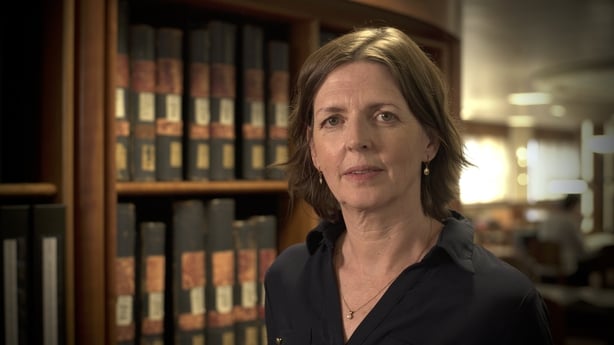
"I was initially apprehensive about participating in the Come to Your Census programme. I would generally be hesitant about putting the story and history of my own family in the public eye. It’s not just my story – it’s also the history of my many relatives, both at home and abroad. Was this my story to tell?
But it was a rare opportunity to present the Gaeltacht as an integral part of the national story.
While the Gaeltacht is discussed in depth within the Irish language media, the conversation doesn’t often go beyond that closed circuit.
And although issues pertaining to the Irish language are often discussed in the English language media, its spokespeople are generally not of the Gaeltacht.
So that was it. Decision taken. With the help of an excellent production team, we explored the story of my family and my community.
What did I get from the process?
A new understanding of the strength of the bonds of family and heritage, even when loosened by history.
Although this is a story that goes back a century, I was taken aback by how strongly I was affected, when I saw my grandfather’s census form, neatly and carefully filled out in Irish.
Inside the National Archives, I was uncharacteristically overcome by a wave of emotion while looking at the records of my family, my neighbours, my community. It was a strange experience.
Looking at the census form, I felt as if I had been granted some surreal insight into the heart of this young family - my grandfather, his wife and their small children - the love, the heartbreak, the suffering, the hope. In that room, a century later, I knew all these things that were not yet clear to them in 1926 when this record was created - the death that would come shortly to their door, the children who would grow up and leave the country - and the different paths that their descendants would take in the years that followed, at home and overseas.
What else?
I came to realise how ignorant I was of the lives of those who had gone before me. I was surprised - and a little ashamed - at how little I knew and by comparison, what a wealth of information people around me, relatives and neighbours, had - about my family's history and the history of their community.
I was so busy looking forward that I never bothered to look behind me.
Maybe that's the opportunity the entire country will have with the publication of the 1926 Census: we can all take a moment to look back. There is so much to learn."
Episode One of Come to Your Census broadcasts on RTÉ One at 6.30pm on Sunday May 3rd 2026 and Episode Two broadcasts on Sunday May 10th 2026. at 6.30pm. Both episodes will also be available on RTÉ Player.
