


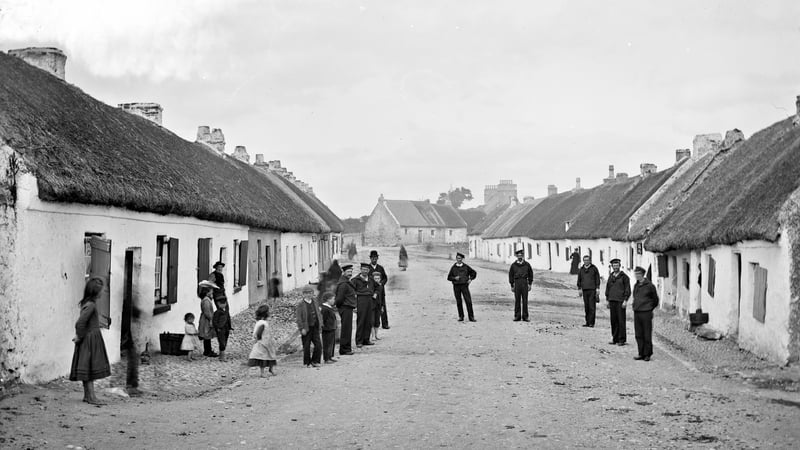


In April 1926, a few short years after the foundation of the Irish Free State, a census was taken to count and record people resident here.
On the night of 18 April 1926, enumerators travelled from city streets to remote townlands, knocking on doors and gathering the details that would create a portrait of a young nation trying to define itself.
Nearly three million people were recorded in that census, every household return capturing the fabric of everyday life: names and families, occupations and languages, faith, birthplace. The details that shaped communities across the country.
A century later, the release of the 1926 Census of Population into the public domain offers a rare and intimate glimpse into a pivotal moment in Ireland's history as the foundations of a new state were being laid and the lives of ordinary people quietly recorded in ink.
Preserved today in the care of the National Archives of Ireland, these records survive in 1,299 archival boxes containing more than 700,000 census returns, laced together into canvas volumes representing every enumeration area across the 26 counties.
To mark this historic release, the National Archives are supporting a wide range of cultural, educational and creative events throughout 2026 under the heading: The Story of Us.
Click here to link to the National Archives website for Census 1926
These include major exhibitions in Dublin Castle, the British Academy in London and Boston College Massachusetts, followed by a touring exhibition that will bring the census to communities across Ireland.
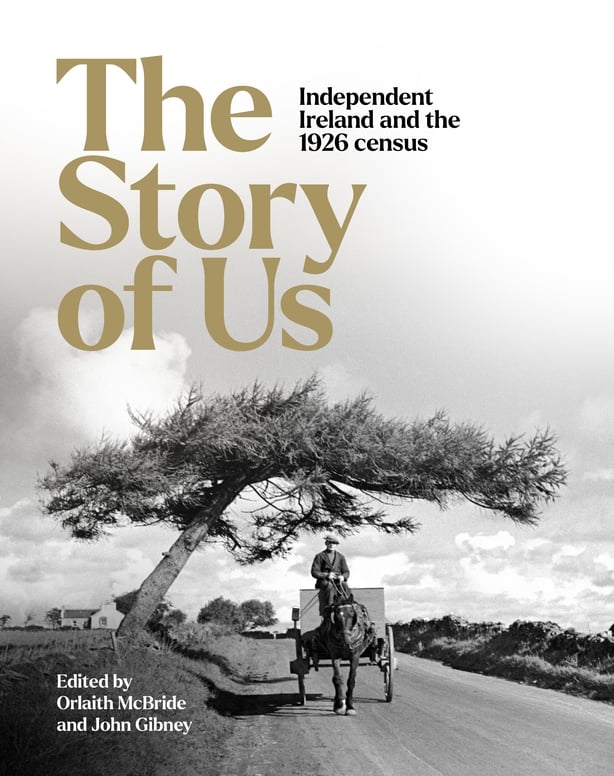
The census will also be brought to life through an ANU theatrical production and the release of a book The Story of Us: Independent Ireland and the 1926 Census.
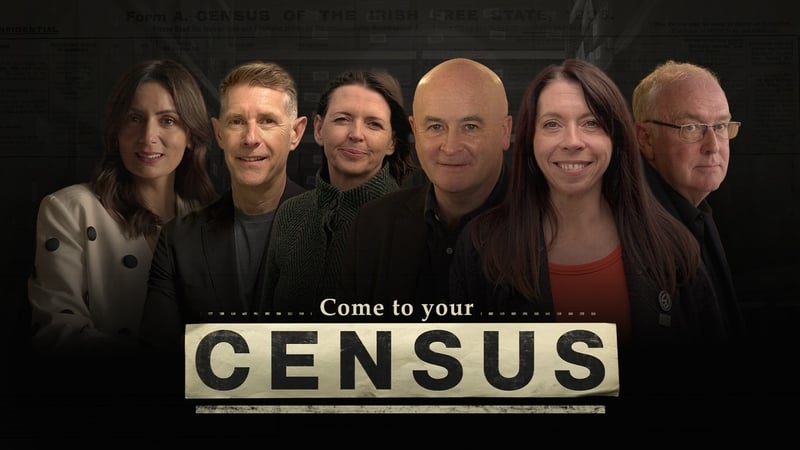
The National Archives has also partnered with RTÉ to produce a two-part landmark documentary series, Come to your Census and an accompanying six-part podcast series.
THE DOCUMENTARY SERIES
On the night of 18 April 1926, enumerators travelled the length and breadth of Ireland with census forms in hand, calling to doorways in cities, villages and remote townlands to record the lives of those people who lived there.
Names were written down, occupations noted, families counted, and languages recorded. In printed rows, a portrait of a newly independent country was captured: an Ireland still emerging from revolution and civil war and now beginning to reshape itself.
A hundred years later, with the release of the 1926 Census of Population, those lives that were once captured in handwriting on official forms come to life as part of a two-part landmark documentary series Come to Your Census.
Guided by historians and archivists from the National Archives of Ireland, six well-known Irish public figures follow the census trail back to places of personal or historical significance, uncovering the lives of some of those whose details were captured on a night in April 1926.
What emerges is a portrait of a country in transition: urban neighbourhoods filled with industry and immigration, rural communities shaped by resilience and emigration, and families navigating the uncertain early years of the Irish Free State.
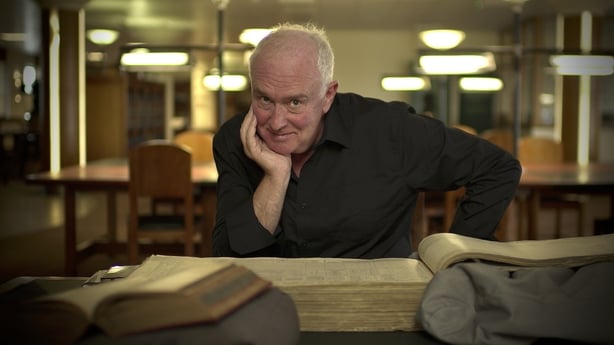
In Dublin’s Liberties, author Joseph O’Connor returns to Francis Street, where both sides of his family once lived, to re-imagine the life of a neighbourhood that was among the most vibrant and diverse in the city. The 1926 census reveals a world of factory workers and shopkeepers, Irish families living alongside Jewish pharmacists and Italian immigrants that had arrived in search of opportunity in a new state.
In Cork, actor Eileen Walsh walks the streets around Quaker Road where her grandfather once lived, uncovering the lives of neighbours who shared those houses in the years after the Civil War. Eileen discovers family names that are still recognisable as well as some unexpected entries for homes that she thought she knew well.
Streets away from Quaker Road, trade unionist Mick Lynch discovers a striking coincidence in the census: two boys named Jack Lynch, both growing up in Cork but destined for very different futures. One was his father, raised among the working-class lanes in the city. The other, raised similarly, would become a future Taoiseach.
In the west of Ireland, broadcaster Gormfhlaith Ní Thuairisg turns to the census records of her native Connemara to search for her grandparents’ generation. The returns reveal over-crowded households, families living from fishing and farming, and communities already shaped by the scourge of emigration. But the records also show a resilience among Irish-speaking communities rooted to place and language despite the many forces pulling its people away.
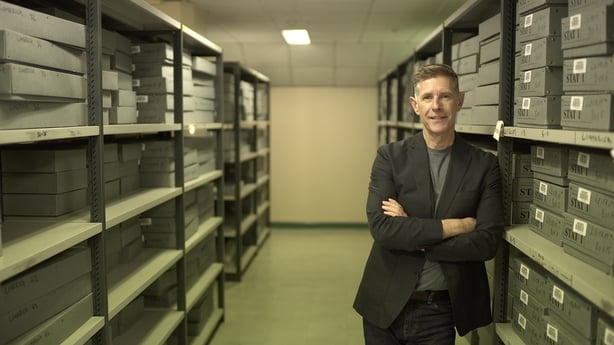
Architect Dermot Bannon travels to Cappoquin in County Waterford, where his father’s family once lived. He uses the census records to explore the quieter stories of ordinary Irish households, of how families were structured, how work was organised, and how institutions such as the local industrial school imposed on the rhythms of everyday life.
In Crossmolina, County Mayo, broadcaster Louise Duffy traces the lives of local women recorded in the census. Widows running shops and boarding houses, young women working as teachers or servants, and families emotionally sustained by the letters sent home from sons and daughters who had already left Ireland for England and America.
Taken together, these journeys reveal the census not simply as a record of numbers, but as a vast archive of human stories.
Episode One of Come to Your Census broadcasts on RTÉ One at 6.30pm on Sunday May 3rd 2026 and Episode Two broadcasts on Sunday May 10th 2026. at 6.30pm. Both episodes will also be available on RTÉ Player.
