


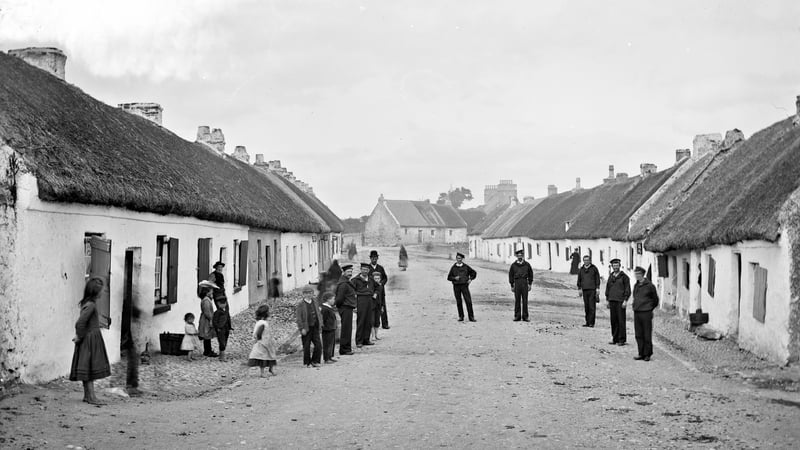



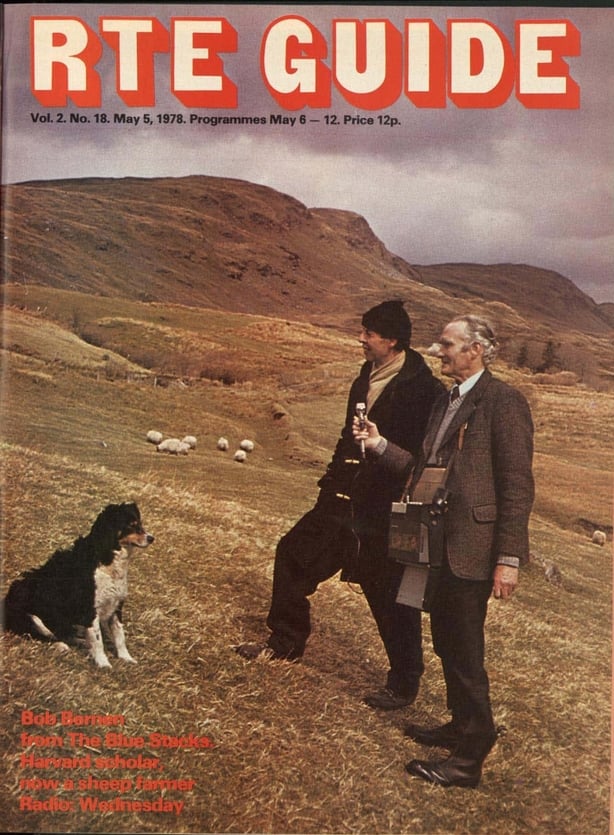
Every week we take a look in the RTÉ Guide archives to check out the stories from years gone by. In the middle of May 1978, the cover story was devoted to Bob Bernen from the Blue Stacks, a radio documentary by Proinsias O Conluain about a Harvard academic who had moved to a remote part of Donegal to become a farmer. You can listen to the documentary here.
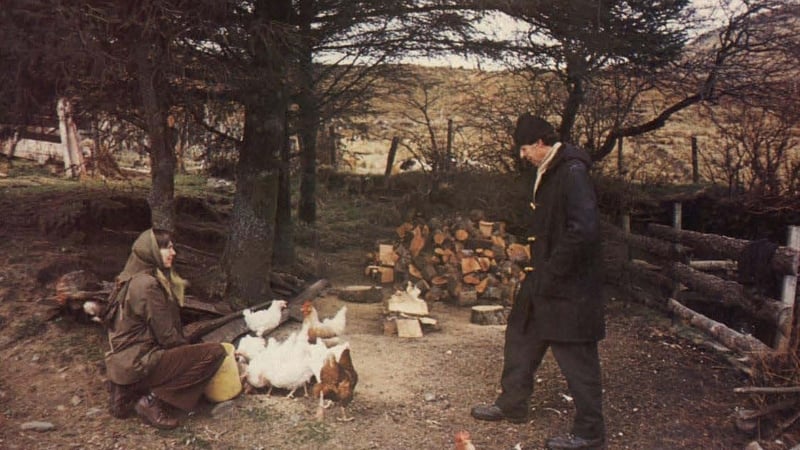
John Walsh's article painted a vivid picture of the couple's new life. '"They referred to us as the mad Yanks", said Bob Bernen, not without pleasure. "Mad?" says Amby Meehan, whose taxi provides for the Blue Stacks what Bob likes to call the Amby Meehan Transportation System. "Mad? They had to be!" The mad thing Bob and Satia Bernen did eight years ago was to leave a comfortable academic life in their native America to farm sheep in such a remote part of Donegal that "I was afraid when we went there that we would roll off it".'
Walsh clearly found it difficult to discover why exactly Bernen had made the move. '"I suppose," he muses with characteristic understatement, "people didn't understand what we were doing, perhaps still don't". That's not too surprising.Though he'll talk until the fire goes out about the habits of sheep or cows, and listen until morning to what a neighbour has to say about anything at all, it's next to impossible to get him to say anything about the interior goings-on that brought a classical scholar (and co-author, with his wife, of a book on religion and myth in European painting) to Donegal. Bob Bernen from the Blue Stacks: that's the title of Proinsias O Conluain's radio documentary, and it's as interesting for what his subject doesn't say as for what he does.'
Walsh did get Bernen to discuss his experiences as a farmer. '"The hard thing", says Bob, "was not making the move from the city to the country. We wanted to get away from the city. The hard thing was having to start with a derelict farm on the side of a hill in a wet climate, and having to rebuild from scratch". In the process "we almost killed ourselves."'
'He had the books to help him,' wrote Walsh. 'What he learned was that a neighbour's advice was more help than a dozen books. He bought a cow. The books said a cow sleeps, grazes, chews the cud so many hours a day unvaryingly. He wasted a great deal of time organising that cow's life for her before a neighbour told him it was all rubbish, and the cow proved him right. He learned that animals were "not as we had thought, unreasoning brute beasts, that they were governed by a kind of reasoning power of their own, and that whatever they did was done for a reason that they knew even if we didn't".'
The Good Life?
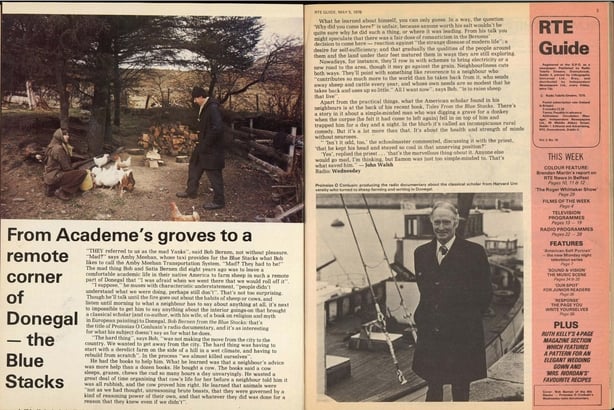
Based on Walsh's article, the Bernens' story feels a bit like a more dramatic version of the popular 1970s sitcom The Good Life, about a middle class couple who decide to become self-sufficient (though in their case, they're doing it in the suburbs rather than a remote farm). 'What he learned about himself, you can only guess,' writes Walsh. 'ln a way. the question 'Why did you come here?' is unfair. Because anyone worth his salt wouldn't be quite sure why he did such a thing, or where it was leading.
From his talk you might speculate that there was a fair dose of romanticism in the Bernens' decision to come here - reaction against "the strange disease of modern life"; a desire for self-sufficiency; and that gradually the qualities of the people around them and the land under their feet matured them in ways they are still exploring. Nowadays, for instance, they'll row in with schemes to bring electricity or a new road to the area, though it may go against the grain. Neighbourliness cuts both ways. They'll point with something like reverence to a neighbour who "contributes so much more to the world than he takes back from it, who sends away sheep and cattle every year, and whose own needs are so modest that hetakes back and uses up so little." All I want now". says Bob, "is to raise sheep that live".'
The Bernens returned to the US in 1984 so Bob could receive treatment for Parkinson's Disease. He died in 2002; Satia died in 2006.
