


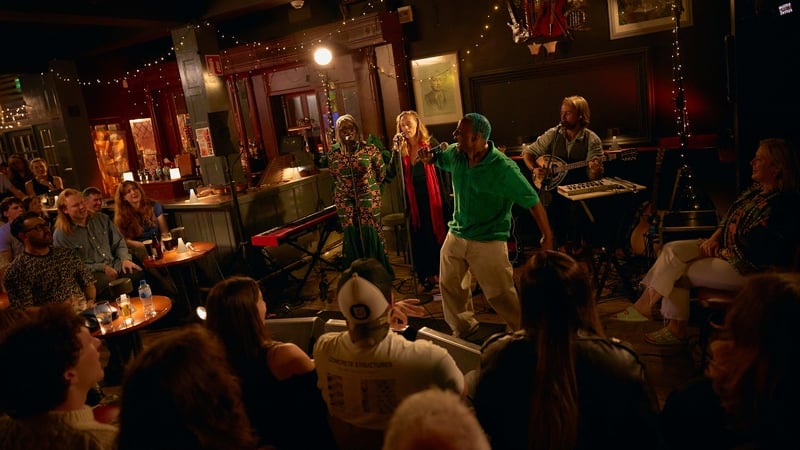
Director, Feilimí O' Connor writes about Cara sa Cheol, a series about exploring an evolving Ireland through music, tradition and language.
Cara sa Cheol started as an idea about exploration and welcoming.
Ireland is evolving. There are so many different cultures in the country at the moment, and we wanted to explore what is happening musically on the ground — across these communities — and see if there was a way of connecting that with the Irish-language music scene.
Another key idea was to bring people into the Irish-language world. The Irish language is at the heart of our culture, but it can sometimes feel difficult to access for someone new to the country. We wanted to open that up — to experience the language through different lenses, through music and collaboration.
The title Cara sa Cheol comes from the Irish phrase mo chara sa cheol — my musical companion — which reflects the spirit of collaboration at the heart of the series.
What we discovered very quickly was just how many different music scenes exist in Ireland — and how much they are already intersecting. Soul, rap, jazz, traditional music, classical and influences from Africa, the Middle East and Eastern Europe are all present, and often already blending in interesting ways.
We wanted the series to be more than a music performance series — capturing the time artists spent in each other's communities was a key part of it.
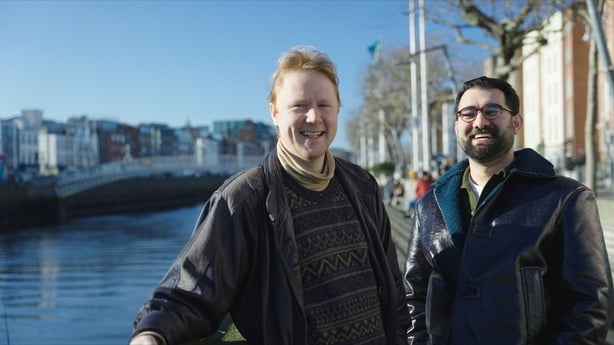
The team at Setanta Films, the production company, has a strong background in music and culture. I directed and executive produced the series, with Aisling Ní Fhlaithearta as series producer, and Doireann Ní Ghlacáin was brought on board as music producer. Aisling recently produced documentaries on Christy Moore and David Keenan (Focail ar Chabhas), while Doireann, as a musician, podcaster (How to Gael) and broadcaster, has a strong understanding of the current music scene in Ireland. We had previously worked together on projects such as Seán Ó Riada – Mo Sheanathair, Ceolaireacht, and the Say a Song Project.
From there, we began the research process — reaching out to artists, having conversations, and gradually building the pairings that would form the heart of the series.
The next step was to bring the project to a broadcaster. TG4, through Proinsias Ní Ghráinne, immediately understood the potential of the idea, particularly in terms of music and cultural exchange, and the project moved forward from there with the support of Coimisiún na Meán.
One of the most interesting aspects of the series — and one of the most uncertain — was the moment when two artists met for the first time. There’s always a level of trepidation in putting people together and asking them to collaborate, especially when they come from very different musical and cultural backgrounds. Even with preparation and conversations beforehand, it’s never the same as being in the room together. The first days of filming were always the most exciting — and the most unpredictable.
One of the earliest shoots took place in Ballyduff, Co. Waterford, on the family farm of accordion player Séamas Hyland. He was meeting Iranian composer and musician Shahab Coohe, who is trained in Persian classical music. While we had spoken to both of them in advance, there was still a sense of not knowing how it would unfold. Very quickly, though, they found common ground at the kitchen table — first through the music of Turlough O’Carolan. Shahab plays the santoor, a traditional Persian instrument similar to the hammered dulcimer, and there was something striking in how naturally Irish harp music fitted that instrument. It was one of those moments where the idea of the series — connection through music — became very real.
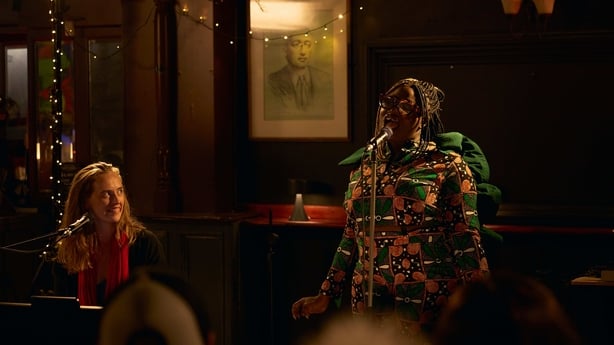
Another standout moment came when Toshín, a soul singer who moved to Dundalk from Nigeria at a young age, visited Cáit Ní Riain’s family pub, Jim of the Mills, in Tipperary. Despite living in Ireland for over twenty years, it was her first time experiencing that kind of rural landscape and musical tradition up close. Sitting together at the piano in Cáit’s kitchen, they began writing a song called Home, exploring Toshín’s experience of identity — feeling at times too Irish to be Nigerian, and too Nigerian to be Irish. It was a very honest and personal moment, and one that captured the heart of the series.
There were many moments like this throughout the series. In Donegal, Palestinian oud player Sarraj Alsersawi, on his way to Gweedore to collaborate with singer Caitríona Ní Ghribín, stopped to take in the mountainous landscape around Dún Lúiche / Poison Glen, reflecting on the contrast with his own experience growing up with restricted movement. One of the central pairings in the series is between Zimbabwean-Irish rapper Godknows and electro-Celtic musician Caoimhín Mac Uaid, whose collaboration developed into a genuine friendship over the course of filming, with plans to record more music together.
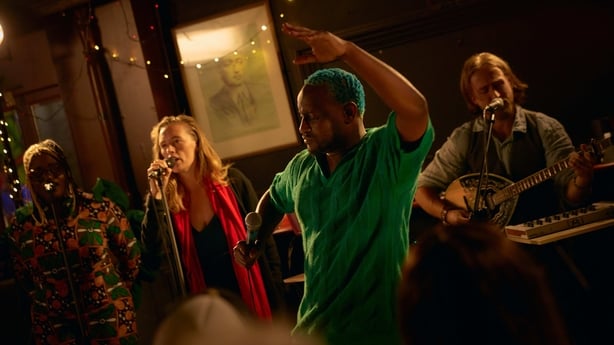
All of these journeys led towards live performance, where each pair presented their new compositions at a concert in The Cobblestone in Dublin. These performances brought together diverse audiences and created a shared space for the music to be heard. There was a real sense of emotion on those nights.
Virtuoso musicians Aoife Ní Bhriain and Ukrainian jazz singer Olesya Zdorovetska electrified the audience with a high-energy performance, following deeply moving visits to a Ukrainian community centre and to the Willie Clancy Summer School in West Clare. Elsewhere, Ciara Ní É’s spoken word poetry blended seamlessly with Dara Abdurahman’s smooth R&B-influenced playing, bringing another dimension to the series’ collaborations.
We launched the series in the Button Factory to a full room of family members, friends, dignitaries, NGO representatives, industry guests, journalists and musicians. The response to the series has been very positive. At a time when there can often be tension and division in public discourse, the project felt like a way of creating connection — showing the value of collaboration, and the richness that different cultures bring to Irish life.
Ultimately, Cara sa Cheol is about creating space — for people to meet, to listen, and to make something together.
Cara sa Cheol begins on TG4 on April 26th at 22:30, with repeats on Fridays at 19:30.
Cara sa Cheol: Cultúir éagsúla a thabhairt le chéile trí cheol
Thosaigh Cara sa Cheol mar smaointeadh faoi fhiosrú agus faoi fháilte a chur roimh dhaoine.
Tá Éire ag athrú. Tá an oiread sin cultúr éagsúil sa tír anois, agus bhí muid ag iarraidh féachaint caide atá ag tarlú ó thaobh an cheoil de ar an talamh — sna pobail éagsúla seo — agus an raibh bealach ann é sin a cheangal leis an saol ceoil trí Ghaeilge.
Smaointeadh lárnach eile a bhí againn ná daoine a thabhairt isteach i saol na Gaeilge. Tá an teanga i gcroílár ár gcultúir, ach uaireanta bíonn sé deacair teacht isteach ann do dhaoine atá nua sa tír. Bhí muid ag iarraidh sin a oscailt — go bhféadfaí taithí a fháil ar an Ghaeilge ar bhealaí éagsúla, trí cheol, trí lionsa éágsúil agus trí chomhoibriú.
Tagann an teideal Cara sa Cheol ón nath 'mo chara sa cheol’ — compánach ceoil — agus sin go díreach atá i gcroílár na sraithe.
Thug muid faoi deara go luath go bhfuil go leor saol ceoil éagsúla in Éirinn, agus go bhfuil siad ag teacht le chéile níos mó ná mar a shílfeá. Tá soul, rap, snagcheol agus ceol traidisiúnta ann, chomh maith le tionchair ó Afrac, ón Mheánoirthear agus ó Oirthear na hEorpa — agus iad ag meascadh lena chéile ar bhealaí fíorshuimiúla.
Ní raibh muid ag iarraidh go mbeadh an tsraith dírithe ar taibhiú ceoil amháin — bhí sé tábhachtach dúinn go bhfeicfí an t-am a chaith na healaíontóirí i bpobail a chéile mar chuid lárnach den scéal.
Tá cúlra láidir ag foireann Setanta Films, an comhlacht léiriúcháin, i gcúrsaí ceoil agus cultúir. Bhí mise ag stiúradh agus mar léiritheoir feidhmiúcháin ar an tsraith, le hAisling Ní Fhlaithearta mar léiritheoir sraithe, agus tugadh Doireann Ní Ghlacáin isteach mar léiritheoir ceoil. Le gairid, léirigh Aisling cláir faisnéise faoi Christy Moore agus David Keenan (Focla ar Chanbhás), agus tá tuiscint láidir ag Doireann, mar cheoltóir, podchraoltóir (How to Gael) agus craoltóir, ar an saol ceoil in Éirinn faoi láthair. Bhí muid ag obair le chéile cheana ar thionscadail ar nós Seán Ó Riada – Mo Sheanathair, Ceolaireacht, agus an Say a Song Project.
As sin amach, thosaigh muid ar an taighde — ag dul i dteagmháil le ceoltóirí, ag caint leo, agus ag cur na beirteanna le chéile de réir a chéile.
Ba é an chéad chéim eile craoltóir a fháil ar bord. Thuig TG4, trí Phroinsias Ní Ghráinne, láithreach an fhéidearthacht a bhí sa smaoineamh, go háirithe ó thaobh an cheoil agus an mhalartaithe chultúrtha de, agus chuaigh an tionscadal ar aghaidh le tacaíocht ó Choimisiún na Meán.
Ceann de na rudaí ba shuimiúla — agus ba mhó a bhí neamhchinnte — ná an chéad uair a bhuail na healaíontóirí lena chéile. Fiú má bhí comhráite déanta roimh ré, ní hionann sin agus a bheith sa seomra céanna. Ba iad na chéad laethanta scannánaíochta na cinn ba shuimiúla.
Bhí ceann de na chéad laethanta i mBaile Uí Dhuibh i gContae Phort Láirge, ar fheirm an seinnteori bosca iomraiteach Shéamais Hyland. Bhí sé ag casadh le Shahab Coohe ón Iaráin, ceoltóir atá oilte i gceol clasaiceach na Peirse. Cé go raibh muid i dteagmháil leo roimhe sin, ní raibh a fhios againn cén chaoi a n-oibreodh sé. Ach gan mhoill, d’aimsigh siad talamh coitianta — ag an tábla cistine — trí cheol Thurlough Uí Chearbhalláin. Seineann Shahab an santoor, uirlis thraidisiúnta atá cosúil leis an dulcimer, agus bhí sé iontach cé chomh maith agus a d’oir ceol na cláirsí Gaelaí don uirlis sin.
Mhair eachtra eile inár gcuimhne nuair a chuaigh Toshín, amhránaí soul a tháinig go Dún Dealgan ón Nigéir agus í ina páiste, go teach tábhairne Cháit Ní Riain, Jim of the Mills, i dTiobraid Árann. Cé go raibh sí in Éirinn le breis agus fiche bliain, ba é seo an chéad uair aici áit chomh iargúlta sin agus traidisiún ceoil clainne a fheiceáil go pearsanta.
Agus iad ina suí ag an bpianó i gcistin Cháit, scríobh siad amhrán dar teideal Home, ag plé le féiniúlacht Toshín — an mothúchán go mbíonn sí idir dhá shaol uaireanta: "too black to be Irish and too Irish to be Nigerian."
Bhí go leor chuimhneachán mar seo ar fud na sraithe. I nDún na nGall, stop Sarraj Alsersawi, seinnteoir oud ó chathair Gaza, ar a bhealach go Gaoth Dobhair chun bualadh leis an amhránaí Caitríona Ní Ghribín, agus ghlac sé scaoiset ag Dún Lúiche / Gleann Nimhe chun féachaint ar an tírdhreach — rud a chuir i gcuimhne dó an difríocht idir an saoirse anseo agus a thaithí féin ag fás aníos, áit a bhfuil srianta ar ghluaiseacht mhuintir na Palaistíne.
I Luimneach agus níos faide i gcéin, d’fhorbair Godknows agus Caoimhín cairdeas láidir agus iad ag obair le chéile agus ag dul isteach i saol a chéile.
Tháinig deireadh leis na turais seo ar fad le taibhiú beo, áit ar chuir gach péire a gcuid ceoil nua i láthair i gCobblestone i mBaile Átha Cliath. Thug sé sin daoine ó chúlraí éagsúla le chéile agus chruthaigh sé spás comhroinnte don cheol. Bhí mothúchán láidir le brath sna hoícheanta sin i measc an lucht féachana.
Chuir Aoife Ní Bhriain agus Olesya Zdorovetska ón Úcráin beocht mhór sa lucht féachana lena léiriú fuinniúil, tar éis cuairteanna mothúchánacha ar phobal Úcránach agus ar Scoil Samhraidh Willie Clancy. Tháinig filíocht labhartha Chiara Ní É le chéile go smior le ceol Dara Abdurahman, ag cur gné eile leis an tsraith.
Seoladh an tsraith sa Button Factory os comhair slua mór — muintir na háite, cairde, daoine ón tionscal, iriseoirí agus ceoltóirí. Fuair muid aischothú iontach dearfach. Táimid ag maireachtáil i ré ina mbíonn deighilt agus teannas le brath go minic. Ach bhraith an tionscadal seo mar bhealach chun daoine a thabhairt le chéile — ag léiriú an luach a bhaineann le comhoibriú agus leis an éagsúlacht i saol na hÉireann.
Sa deireadh thiar thall, sin atá i Cara sa Cheol — spás a chruthú do dhaoine le bualadh lena chéile, éisteacht lena chéile, tuigbhéal a fháil ar a chéile, agus rud inteacht nua a chruthú le chéile.
Tosaíonn Cara sa Cheol ar TG4 ar an 26 Aibreán ag 22:30.
