


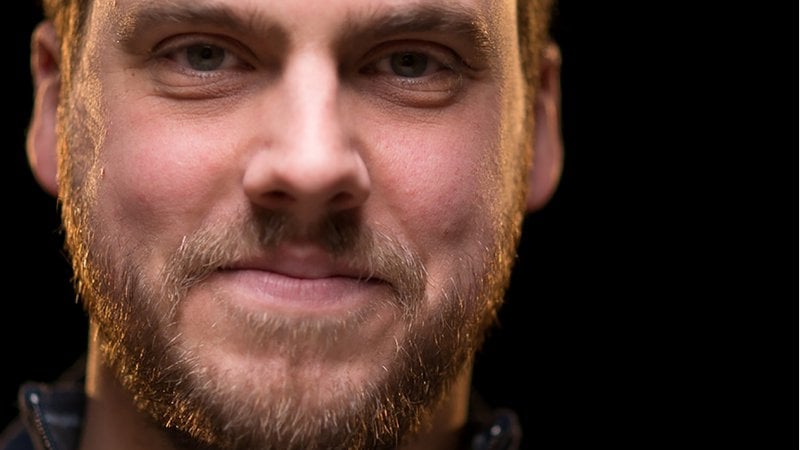
Director Jim Mickle’s fourth film, Cold in July, has just been released on DVD, Blu-Ray and On Demand. Paddy Kehoe spoke to Jim Mickle on the line to New York.
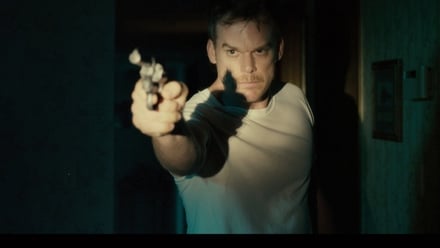
In Cold in July, Richard Dane (Michael C Hall of Dexter fame) is the father awoken in the middle of the night by his wife, who has heard a noise downstairs. Dane surprises the young, masked intruder who has broken in and shoots him dead. After the police have been and gone, and the body’s been taken away, he begins to suffer guilt. It was self-defence, the cops say, it won’t even go to court.
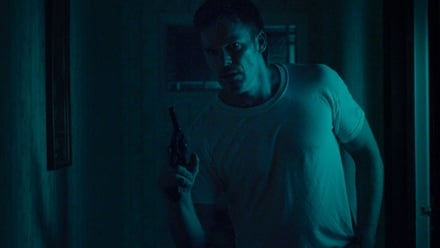
Thus, Dane - himself the father - has killed a young man who didn’t get a chance to rob, who displayed no weapon, and whose father Russel (Shepard) is out of prison on parole. The morning after the killing, the news has spread like wildfire. Dane is uneasy and his wife Ann feels the bad vibes when she drops their son off at school.
It looks like it’s going to be a small-town nightmare of social ostracisation and conflict, a tightly-coiled story involving an ordinary, decent family and a tragic shooting. Cold In July becomes a very different movie in fact, featuring crooked cops, and a picaresque chase after the makers of video nasties, with Don Johnson playing a rather colourful private investigator. It’s like the genesis of two different movies lurking within the same script.
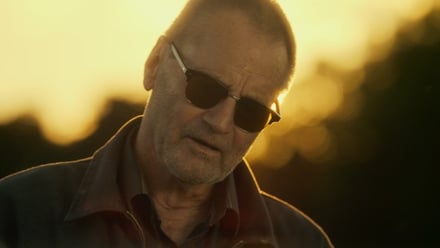
Sam Shepard as the disaffected, resentful Russel - ostensibly father of the dead house-breaker - says little. He just burns with an inner fury, was in Korea with Don Johnson’s Private Investigator character, and they have that war buddy thing between them.
Talking to Jim Mickle, I note that Shepard’s character resembles the Harry Dean Stanton role in Paris, Texas, and Jim absolutely concurs with the comparison. When he was writing the first draft of the script, he did not envisage Shepard (pictured below in the movie) “but he was the first person we sent it to, and that was 2007. “
Jim laughs wryly at the memory. “He’s got a lot of stuff going on, he gets a lot of material, and at that point when we’d sent it to him, we had only done our first movie. I think there wasn’t much interest around what we were doing."
“We waited about two months to hear back, we kept hearing, 'he’s got it, he’s on a fishing trip, he’s going to read it this weekend'. The next week, you'd check in and you wouldn’t hear anything, or ‘he’s probably going to read it this weekend.’
"In such cases, you have to move on and you never know if the person ever read it or ever really wanted to.”
To complicate matters, the original financiers could not 'buy' the role which would eventually be played by Shepard. “At the time, it was a really difficult thing because so many people kept saying, “I just do not get this guy.” And we kept saying: you will see it.”
There were to be another six years of massaging the script, getting it right, making pieces fit together. “Definitely circumstances changed after a few more movies, and bringing in Michael (C Hall) really raised the profile. We sent the script again to Sam, the film was up and running and this time he read it very quickly.” Shepard, it seems, quickly agreed to play the role this time around. Johnson (pictured below in Cold in July) was gameball too.
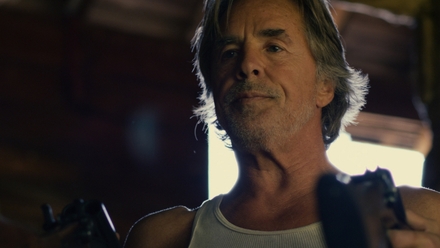
The film received plaudits in the UK press, where it was garlanded with generous four star rankings. Gratifying surely for the amiable director, I ask. “It is," he replies. “It’s not a film we set out to win the critics with. I think this was a little more for the fans.
Previous Mickle-directed films include Stake Land (2010) and We Are What We Are (2013). "Other stuff that we’ve made, our horror films, we’ve always tried to elevate them and give them an art house quality in order to have a more discriminating viewer buy into it. This one I think was the first one that we said, to hell with it, this isn’t one for the critics, this is going to be one for fans of eighties, sweaty pulpy thrillers. So it’s really amazing to see the response to it be so overwhelmingly positive.
“I’m a horror movie fan, first and foremost , I love ‘em, and that’s what really got me interested. I've always been a genre apologist because it’s always the genre that people pick on the most for quality, and always the one that people have the least expectations for. When a horror movie is done right, it’s the most intense, visceral, connective kind of story-telling there is.
“Unfortunately, there are so many bad examples out there. The ones we made I wanted to make sure that they were able to stand up in the class of whatever genre they went into, whether it was zombie movie or vampire movie.
"We wanted to make sure that people recognised we were actually doing a film about characters, we were actually paying attention to the themes and to bigger issues. We weren’t just putting a sexy girl on the cover to make a quick buck.”
He and actor/writer Nick Damici - who also has a role in Cold in July - wrote individual screenplays at first, although it was Damici who was ultimately responsible for the final version.
Mickle was a mere 40 pages into Joe R Lansdale’s novel, Cold in July (on which the movie is based) when he had finished his attempt at the full screenplay. You can see how that might happen - the film takes a wild turn after the first half hour, as outlined above.
“The beauty of what Joe (Lansdale) does is he uses that opening story as a jumping off point for a totally different movie," says Mickle. “It’s Cape Fear, really. I remember having the same response (reading Joe’s book ) by the time that first arc is coming to a close – that movie within a movie – I finally get a handle on what it was going to be – it’s going to be cat and mouse, Cape Fear, vengeance, eye for an eye. But then it starts to come to a close and you realise you are only a third of the way through the book. To me that was so exciting.”
Any further projects? “We are doing a TV show right now based on more of Joe Lansdale’s novels," says Jim. “Also, two other movies we are casting right now. One is a quiet, Hitchcockian thriller and one is grounded in science fiction.”
