


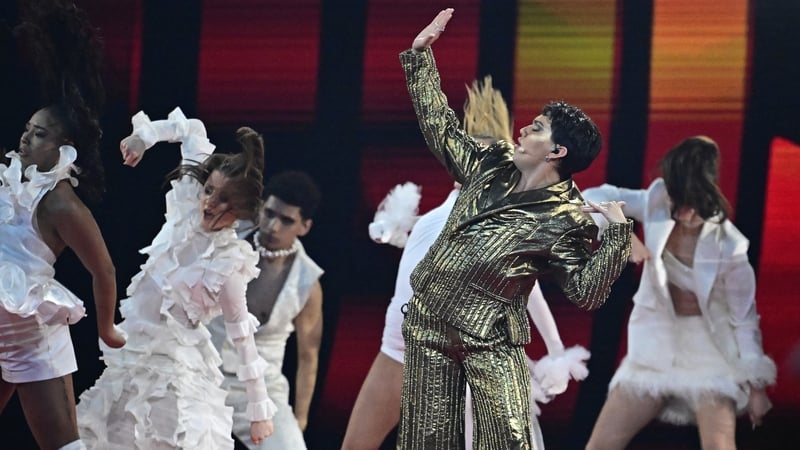
The 2026 Eurovision Song Contest Grand Final is continuing in Vienna, where a fiery Finnish duo and an acclaimed Australian star are among the favourites to win the glittering crown.
The 70th edition of the world's biggest live televised music event began at the Wiener Stadthalle just after 8pm Irish time, with 25 countries competing for the title.
The show opened with reigning Eurovision winner JJ returning to the stage for an opening act titled The Queen of the Night, before this year's finalists were introduced to the crowd.
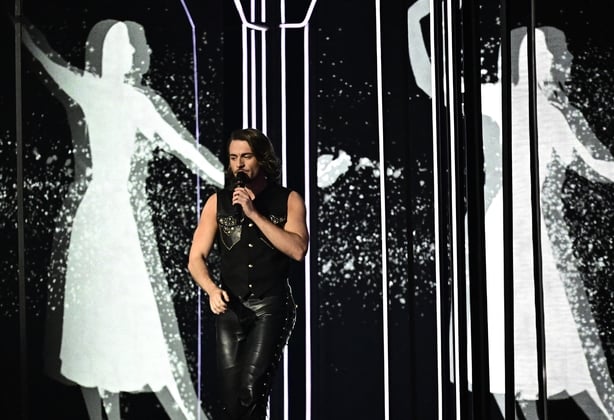
Denmark was the first competing country to perform, with Søren Torpegaard Lund opening the final with Før Vi Går Hjem.
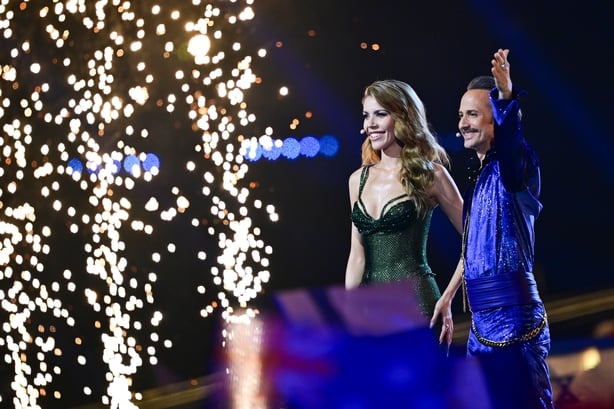
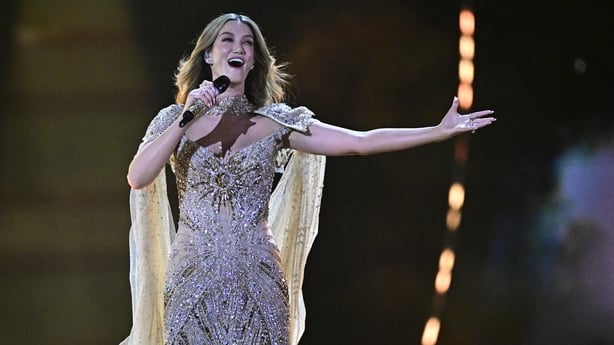
Germany, Israel, Belgium, Albania, Greece and Ukraine were next in the running order, before one of the night's main contenders, Australia's Delta Goodrem, took to the stage in eighth place with Eclipse .
Bulgaria's Dara, who has been gaining traction with her high-energy and highly choreographed Bangaranga, performed 12th, while the Finnish double-act of violinist Linda Lampenius and pop singer Pete Parkkonen took to the stage with Liekinheitin, or Flamethrower, in 17th place.
The United Kingdom's Look Mum No Computer, the stage name of Lincolnshire-born musician Sam Battle, performed Eins, Zwei, Drei in 14th place, while host country Austria closed the competing performances with COSMÓ's Tanzschein.
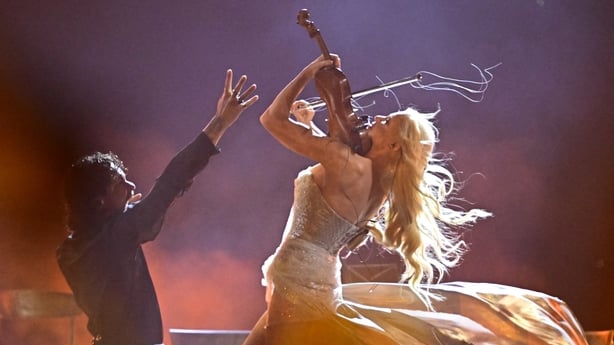
"It's going to come down to Finland and Australia," Fabien Randanne, a journalist at French news outlet 20 Minutes and a specialist on the contest, told AFP.
Israel's Noam Bettan is also an outside bet with Michelle, while 22-year-old Romanian singer Alexandra Căpitănescu’s heavy metal song Choke Me caused a minor furore in the Eurovision build-up over the oft-repeated lines "I want you to choke me."
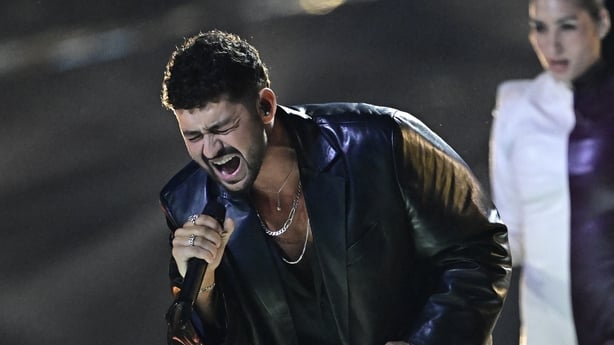
Bettan's performance appeared to pass without major disruption. As the 28-year-old sang in English, Hebrew and French, some chants and booing could be heard in the crowd, where Israeli flags and banners could also be seen.
It followed attempts to disrupt his performance during Tuesday's first semi-final, when four audience members were later removed from the venue, according to organisers.
Daniel Zizka, the act from Czechia, appeared to be plagued by technical difficulties during his performance of his song Crossroads.
He performed inside an elaborate hall of mirrors, but at one point the picture became distorted and seemed to freeze.
The interval act opened with a disco version of All Kinds of Everything as part of a Eurovision classics medley performed by former winners - and with Ireland's Dana namechecked by the hosts.
This year's contest is taking place amid one of the biggest political boycotts in Eurovision history.
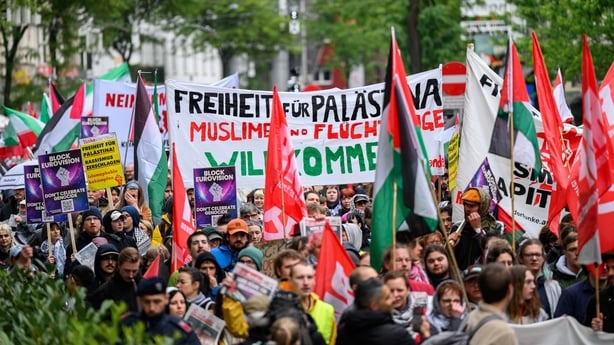
Ireland, Spain, the Netherlands, Iceland, and Slovenia have stayed away over Israel's participation, citing the war in Gaza, while in Vienna, hundreds of demonstrators marched past the Wiener Stadthalle concert venue ahead of the final.
Party time
Some 166 million viewers watched the contest on television last year when it was hosted in Basel, Switzerland.
More than 10,000 Eurovision fans in party mood are packing out Austria's biggest arena for the final.
"I'm here to see my favourite singer, my idol, my queen: Delta," said Jeremy, 45, a teacher from Britain, who was lining up with other fans wearing ponchos in the pouring rain outside the Stadthalle.
"The excitement inside of me is so beyond words that I'm here in the live grand final."
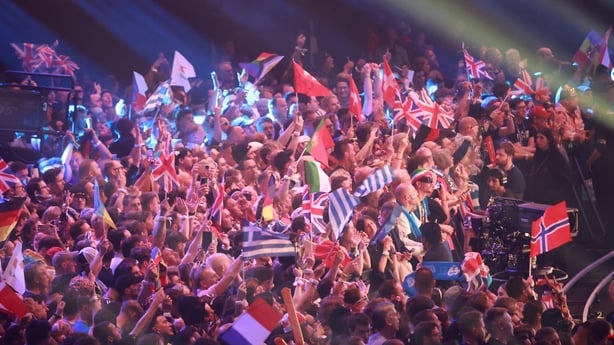
Undeterred by rain in Vienna, many fans took musical cruises on the Danube and sang karaoke in the huge fan zone set up in front of the City Hall and aboard trams crisscrossing the city.
Protest against Israel's slot
But elsewhere, demonstrators were marching in protest.
Hundreds marched through Vienna before the final shouting, "Free, free Palestine" and "boycott Eurovision", under heavy police presence.
They held banners reading "Don’t celebrate genocide".
"It’s very weak of Austria that it isn’t taking a boycotting stance itself," 17-year-old student Juli Pfefferkorn told AFP.
Spanish Prime Minister Pedro Sánchez on Friday said he was certain his country was on "the right side of history" by snubbing the event because of Israel's "genocide".
Just before showtime, Eurovision director Martin Green admitted: "We're going through some challenging times at the moment as well and I think we learn more about this event, and how we deal with that event as we go forward as well, and the strength of the event - and what the fans want."
Multilingual show
While stage designs varied in boldness, songs range from pop to heavy rock to ethereal and electro.
"Everyone’s bringing their A-game. The show is going to absolutely astounding and vintage Eurovision," Green said on Friday.
Across Eurovision week, though 16 songs were in English, more than 20 different languages were sung on stage, including Maltese.
"I feel like we are the underdog in this year's competition," said Malta’s entrant Aidan, who sang a classic romantic ballad, Bella.
"As a huge Eurovision fan myself, I've seen the need for true music, real music at Eurovision. I feel like Bella does that, and it’s very rich music," he told AFP.
During the voting period, the interval acts are set to include a Eurovision Allstars celebration, Austrian electro-swing musician Parov Stelar, and Austrian Eurovision star César Sampson performing Billy Joel’s Vienna before the results are announced.
Source: AFP
