


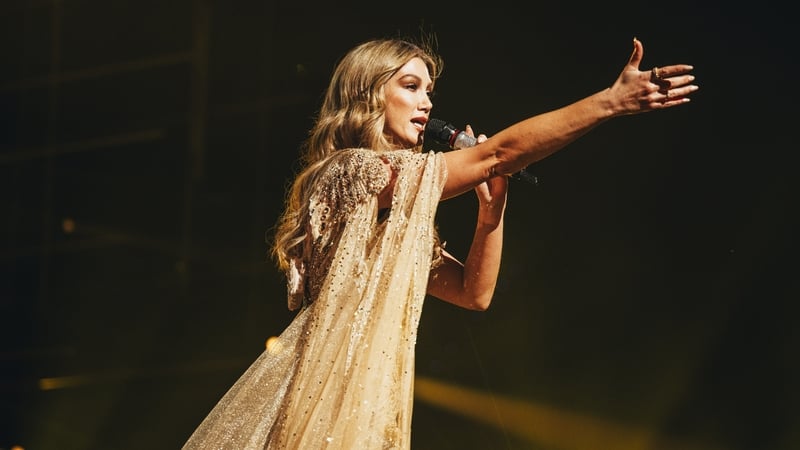
Bulgaria, Ukraine, Norway, Australia and Romania are among the ten countries to have qualified for the Eurovision Song Contest Grand Final following the second semi-final in Vienna.
Malta, Cyprus, Albania, Denmark and Czechia also qualified on Thursday night at the Wiener Stadthalle in the Austrian capital following the combined public and jury vote.

They will join the ten acts who progressed from Tuesday's first semi-final, along with pre-qualified countries Austria, France, Germany, Italy and the United Kingdom, in Saturday night’s Grand Final.
Azerbaijan, Luxembourg, Armenia, Switzerland and Latvia did not qualify.
Host country Austria, along with France and the United Kingdom, also performed and voted during Thursday’s show.
Israel, Greece, Finland, Belgium, Sweden, Moldova, Serbia, Croatia, Lithuania and Poland qualified during the first semi-final on Tuesday.
Portugal, Georgia, Montenegro, Estonia and San Marino were eliminated.
Austria won the Eurovision Song Contest 2025 in Basel, Switzerland, with JJ’s song Wasted Love, which scored 436 points.
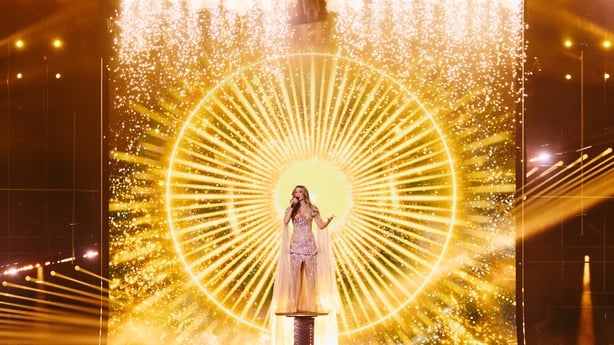
Delta Goodrem, who is representing Australia with Eclipse, received one of the biggest reactions of the night as she booked her place in the final.
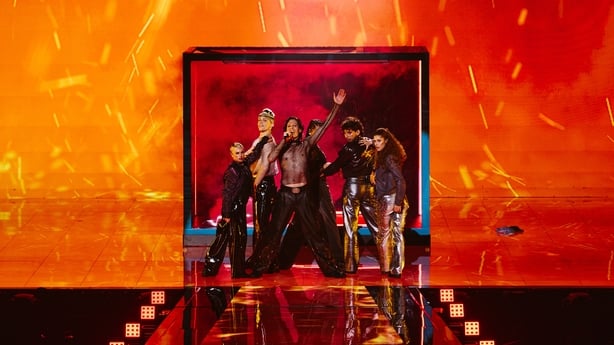
Bulgaria also made it through after returning to the contest following a four-year hiatus, with Dara performing Bangaranga.
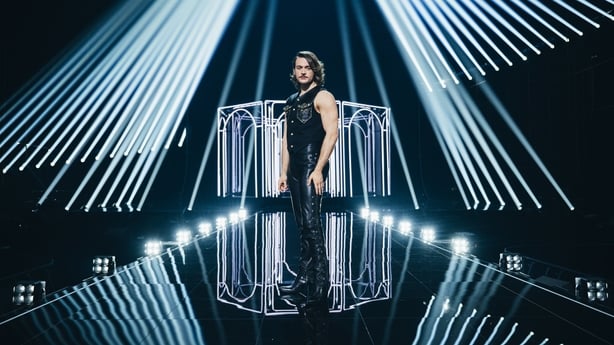
Ukraine qualified with Leléka and the song Ridnym, while Norway’s Jonas Lovv progressed with Ya Ya Ya.
Romania, back at the contest after a two-year absence, also made the final with Alexandra Căpitănescu’s Choke Me.
Malta’s Aidan qualified with Bella, while Cyprus, represented by Antigoni, made it through with Jalla.

Albania’s Alis progressed with Nân, Denmark’s Søren Torpegaard Lund qualified with Før Vi Går Hjem, and Czechia took the final place of the night with Daniel Zizka’s Crossroads.
The second semi-final came after a tense opening night on Tuesday, when Israel’s entrant Noam Bettan qualified for the Grand Final with his song Michelle after receiving a mixed reaction from the crowd.
The European Broadcasting Union and Austrian host broadcaster ORF said one audience member, close to a microphone, loudly expressed their views as Bettan began his performance and during the song, which was heard on the live broadcast.
They said the person was later removed after continuing to disturb the audience, while three other people were also removed from the arena for disruptive behaviour.
Eurovision is celebrating its 70th anniversary, but this year’s contest is taking place against a backdrop of controversy, with RTÉ among a number of broadcasters boycotting the event.
Ireland is not taking part in this year’s Eurovision Song Contest and RTÉ is not broadcasting the competition, after the European Broadcasting Union confirmed Israel would be allowed to compete.
RTÉ said in December that Ireland’s participation remained "unconscionable" given the loss of life in Gaza and the humanitarian crisis there.
The broadcaster also said it remained deeply concerned by the targeted killing of journalists in Gaza during the conflict and the continued denial of access to international journalists to the territory.
Ireland is one of five countries boycotting this year’s contest over Israel’s participation, alongside Iceland, the Netherlands, Spain and Slovenia.
The EBU has introduced changes to the voting system for this year’s contest following concerns raised after Eurovision 2025, when Israel’s Yuval Raphael received the highest number of public votes and finished second overall behind Austria after jury votes were taken into account.
Under the revised system, professional juries have returned to the semi-finals, while the maximum number of votes any viewer can cast has been reduced from 20 to ten.
Audiences have also been encouraged to spread their support across multiple songs.
Saturday night’s Grand Final will take place at the Wiener Stadthalle in Vienna.
