




The 70th Eurovision Song Contest kicks off tonight, with the first semi-final being held in the host city of Vienna.
This year however, there will be no Irish entry on the Austrian stage.
Billed as the largest live music event in the world, in December 2025 RTÉ confirmed that due to Israel's on-going participation in the contest, it was withdrawing from Eurovision 2026.
RTÉ stated that it would neither participate in, nor broadcast, the contest on RTÉ One.
RTÉ was one of five broadcasters along with fellow European Broadcasting Union (EBU) members, Spain's public broadcaster RTVE, Dutch broadcaster AVROTROS, Iceland's RUV and RTV Slovenia who announced their decision to boycott the show in December.
For Ireland, this is a momentous chapter in its unique history with Eurovision since its debut in 1965.
The country continues to hold the joint record with Sweden for most victories at the contest, having topped the leaderboard seven times.
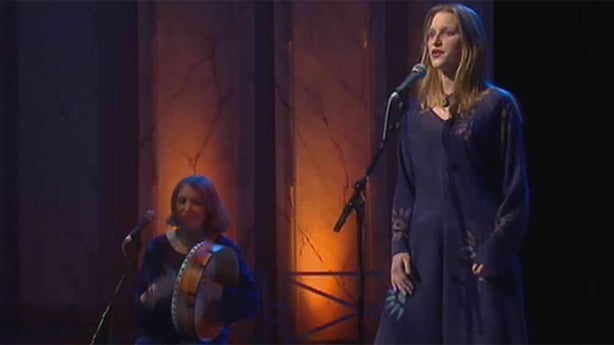
But while Ireland may still be the only country to have also won three times in a row (1992,1993 and 1994) the sobering reality is that this year marks three decades since Ireland last won the top prize.
It is now 30 years since Eimear Quinn won Ireland’s seventh Eurovision with the song, 'The Voice' in 1996.
Now, in 2026, Ireland is boycotting the contest and who knows when, how and if it will return?
So how did we (not) get here?
Rewind two years to the 68th Eurovision in 2024
In May 2024, the song contest was held in Malmo in Sweden, but due to the war in Gaza, tensions were growing both on and off stage about Israel's participation.
The spotlight was firmly focused on the EBU (the alliance of public service media that organises the annual event) with criticism aimed at the Israeli national broadcaster KAN.
Despite the loud calls and plans for protest marches on the streets of Malmo, the EBU stated that KAN was found not to have breached any of its rules, and therefore the governing bodies decided that they could continue in the contest.
Eurovision, organisers said, is a "non-political contest designed to unite audiences and bring people together through a shared love of music and entertainment".
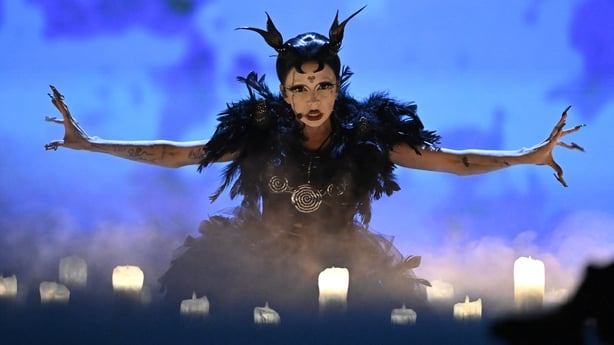
Amidst the turmoil and headlines, the final for Eurovision 2024 rolled on with Bambi Thug representing Ireland, and on the night, Switzerland emerged as the victor.
Fast forward to 69th Eurovision in 2025
The tensions around the annual beloved festival of pop, glitz and glamour continued in the months building up to Eurovision 2025, as concerns from some EBU members about Israel were growing louder.
The EBU though continued to hold its position that "broadcasters are the members of the EBU… not governments," and as such, KAN had a right to take part.
In Ireland, the pressure was mounting on RTÉ to take a stance against the Eurovision organisers.
RTÉ was one of several broadcasters, including Spain’s RTVE and Slovenia’s RTV who were now asking for a debate on Israel’s involvement in the festival.
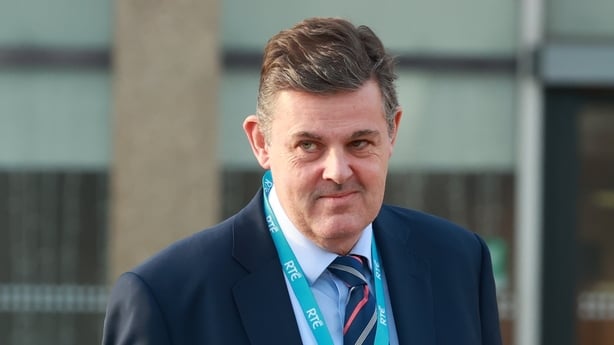
Days before Emmy headed to Basel in Switzerland to represent Ireland for Eurovision 2025, RTÉ Director General Kevin Bakhurst released a statement, saying that he was "appalled by the ongoing events in the Middle East and by the horrific impact on civilians in Gaza, and the fate of Israeli hostages".
He confirmed that RTÉ had "asked the EBU for a discussion on Israel’s inclusion in the contest".
Others, meanwhile, pointed to the treatment of Russia by the EBU, when it had been banned from the 2022 contest following its invasion of Ukraine earlier that year.
While that decision was described as a "precedent", the EBU said "it’s not our role to make comparisons between conflicts".
The 69th contest made it to the Basel arena, and while Ireland’s entry failed to progress past the semi-final, Israel succeeded on getting through to the Saturday night Grand Final stage.
Ultimately, the 2025 winner was the 23-year-old Austrian Filipino singer and countertenor from the Vienna State Opera, JJ (Johannes Pietsch).
Austria's broadcaster ORF confirmed they would be hosting the 70th anniversary of the Eurovision Song Contest in their capital city, Vienna.
Build up to Vienna
Once the stages in Basel were dismantled and the delegates packed for home, attention was turning to the 2025 scores of Israel's entry, Yuval Raphael.
On the night of the final, Israel had been ranked joint-14th by national juries, but when the combined phone and online votes were added to their score, its entry significantly climbed up the leaderboard, finishing second overall.
Broadcasters in Ireland, the Netherlands and Spain raised questions and concerns about the management of the popular vote for Eurovision 2025.
Tensions were mounting about the integrity of the contest.
After the Summer General Assembly in July, the EBU issued a statement confirming that members had held an "open and constructive discussion on the Eurovision Song Contest (ESC) on the increasingly complex global contest in which it takes place".
The EBU promised broadcasters an in-depth review of Eurovision 2025, but that was not sufficient to quell the growing calls here at home for RTÉ to boycott Eurovision 2026.
Meanwhile, the broadcaster confirmed yesterday that it never received full details on the 2025 voting information from the EBU as requested, stating that "RTÉ has not received such a breakdown".
In September, Mr Bakhurst released a statement confirming that that it would not take part in the 2026 Eurovision Song Contest "if the participation of Israel goes ahead".
In the statement, RTÉ said that Ireland's participation in the event "would be unconscionable given the ongoing and appalling loss of lives in Gaza".
A ceasefire deal then came into effect on 10 October 2025.
A few weeks later in November, the EBU publicly announced a "series of important updates to the voting framework", designed to "strengthen trust and transparency".
They published key changes that the Eurovision organisers would implement for the 2026 contest.
The amendments included measures such as the return of juries to semi-finals, a cap on votes from 20 to 10 per voting method and stronger limits on promotion to curb disproportionate third-party influence, (including government-backed campaigns).
The EBU also committed to enhanced technical safeguards for the voting system.
Then, on 4 December, at highly-anticipated meeting at the Winter General Assembly 2025 in Geneva, a secret ballot was held behind closed doors with member on the new rules.
The vote passed comprehensively with 68% in favour.
No vote was offered on member participation at the contest, so the path was now clear for Israel to appear in Eurovision 2026.
The response was swift.
Five broadcasters, including RTÉ, announced their decision to boycott Eurovision 2026.
This would have both a financial and reputational impact on the EBU.
The loss of Spanish TV in particular is significant, as it is one of the so called "Big Five" who make the biggest financial contributions to the EBU which helps fund the show.
For RTÉ, the EBU fee (paid annually) to participate in the 2025 Eurovision Song Contest was €100,270.
The fee to the EBU included the licence for RTÉ to broadcast over seven hours of television across three nights.
As RTÉ has withdrawn from Eurovision 2026, the broadcaster has confirmed that is not paying the fee this year.
There will be 35 delegations involved in Eurovision this year.
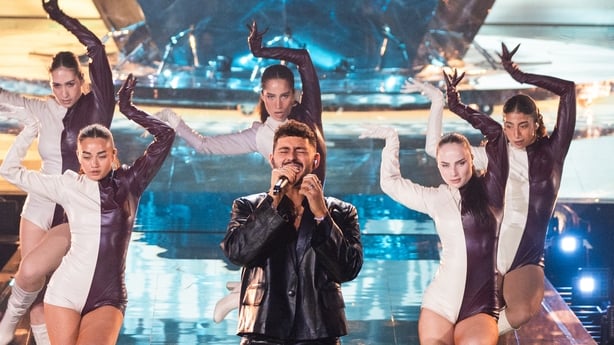
Meanwhile in Vienna over the weekend, Eurovision 2026 was back in the headlines due to controversy about promotional videos across social media, encouraging people to "vote 10 times for Israel" for their singer Noam Bettan.
The videos led to KAN receiving a "formal warning" from the EBU.
"Employing a direct call to action to vote 10 times for one artist or song is also not in line with our rules, nor the spirit of the competition," Director of Eurovision Song Contest Martin Green said.
However, organisers behind the scenes are focused on potential disruptions, with Reuters reporting that Vienna police expect protests against Israel's participation in the Eurovision Song Contest to include "blockades and disruption attempts", and are calling the competition in the Austrian capital one of the biggest security events they have faced.
The scale and impact of any disruption will come clear in the coming days.
Tonight, the glitz and glitter may twinkle at the Wiener Stadthalle for the sold out semi-final, but for Irish audiences, it remains unclear when, how and if RTÉ will step back into the Eurovision spotlight again.
