


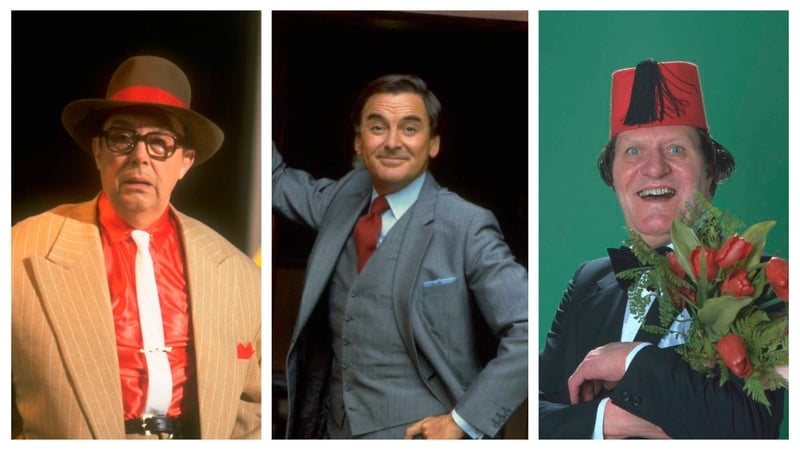

The Last Laugh, a stage play about comedy greats Tommy Cooper, Eric Morecambe and Bob Monkhouse comes to Dublin this July. We spoke to the show's writer and producer Paul Hendy
It's like something from a Fast Show sketch. Two pub bores sit in a vulgarly carpeted boozer somewhere in England, slot machine zinging in the background, and debate who was the very best British comedian of all time.
"You’ve got your Monkhouse - he was a craftsman! An architect of the perfectly executed punchline," says one. " . . . then you’ve got your Morecambe, a bespectacled wizard of the perfect timing." "And of course we can’t forget the Cooper," rejoins the other. "Tommy was the livewire embodiment of pure comedic anarchy . . . he died live on stage, you know?"
It’s a scene that’s probably played out in real life every night somewhere in some pub and one that English scriptwriter, TV host and producer Paul Hendy would know very well - so well in fact that he has written a play about those three comedy giants called The Last Laugh.
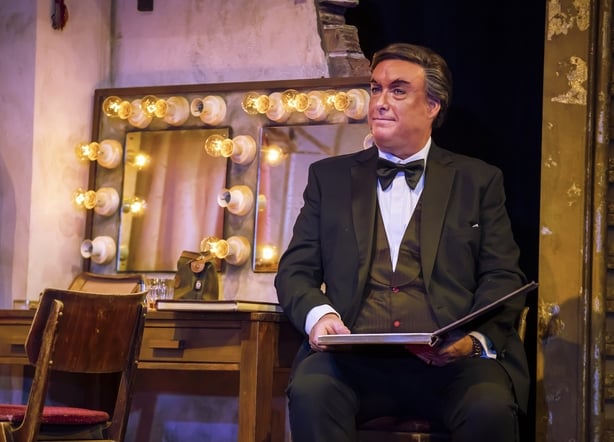
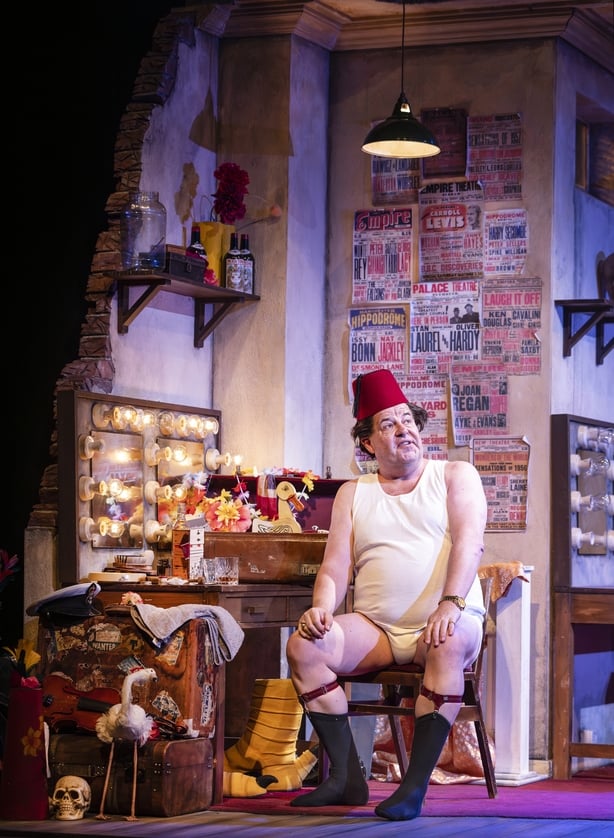
It’s an ensemble piece which sees the trio share a dressing room as they prepare to go on stage. The setting is a kind of anteroom to the afterlife where Monkhouse, Morecambe and Cooper discuss the meaning of life, the certainty of death, and what exactly makes something funny.
It stars Damian Williams as Cooper, Simon Cartwright as Monkhouse and Britain’s Got Talent finalist Steve Royle as Morecambe and after recent runs in the West End and Broadway, it arrives at Bord Gáis Energy Theatre in Dublin this July.
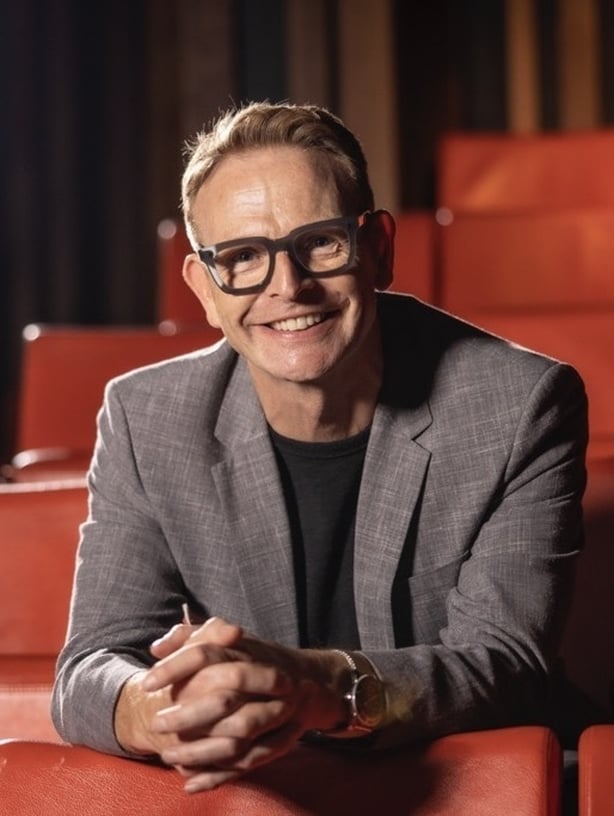
But how did Hendy, who’s hosted TV shows such as Dear Mr Barker, Don’t Try This at Home, Stash the Cash, and Wheel of Fortune, turn the quicksilver wit of Morecambe, the madcap (mad-fez, if you will) visual comedy of Cooper, and the polished patter of an old pro like Monkhouse into dialogue?
59-year-old Hendy is good friends with Morecambe’s son, Gary, and like most men of his vintage, he grew up watching sketch and variety shows on ITV and BBC so the dialogue came easy.
"It just poured out of me. It came from years of living with these guys and loving their material and personalities," he says. "I guess it comes from a lifelong obsession; my wife would call it an obsession!
"The play is fictional - it’s the three of them sitting in a dressing room discussing comedy and what makes something funny. Bob Monkhouse was a great craftsman. He used to polish and hone a joke, whereas Tommy Cooper wouldn’t care about all that - he’d just say it.
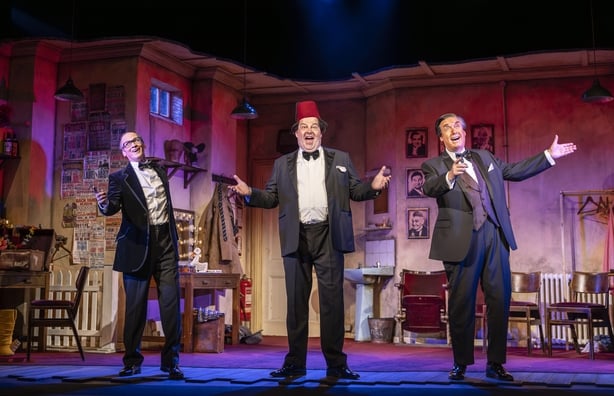
"Eric was an incredibly gifted comedian but he needed writers. So I just thought that was an interesting dynamic."
Morecambe and Cooper shared a similar comedic anarchy. They could stagger on stage and the audience would be rolling in the aisles so the more watchful Monkhouse may seem like the odd man out here. A more traditional stand-up and all round variety performer, he was famous for keeping closely guarded notebooks of his gags. He was a surgeon of the funny bone while and Cooper were kings of the surreal throwaway quip.
"I was really interested in those different approaches to comedy," Hendy says. "Bob would really have to work at it to make it funny. Maybe by his own admission he wasn’t a naturally funny man, whereas Tommy was a really gifted comedian who could say anything and mess up a joke and it would still be funny.
"Latterly, I’ve come to really appreciate how good Bob Monkhouse was. Back in the day, people would just think of him as a gameshow host but latterly he has been more appreciated as a great comedian and a great comedy writer."
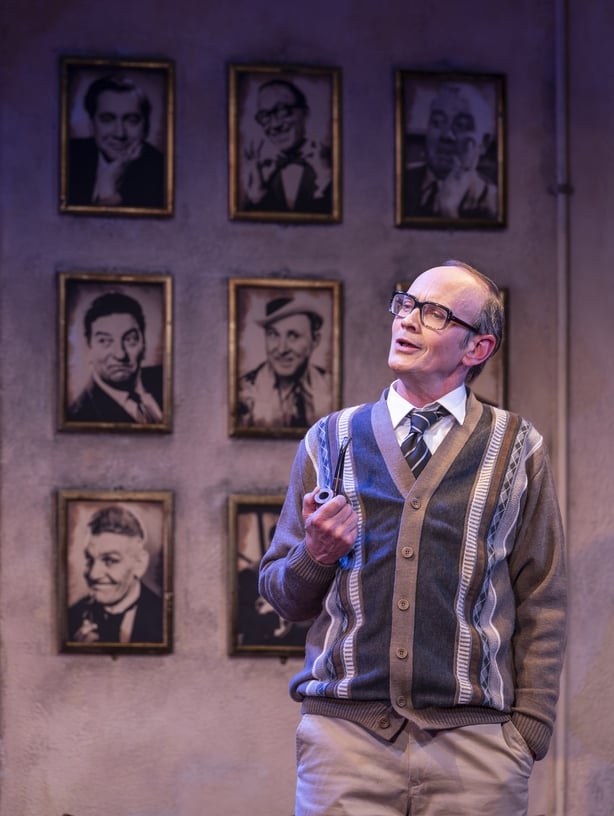
The Last Laugh began life as a short film and Hendy is planning to make it into a full cinematic feature. The dressing room set-up is a neat one that gives the writer and producer plenty of scope to get to the core of the three men. It uncovers a lot about human nature and the serious business of making people laugh for a living.
But does he subscribe to the cliché that all comedians are tragedians at heart?
"Possibly. Eric had a relatively untroubled life, he had a very settled home life with his wife, Joan, and their three children, he wasn’t a big drinker . . . ," Hendy says. "Bob Monkhouse had a disabled son. I don’t talk about that in the play because it’s a love letter, not an expose, so I don’t mention Bob’s other son dying of an overdose.
"Bob’s autobiography was called Crying With Laughter, which really is a great title that shows both sides of him. Tommy just went through life. It’s no secret that he drank. He never seemed troubled to me. We talk about this in the play - sometimes being funny all the time was a little bit of a curse.
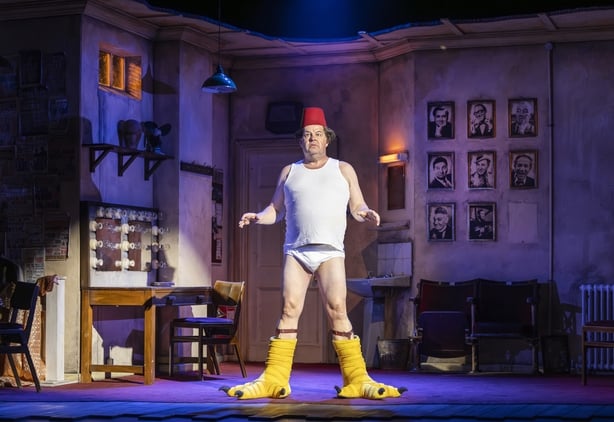
"Tommy tells a story in the play, which is apparently a true story, Barry Cryer used to tell it - Tommy was sitting on a pavement outside a pub and he was crying and he looked up and there were ten people laughing at him.
"Wow. Maybe he was upset about something but seeing Tommy Cooper cry was funny."
Hendy adds, "People used to say about Tommy that he’d walk on stage and people would laugh but what he says in the play is that people didn’t know what it took to get him on that stage. I think Eric also felt that constant pressure to be funny. People are praying that on that night that you will be funny. And maybe it wasn’t that easy."
The Last Laugh mixes the hilarious with the poignant. At one point, Cooper says to Morecambe and Monkhouse, "I hope I don’t die out there . . . " and of course, Cooper was to have the ultimate showbiz death when he suffered a heart attack live on stage and in front a huge tv audience in 1984.
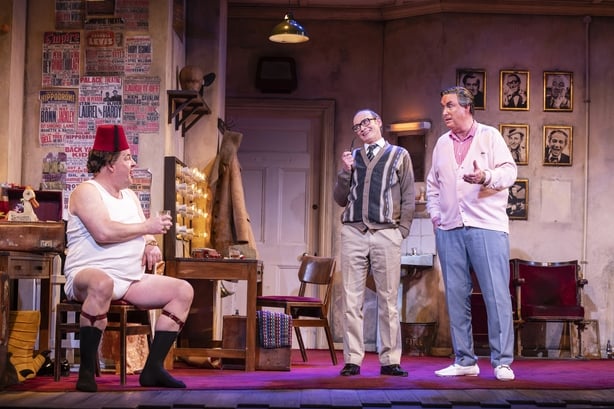
It is a moment Hendy remembers very well. "I was watching it at home with my mum," he says. "I was 18 so I suppose I had some idea of what was going on but they held the camera on him more than you would have thought because they thought it was part of his act.
"You can imagine the conversations in the TV studio gallery and in the wings of the theatre - people were laughing. Jimmy Tarbuck has been to see The Last Laugh and he was the host of that show on the night Tommy died; Les Dennis has been to see the play and Les was the next act on that night . . .
"I’ve spoken to them both and they were asking themselves 'is this part of the act?’ Then nothing happens and they go to a commercial break. We don’t cover it in the play.
"Would Tommy have liked it if we had? With Eric and Bob, we lost to the two of them within six weeks of each other. Eric didn’t die on stage but he collapsed on stage and died later that night. So tragic really."
The golden era of Monkhouse, Morecambe, and Cooper all seems a long time ago now and TV comedy has changed utterly. Are we, for example, witnessing the strange death of the British sitcom?
Once a mainstay on most schedules, the whole two-camera comedy format filmed in front of a studio audience has all but vanished from UK television, with even Mrs Brown’s Boys seeming to have wheezed out its last triple entendre. Audiences are now faced with terminally unfunny panel shows like Mock The Week.
"Maybe sitcoms have changed a little bit," Hendy says. "The Office was really the way television was going. Comedy isn’t made in front of a studio audience anymore."
Hendy is well placed to discuss the arrival of SNL:UK, the British version of US television perennial Saturday Night Live. Reportedly costing £2 million an episode and with a production staff of 300, it has received very mixed reviews ("shockingly competent", opined that fountainhead of mirth The Daly Telegraph) and faltering viewing figures but it has just been commissioned for a second series.
"It is hit and miss but I’m surprised by how much it hits, actually," Hendy says. "I’ve watched it a few times and I laughed out loud quite a few times. I’m a big fan of the American version and SNL:UK have really gone for the American style.
"It’s shot in a very similar way and edited in a very similar way and we just don’t do that on British television. It sort of works for me. I think they would consider it a hit. The American one is very hit and miss too and most sketch shows are like that."
He sagely adds, "Not all Morecambe and Wise Shows were full of hits. That’s the nature of comedy and we talk about that in The Last Laugh - Eric, Bob, and Tommy were constantly looking for one thing - the next gag. And the one after that."
The Last Laugh is at Bord Gáis Energy Theatre from 21 to 25 of July
