


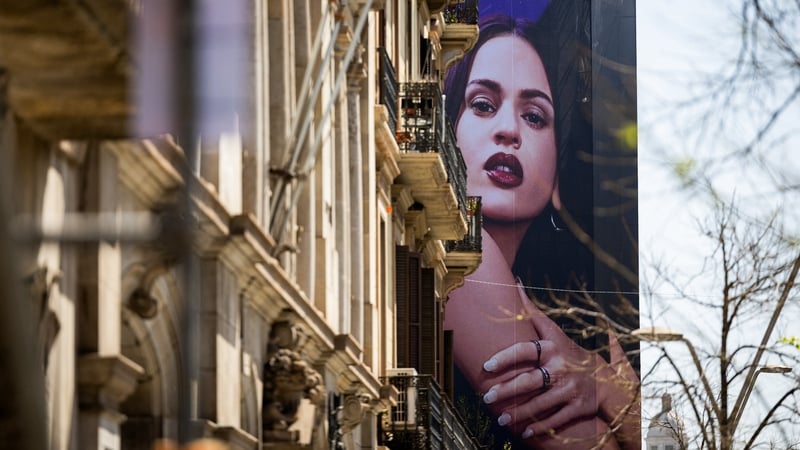
Singer Rosalía spent her early years training in classrooms, rehearsal spaces, and small venues across Barcelona as she developed the voice and style that would define her career.
She has now returned to the city where she honed her craft as a global star with her Lux tour.
"Barcelona, I love you madly," she said in her native Catalan at the first of four sold-out shows at Barcelona's Palau Sant Jordi arena last week.
The concerts were part of the rollout of her fourth album, Lux, a sweeping, spiritual work that does not overlook the flamenco rhythms of her earlier records.

"Thanks for carrying me," the 33-year-old added before breaking into tears as the audience erupted into applause.
The tour, which began last month in France, will also take her to the United States and Latin America.
Fans packed the arena to see Rosalía, who grew up in the nearby commuter town of Sant Esteve Sesrovires, perform in the city where she first began attracting attention as a student.
"There was already an intention there, a very flamenco way of moving through life, which is to move with confidence," Lluís Cabrera, founder of Taller de Músics, the music school where Rosalía enrolled in 2010, just before she turned 18, told AFP.
'Always restless'
Rosalía, hailed for her genre-defying versatility, studied several subjects at the school, including flamenco singing with her mentor, Chiqui de la Linea.
Cabrera recalled Chiqui saying early on that Rosalía's voice blended ancient flamenco styles with a strikingly modern sound.
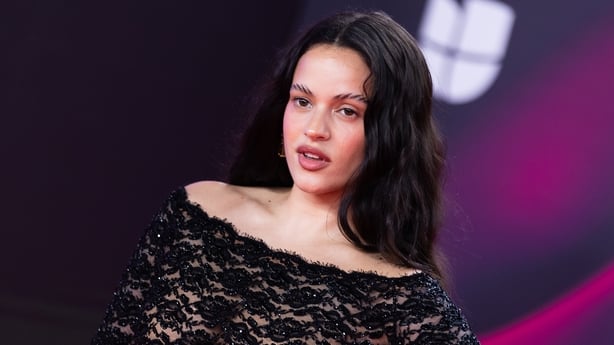
Hard-working and deeply engaged in her studies, she already had a clear sense of direction.
"She used to ask a lot of questions, always restless. And when she said, 'I want my music to reach millions of people', I was shocked," Cabrera said with a smile at the school, where photos of Rosalía now decorate the walls.
The 'Rosalía effect' has since boosted enrolment in its vocal programme, he added.
That same determination is remembered by music journalist and composer Luis Troquel, who closely followed her early years in Barcelona's music scene.
"She told me she wanted to be a diva, but not in the distant sense. In the sense of an artist who sings on stage, dances, and pays close attention to image," he said.
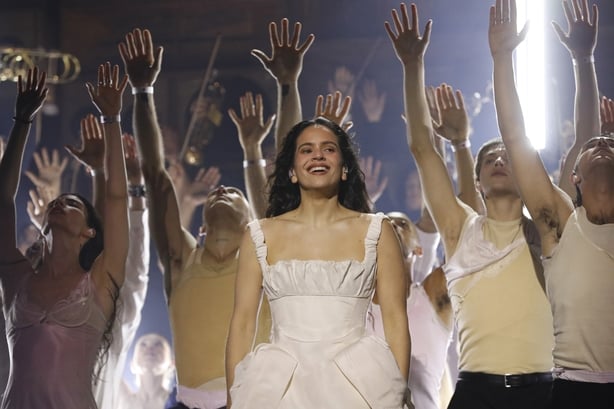
"And she achieved that, even better than expected," added Troquel, who worked on the lyrics of one of the songs of Rosalía's 2018 breakthrough album El Mal Querer (Bad Love).
'Boldness and self-confidence'
That album, her second, began taking shape during her time at Catalonia's main public conservatory for higher music education, Barcelona's ESMUC, where Rosalía completed a degree in flamenco singing.
Like all students, she had to complete a final research project and graduation concert.
Rosalía based her project on Flamenca, a medieval anonymous novel that inspired El Mal Querer, which she later performed as her final graduation recital.
"Everyone still remembers that concert," said ESMUC director general Núria Sempere, describing Rosalía as a student who was "always focused and had strong family support".
"She had the boldness and self-confidence to take all her influences and present them to the public without any hesitation. That requires a lot of work," Sempere added.
ESMUC offers one place each year to study flamenco singing. Rosalía was awarded the place and now funds a scholarship for future students.

A few years ago, Rosalía returned to the school to give a masterclass on creativity.
"The first piece of advice was this: 'Screw it - it doesn't matter, just go for it. You'll fix it later, but you have to jump in'," Sempere recalled.
Rosalía did - and it worked. With two Grammy awards, 11 Latin Grammys, and 28 million Instagram followers, she is now impossible to ignore.
"In Spanish music, it's hard for me to find a phenomenon with the same scale of impact as Rosalía," Troquel said.
Source: AFP
