


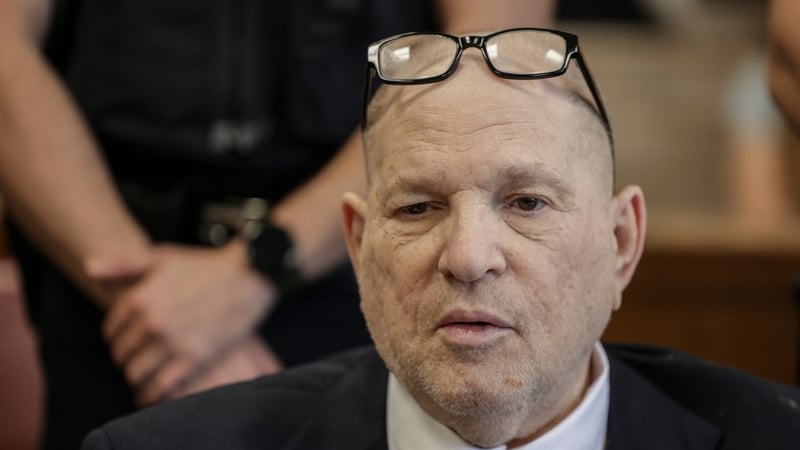
Harvey Weinstein's rape retrial has opened in New York, with prosecutors once again portraying the former Hollywood producer as a powerful figure who used his influence to sexually assault women.
Opening statements began on Tuesday in the latest trial centred on an allegation by Jessica Mann, who says Weinstein raped her in a Manhattan hotel in 2013.
"This case will come down to power, to control and to manipulation," Manhattan assistant district attorney Candace White told jurors.
Weinstein’s lawyer Jacob Kaplan said the case was instead "about consent, about choice and about regret", repeating the defence argument that the encounter was consensual.
Weinstein has pleaded not guilty and has denied ever having non-consensual sex.
The case is being heard for a third time after Weinstein’s 2020 New York conviction was overturned, and a later jury was unable to reach a verdict on the rape charge involving Mann.
The jury of seven men and five women was selected last week.
Now 73, Weinstein was once one of the most influential figures in Hollywood. An Oscar-winning producer and studio boss, he helped bring films including Pulp Fiction, Shakespeare in Love and Gangs of New York to the screen, as well as the reality series Project Runway to television.
His career collapsed in 2017 when allegations about his behaviour towards women became public, helping to fuel the #MeToo movement. Criminal cases later followed in New York and Los Angeles.
Mann, a hairstylist who hoped to break into acting, has previously told the court that she had a consensual relationship with Weinstein before the alleged rape.
According to her earlier testimony, she met Weinstein at a party in the Los Angeles area in late 2012 or early 2013 while seeking a professional connection in the film industry.
She said that during a trip to New York in March 2013, she arranged to meet Weinstein for breakfast with a friend, but alleged that he later trapped her in a hotel room, ignored her protests, demanded that she undress and grabbed her arms.
White told jurors that Weinstein "was used to getting his way" and said that, behind closed doors, he took what he wanted.
Kaplan, however, argued that Mann continued to see Weinstein after the alleged rape, accepted invitations from him, sought career help and sent him warm messages.
He told jurors that Mann was "a strong and capable woman" and said she later came to regret the relationship, but that regret "does not remove consent".
Weinstein remains in prison and is also appealing a separate rape conviction in California.
The trial is expected to last about four weeks.
Source: Press Association
