


Artificial intelligence is transforming Hollywood at a pace that has sent shockwaves through the creative industries, but human creativity will always prevail, a leading executive at the forefront of that change has said.
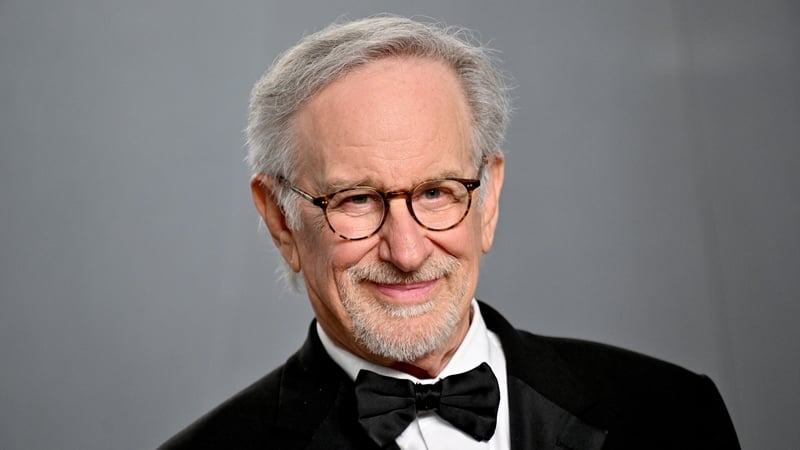
The disruption caused by AI was a dominant theme at this week's South by Southwest conference in Austin, Texas, where veteran director Steven Spielberg made clear he was drawing a line in the sand.
"I’ve never used AI on any of my films yet. We have a writer’s room. All the seats are occupied," Spielberg said.
"I am not for AI if it replaces a creative individual."
Joshua Davies, chief innovation officer of Artlist, a Tel Aviv-based AI video platform that has increasingly positioned itself as a supplier of creative tools to filmmakers, said the technology would never eclipse human creativity.
If given the choice between something made using an AI tool by a techie and a creative, "I know which one I would rather watch at the end", said Davies, who founded video editing software company FXhome before it was acquired by Artlist in 2021.
Davies acknowledged the industry’s anxiety was not unfounded, with new video models having "struck fear in the hearts of everybody", not only over copyright and personality infringement, but also over the fundamental question of how film and television production will look in the years ahead.
"If I was bringing out an Iron Man movie in 2027, 2028, would I be going to multiple visual effects houses? Would I expect them to be utilising AI? We’re all kind of working out our way through that," he said.
Davies described the platform’s AI video tools as a way to "fill in the bits that you can’t shoot, or didn’t shoot, or you don’t have the budget to shoot", rather than as a wholesale substitute for filming on location.
Yet the timing is charged. Editors, visual effects artists and other Hollywood workers have watched the rapid advance of generative AI with alarm, fearing that tools capable of producing broadcast-quality footage at a fraction of traditional costs could hollow out entire job categories.
Major studios are actively evaluating how AI can be integrated into production pipelines, foreshadowing significant workforce changes across an industry that has already endured a bruising period following the Covid pandemic and the writers’ and actors’ strikes of 2023.
Artlist made headlines in February when it produced a Super Bowl LX spot in under five days using its own products, at a fraction of the multi-million-dollar cost typically associated with Big Game advertising.
Davies was keen to push back on the idea that the ad represented the future of production without human involvement.
That was not the point, he said. Instead, it showed creatives "using the tool to get the very best out of it".
A self-described "techie guy", Davies said the platform’s current focus is giving creators nuanced control over the way they create and edit footage, something he described as the company’s "holy grail".
Existing models, he said, can handle simple static shots reasonably well, but still struggle with complex camera movements and consistency across multiple takes.
"You can prompt an elaborate shot, but for now you’ll get something random" that cannot be used, he said.
On cost, Davies cautioned against unrealistic expectations, suggesting AI would significantly reduce production expenses, but not eliminate them.
He said his long-term hope was that AI could level the playing field for independent filmmakers and content creators who currently lack the budgets to realise their ambitions.
"There are definitely YouTubers who make some of the best action work out there on no budget," he said.
"AI will level that playing field completely. The story will be what matters."
Davies struck a cautiously optimistic note on the direction of the creative industries, dismissing the most dystopian predictions.
"The idea that no one works at the end of it is the bit that doesn’t hold any water with me," he said.
"There’s been more and more of everything, not less and less, and the cream rises to the top anyway, because the human element is what we crave."
Source: AFP
