


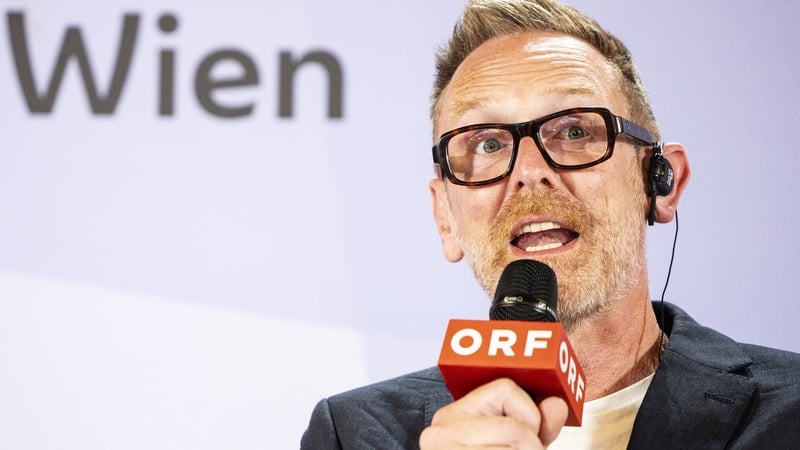
Eurovision Song Contest director Martin Green has told Irish fans that he respects RTÉ's decision to boycott next year’s competition and hopes Ireland will return "soon" to the contest.
In a new open letter to Eurovision fans, Green addressed the growing backlash over Israel’s participation in the 2026 contest in Vienna. Ireland, Spain, Slovenia, the Netherlands, and, most recently, Iceland have all announced they will not take part because Israel has been allowed to remain in the line up.
RTÉ confirmed last week that Ireland will not compete in or broadcast Eurovision 2026, saying participation would be "unconscionable" given the appalling loss of lives in Gaza and the humanitarian crisis there.
The broadcaster also said it remained deeply concerned by the "targeted killing of journalists in Gaza during the conflict" and the continued denial of access to international journalists.
Green told fans he understood "strong emotions" around the Middle East and Eurovision, saying: "No one can fail to be moved by what we have seen in the region in the past few years."
He said the contest organisers had heard from those who felt "anger and pain at what they see as silence in the face of tragedy", adding: "I want to say that we hear you. We understand why you feel so strongly and that we care too."
He defended the EBU’s approach by arguing that the only way Eurovision can continue to bring people together is by sticking to its own rulebook.
"We know many fans want us to take a defined position on geopolitical events. But the only way the Eurovision Song Contest can continue to bring people together is by ensuring we are guided by our rules first and foremost," he wrote.
Green pledged that in 2026 "all participating broadcasters" would be held to those rules and that organisers "will not tolerate" breaches.
Addressing fans in the five boycotting countries directly, Green said: "I want to say specifically to fans in Ireland, Spain, Iceland, Slovenia, and the Netherlands that your broadcasters, like all our Members, made a decision that was right for them and contributed to the debate with great dignity.
"All of us here respect their position and decision. We will continue to work with them as friends and colleagues in the hope they return to the Contest soon."
Green also set out a broader defence of Eurovision’s role in a time of conflict. He described the contest, created almost 70 years ago in a divided post war Europe, as "a symbol of unity, peace, and hope through music" that has survived "wars, political upheaval, and shifting borders".
He said Eurovision still aimed to provide "a space where millions can celebrate what connects us. A space where music takes centre stage. A space that welcomes everyone - whoever you are, wherever you are, and whatever your views are about the world around us."
The row over Israel’s participation has developed into a major crisis for the contest, with Spain’s exit particularly significant given its "Big Five" status and Ireland’s withdrawal ending an unbroken broadcast run that stretches back to the 1960s.
Green closed his letter by insisting that artists, delegations and fans remain "the heart" of Eurovision and by repeating the event’s official slogan: "In a challenging world we can indeed be United by Music."
