



Israel's participation in next year’s Eurovision Song Contest is being debated at a two-day meeting of member broadcasters at the European Broadcasting Union (EBU) headquarters in Geneva, which began this morning.
Speaking to David McCullagh on RTÉ Radio 1, former EBU member and former RTÉ Head of Entertainment David Blake Knox described it as "a critical meeting of the EBU and Eurovision committee" and "a different type of crisis than Eurovision has experienced before", because it centres on a live conflict "between people on two different sides" rather than a dispute about a single host country or entry.
He noted that Eurovision has faced boycotts before, pointing to Austria’s decision not to take part when Franco’s Spain hosted the contest, Georgia’s withdrawal when the event was staged in Russia, and Turkey’s boycott over what it saw as the promotion of gay rights.
Watch: 'The Eurovision is facing a moment that could redefine its history...'
"This is a different one because of the nature of the conflict between people on two different sides," he said.
"There are at least four countries that say they will boycott if Israel takes part, and one of them is Spain, and Spain is one of the so-called 'Big Five’ countries that are major contributors to the financing of the Eurovision," he said.
"On the other side there is Germany and several other countries who say they will boycott if Israel is expelled, and it’s very difficult to see how this conflict can be resolved to the satisfaction of both parties."
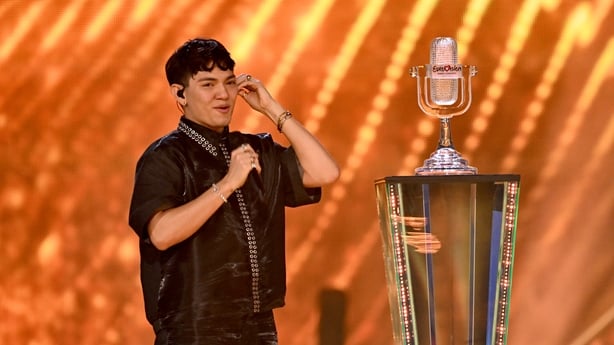
Public broadcasters from Slovenia, Ireland, Spain and the Netherlands have said they are prepared to boycott the May 2026 contest in Vienna if Israel competes. Germany and other supporters of Israel's participation have warned there could be consequences if Israel is barred. Germany’s Minister of State for Culture, Wolfram Weimer, said Berlin should not take part if Israel is excluded, adding: "Israel belongs in the Eurovision Song Contest. There must be no ESC without Israel."
The EBU had originally planned to convene member broadcasters in November for a decision on Israel’s participation but postponed that after the October announcement of a ceasefire agreement between Israel and Hamas. Instead, it announced changes to its rules, saying they were designed to strengthen "trust and transparency" and to protect the contest’s neutrality.
Under the new system, an expanded professional jury will be reintroduced at the semi-final stage, with juries and the public each accounting for about 50% of the vote. The number of votes any viewer can cast will be cut from 20 to 10, with audiences encouraged to support multiple entries. The changes are also intended to discourage governments from heavily promoting individual songs in an effort to sway the outcome.
At this week’s meeting, members are being asked whether those measures are sufficient or whether they still want a formal vote on Israel’s participation. If they are not convinced by the new system, the EBU has said the question of Israel’s place in the contest will go to a ballot.
Some broadcasters have already tied their involvement to the outcome. Finnish broadcaster Yle has said it will only take part if the revised rules are implemented and if there are additional safety guarantees for participants and audiences. "Eurovision’s original purpose has been to create a space where we can meet despite differences and disagreement," Yle’s CEO Marit af Björkesten said, adding that the contest must not be used for political influence. The president of Portugal’s public broadcaster RTP, Nicolau Santos, said his organisation supports the new rules.

Ireland is central to the current debate. In September, RTÉ said its position was that Ireland would not take part in Eurovision 2026 if Israel participates, and that a final decision would be made after the EBU's ruling. It said Irish participation would be "unconscionable", given the loss of lives in Gaza, which has surpassed 70,000 according to Gaza health authorities, and also cited concern about the killing of journalists and restrictions on media access to Gaza.
The war followed the 7 October 2023 attack by the Palestinian militant group Hamas on Israel, in which 1,200 people were killed and 251 were taken hostage and brought to Gaza. Israel’s 2025 entrant, Yuval Raphael, was at the Nova music festival, one of the targets of the 7 October attacks.
For Ireland, the stakes are particularly high. The country shares the record for the most Eurovision victories, with seven wins, and the contest has long been a major platform for Irish performers, from Dana and Johnny Logan to Riverdance and, more recently, acts such as Bambie Thug. Stepping away in 2026 would be one of the most significant breaks with Eurovision in the history of Irish participation.
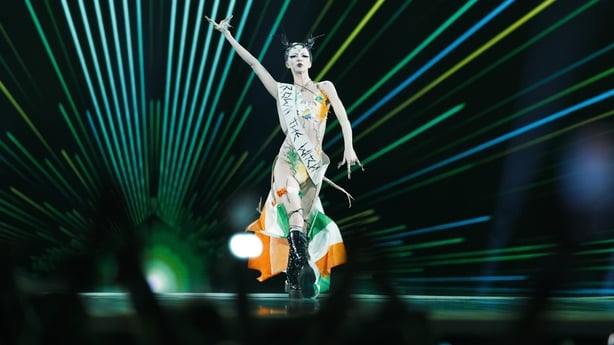
The meeting in Geneva also follows allegations that Israel unfairly boosted its entrant at this year’s contest, where it finished second. Israel has not responded in detail to those accusations but has often argued that it faces a broader smear campaign. Its public broadcaster KAN has said it is preparing for next year’s contest, will present its position on possible disqualification at the meeting, and will soon announce changes to its selection process.
In Vienna, host broadcaster ORF has said it wants Israel to compete, while German public broadcaster ARD has said it hopes for "constructive discussions and solutions within the EBU that are consistent with the values of the EBU and the ESC".
Eurovision expert Paul Jordan has described the current stand-off as a "watershed moment" for the competition, which reaches around 160 million viewers worldwide. Since its launch in 1956, the contest has promoted itself as a non-political celebration of music, but has repeatedly been drawn into wider geopolitical disputes, including Russia’s exclusion after its invasion of Ukraine.
Asked what it would mean if Ireland were not in Eurovision, Blake Knox said: "Personally I think it’s better to maintain dialogue rather than to close it and in general I wouldn’t be in favour of boycotts."
On whether the EBU will find a way through the current crisis, he said: "I think it’s going to be extremely difficult for them to get out of this crisis without damaging the organisation."
Additional reporting: Dónal Ryan, Reuters
