


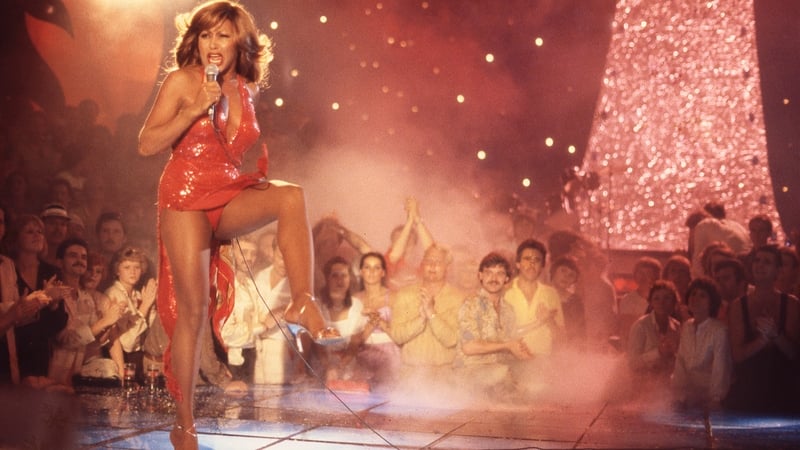

John Byrne talks to Daniel Lindsay and TJ Martin, the documentary-making team behind Tina, the HBO feature looking back on the remarkable life and career of Tina Turner.
Her life story is such an amazing tale, you'd be forgiven for thinking that Tina Turner’s personal and professional adventures were the far-fetched creation of some Hollywood scriptwriter.
From a dirt-poor background (her parents were cotton pickers who deserted her when she was just a child), she survived an horrendous marriage to music partner Ike Turner, reinvented herself as the first black superstar of stadium rock, sold a ridiculous amount of records, and now lives in idyllic surroundings in Switzerland.
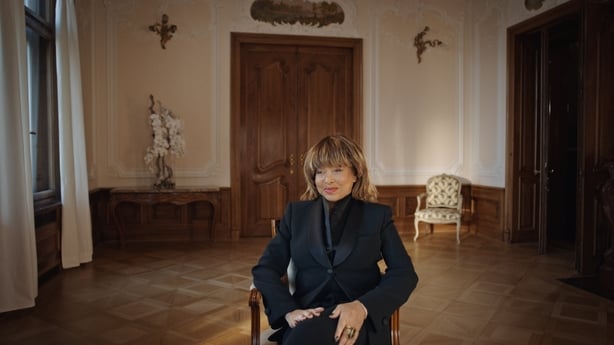
As something of a farewell to the world, the now 81-year-old is the focus of HBO film Tina, where the Oscar-winning documentary team of Daniel Lindsay and TJ Martin have unearthed a veritable mosaic of footage, audio and photography to help viewers visualize Anna Mae Bullock’s remarkable life.
It's a great watch. But it must have been a nightmare to piece it all together and cram it into a two-hour movie. So, when chatting with Daniel Lindsay and TJ Martin on the proverbial Zoom call, it seemed only good manners to ask them the initial dilemmas they faced.
John Byrne: Can you tell me about the challenges you came up against while getting the source material for Tina together?
TJ Martin: One of the big challenges is just recognizing that her story has been told so many times. That was something I don't think we were fully aware of, when we first jumped in.
But as we started to realize there had been a book and then she came out with the second book, My Love Story, and then Tina Turner: What’s Love Got to Do With It, the movie. And then there's a musical.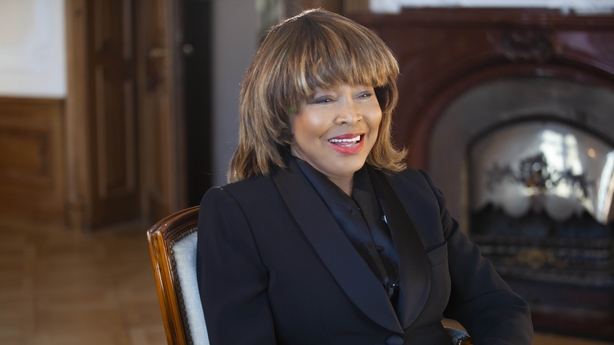
It started getting a little in terms of like what angle we're going to take, and how are we adding value to the story and, and it was really it was the first couple of meetings with Tina and speaking with her and realizing how much the pain of in the trauma or past is still so very present, even at 80 years old.
And it was something that shouldn't be neglected, and inform the Point of View of the film. We decided the one thing that seemed to be missing was what's Tina's perspective of the story that has been solidified in the public eye? What's Tina's perspective on the public persona of Tina? And that's really what kind of gave us our lens for the film.
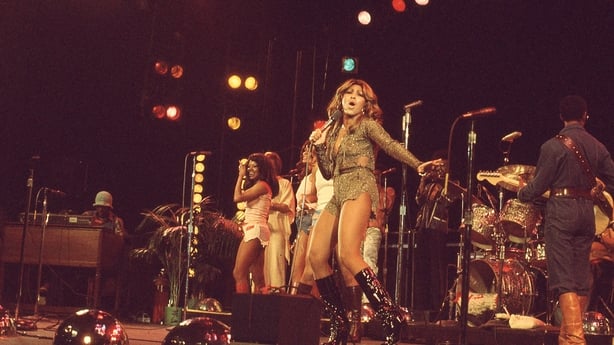
John Byrne: One of the strange things about somebody in her position is that she's such a public figure to people . . .
Daniel Lindsay: Somebody articulated it in a way that really makes sense . . . because what of what Tina kind of endured and what she was able to do, we hold her up as this kind of symbol of strength and resilience and we kind of just assume that because of that, what she symbolizes, then she is super human in a way.
But she is just like all of us . . . in her case by just mentioning certain times of her life, that can bring those traumas up to her in nightmares and it feels like for her it's happening again the first time. She's vulnerable.
And she is as a survivor is still even at 80 years old. You know, wrestling with that and processing those traumas and I think because of what we see her as in the public eye, we assume that she is, again, a superhuman. But she's not. She's like everybody.
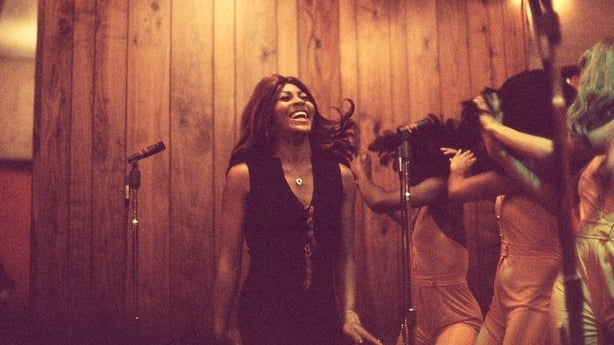
John Byrne: Yeah, a bit smarter though. I mean, there are these stages in life where she makes choices and that are actually great choices. Like when she was recording River Deep Mountain High and realizing that, you know, maybe the type of music she was singing was too restrictive for her talent.
TJ Martin: Well, in the case of River Deep Mountain High . . . she was being pushed from a from a producer to kind of learn the vocal technique that didn't require her to scream. Yeah, so she's beginning to learn more about her prowess as a vocalist and as an artist.
But I think, more importantly, she was starting to feel what it was like to be liberated from it and to and to kind of stand on her own two feet and create her own independent identity.
And that plot point in her story is so critical because that's one of the beginnings of building the foundation for the Tina that we all came to love, which is someone who's resilient, is going to pursue their vision for herself.
This is this person who carved out her own identity amidst the feeling of being owned by Ike Turner, spiritually, emotionally, intellectually, and then also amidst kind of the obstacles that were created for, within a very sexist and racist music industry. She continued to move forward and pursue her own vision of who she was.
John Byrne: And then she had the strength to not just finally leave Ike, but to start again, doing bar mitzvahs or whatever, and to be able to have the resilience to within five, six years to basically rebrand herself as Miss Rock and Roll. It's just incredible.
Daniel Lindsay: It's one of the most incredible second acts in musical history. And I think, I think that was something that really drew us to wanting to make the film. I think, also, you know, something you're touching on too, is the longevity of Tina and her career.
That was something that we're obviously aware of, in an intellectual sense. Alright, she's been around for a while, but in making the film and seeing her on black and white teen pop shows. I mean, she's there at the kind of beginning of popular recorded music, right, in the in the 1950s, and all the way through into the 2000s. And she's relevant the whole time.
I mean, it's extraordinary, you know, and it wasn't like she was a legacy act on MTV. She was like, helping to pioneer MTV, right? She was one of the stars. And it's just, yeah, it was it was an incredible thing to be reminded of and making the film.
Tina is available to download on Sky Documentaries and NOW TV and available on other formats at altitude.film.
