


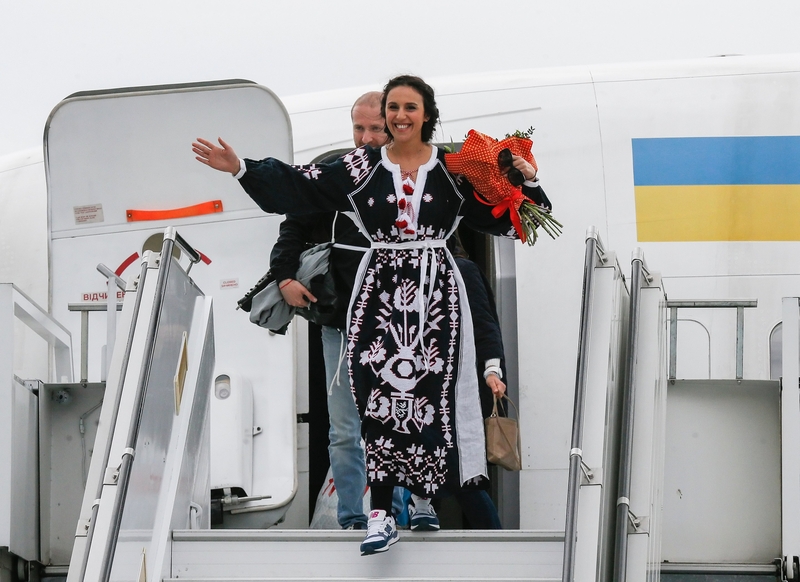
There's been an outpouring of joy in Ukraine following the country's surprise win at Saturday's Eurovision Song Contest.
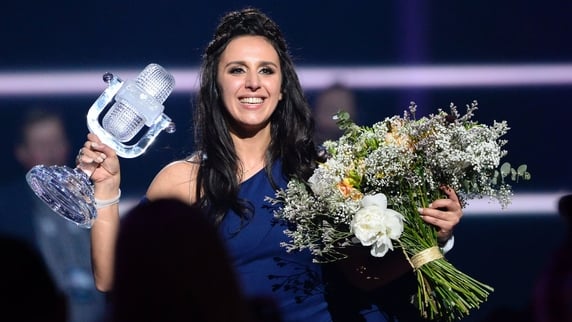
Singer Jamala overtook the bookmakers' favourites, Russia and Australia, to win the contest with the politically charged song, 1944, about the Soviet deportations of ethnic Tatars from the Crimea peninsula.
After the results were announced in Stockholm, Ukrainian President Petro Poroshenko wrote on Twitter: "Personally congratulated Jamala with the victory. Today her voice spoke to the world on behalf of the entire Ukrainian people. The truth, as always, prevailed!"
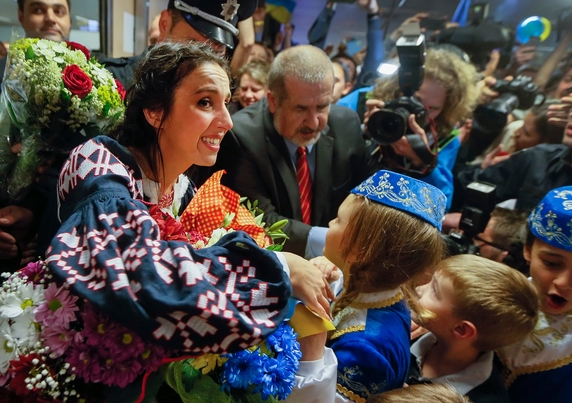
Greeted by singing and cheering fans on her arrival in the capital Kiev yesterday evening, Jamala said the win was double-edged.
"I think it's a big opportunity for us and at the same time it is a huge responsibility because Europe trusted us," she said.
Symbolically yesterday was the day that Ukraine marked an annual day of remembrance for victims of political repression, including Soviet purges of Crimean Tatars and other groups on Ukrainian soil.
However her win has gone down badly in Russia. Several Russian politicians said a music contest, which is supposed to be free of politics had been hijacked by political considerations and anti-Russian stereotypes.
"Geopolitics won on aggregate. Political meddling triumphed over fair competition," Konstantin Kosachev, a top foreign policy official of Russia's upper house of Parliament wrote in a Facebook post, adding that "Music lost, because victory clearly did not go to the best song....".
Russia's Foreign Ministry spokeswoman offered a weird suggestion that next year Russia's entry should be about the Syrian conflict and even suggested some lyrics for the song:" Assad bloody. Assad worst. Give me a prize, that we can host".
Another Russian politician, Franz Klintzevich, said Ukraine would exploit the win to highlight their ongoing differences with Russia.
"If nothing changes in Ukraine, I don't think we should take part in this," he said.
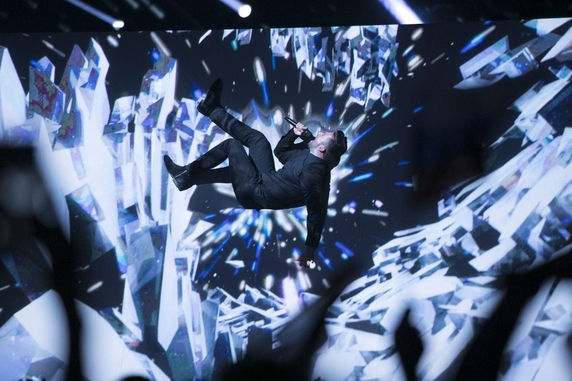
Russia's Sergey Lazarev put on a spectacular staging for his song
Eurovision rules ban any overt political statement or gestures, however the Ukranian song was found not to have breached the rules. In 2009, however, the country chose to not take part after its song, Don't Wanna Put In, an upbeat disco number, was deemed unacceptable as the title was considered a play on Vladimir Putin's name.
Meanwhile back home, fans have have continued to call for RTÉ to review the way it selects its entry after Nicky Byrne crashed out in the semi-final. It was the third year in a row Ireland has failed to qualify for the final.
Fans also noted that the Irish jury failed to award any points to the top three songs from Ukraine, Australia and Russia and instead awarded top marks to Belgium's Fleur East-like song, What's the Pressure?.
