


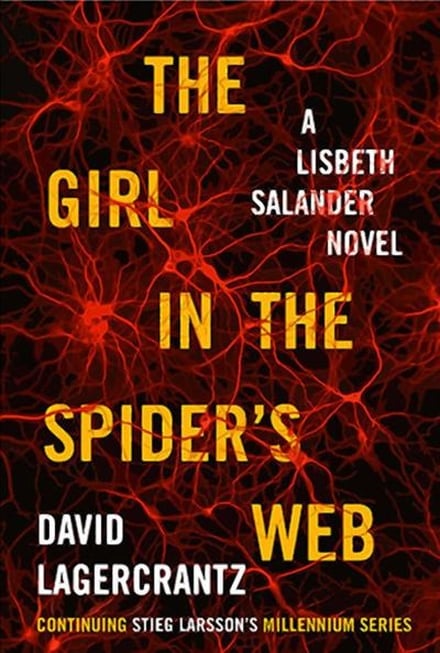
Sebastian Faulks had a go at resurrecting James Bond but his success will be small fry compared to The Girl in the Spider’s Web, the fourth book in Stieg Larsson’s Millennium series, which is set to be the book launch of the year when it appears on Thursday next, August 27. In this case the novel was not written by Larsson, but by Stockholm-based writer David Lagercrantz.
The much-anticipated crime novel will be simultaneously released in 27 countries in almost as many languages. Stieg Larsson, the author of the original Millennium series, died of a heart attack in 2004 aged 50. The following year, 2005, the first book in the Millennium series, The Girl with the Dragon Tattoo appeared in Swedish, published by Nordstedts publishing house. The Girl Who Played with Fire and The Girl Who Kicked the Hornet’s Nest followed in due course, and the three books have combined sales of 82 million copies worldwide.
The new crime blockbuster will continue the story of the troubled heroine Lisbeth Salander first introduced in Larsson’s The Girl with the Dragon Tattoo. The author believes that he had remained faithful to Larsson, weaving social and political issues with criminal intrigue. “Lisbeth Salander’s not just any superhero, “ Lagercrantz says.“She’s not only great because of her talents but also because of her context and background.”
The author, who was born in 1962, already has four novels to his name and seems to be something of a mercurial, mischievous character. At the Hay festival last May he caused a ripple of surprise when he declared that he had invented all the quotes in I am Zlatan Ibrahimovic, the autobiography he ghost-wrote for the iconic Swedish footballer.
The book sequel – the literary equivalent of the cinematic re-boot – is of course nothing new. For instance, Ian Fleming’s most famous creation, James Bond has died to live another day, as it were at the hands of many other writers. These scribes have boldly risen to the challenge of replicating Fleming’s glittering and dangerous ambience .
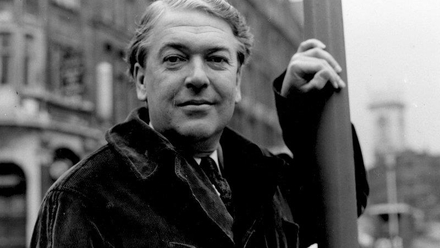
One of the first out of the traps after Fleming’s death in 1964 was Kinsgley Amis (pictured) whose James Bond novel, Colonel Sun was published in 1968, under the alias Robert Markham. One John Pearson subsequently penned a fictional biography of Bond, and novelist and screenwriter Christopher Wood wrote two novelizations of Moonraker and The Spy Who Loved Me in the 1970s. John Gardner - who was commissioned to continue the Bond series by Ian Fleming Publications - wrote fourteen novels and two novelizations of films.
It doesn't end there of course. Described as “a James Bond novel written by Jeffery Deaver,” Carte Blanche was commissioned by Ian Fleming Publications and launched in a whirl of publicity in Dubai in 2011. Two years later, William Boyd attracted much publicity for his 2013 outing, simply entitled Solo, in which Bond tries to stop a civil war in the fictional country of, ahem, Zanzarim.
Birdsong author Sebastian Faulks decided to continue Fleming’s The Man with The Golden Gun in Devil May Care, which was published on the 100th anniversary of Fleming’s birth on April 21, 2008, billed as “Sebastian Faulks writing as Ian Fleming.”
Ian Fleming expert, Nader Elhefnawy has written a chapter in his book, The Many Lives and Deaths of James Bond on the Bond books that came after Ian Fleming. “The result of Faulks’ efforts are mixed, “ he writes leadingly of Devil May Care. Admitting that he found much of the book “consistently readable”, he also declared that the book “ left a lot to be desired as a continuation of Ian Fleming’s series . . “ Ouch.
Far from daunted, Faulks has since returned to the book reboot business with a PG Wodehouse novel, Jeeves and The Wedding Bells, which appeared in 2013. It was largely well-received, and the fact that he had tried to imitate the master stylist and comic genius was almost enough in itself.
John Banville (pictured) was commissioned by the Raymond Chandler estate to write a novel featuring the author’s world-weary detective, Philip Marlowe. The Black-Eyed Blonde duly appeared in May 2014, and it is a cracker of a novel, wistful and humorous and at ease in its California setting. In fact it is arguably superior to some of Banville’s Benjamin Black/Quirke creations, and certainly ripe enough for an, er, quirky Coen Brothers adaptation.

And finally, let’s not forget Jane Austen who has had literally hundreds of sequels of some fashion or other written since her death on July 18, 1817, some of them with, yes, Mr D’Arcy in the title.
Scarlett was written in 1991 by Alexandra Ripley as a sequel to Margaret Mitchell's Gone with the Wind, published in 1936. While it made the New York Times bestsellers list, the critics were a bit tepid and fans deemed the book to be somehow inferior to Gone with the Wind.
Described as a prequel to Charlotte Brontë's novel Jane Eyre, the highly-regarded novel Wide Sargasso Sea by Jean Rhys was published in 1966 and remains a kind of cult classic. Prequels – now that’s a whole other ball game, but in the meantime, get ready for the Larsson avalanche.
Paddy Kehoe
