


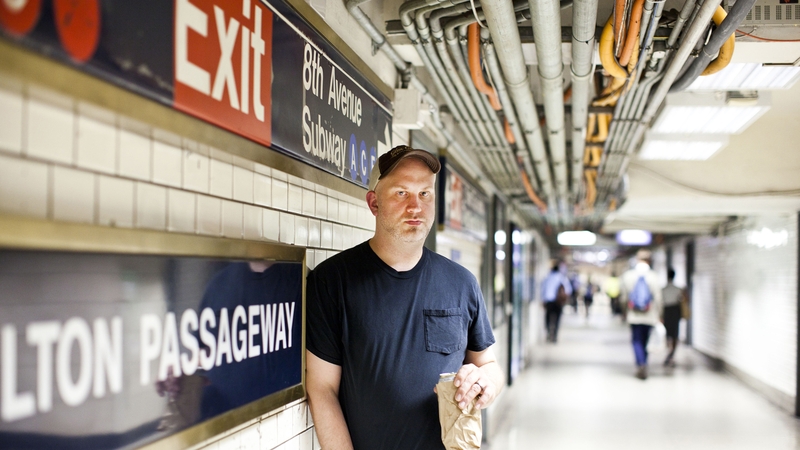
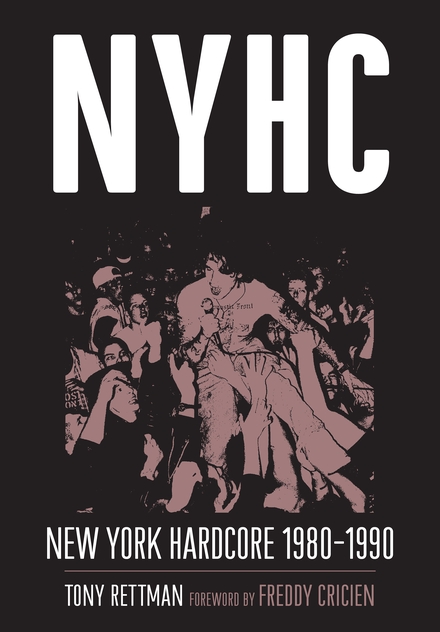
A must-read for music fans, Tony Rettman's just published NYHC tells the story of the hardcore scene in the city from 1980 to 1990. Harry Guerin found out more about the gold, grit and grime.
Harry Guerin: It's strange to think that, for all the books about New York and its music, we've never had the big one on NY's hardcore history until now - why do you think it has taken so long for someone to write?
Tony Rettman: There could be a couple reasons why this book wasn't written until now. Firstly, it could be the fact everyone is so obsessed with what happened on the Lower East Side from 1974 until 1977, that anything that came after in this location is something of an afterthought. They may not view it as being as important. The other reason could be the NYHC scene portrayed by Agnostic Front or The Cro-Mags is simply not as glamorous, intellectually driven or palatable as the stuff that came before them; like Patti Smith or Television. I read an interview once with Roger Miret, the vocalist of Agnostic Front, where he said something like, 'Why would you want to talk about people like us when you can just put a nice pretty picture of Debbie Harry and be done with it?' He really nailed it by saying that. People want stories about people coming into New York and finding themselves. They don't want stories of the people who were already here and trying to simply survive.
The other reason could be that some people were simply intimidated by writing such a book. Lord knows I was! I was intimidated for many years from writing this book. But I looked around and saw all the people who were always saying they were going to write it weren't delivering. NYHC meant a lot to me and was a huge part of my life, so I wanted the story I wanted to read about out there. I certainly am not claiming it to be the be-all-end-all story on the subject, that's for sure. But if it gets anyone who was truly knee-deep in the scene - which I will admit I was not - to say 'Hey! **** this Jersey kid! I'm writing about what this scene was really about!', then my mission is accomplished.
It's an epic of book, so which was harder: tracking the people down or the transcriptions?
I'd say the toughest thing was nailing down times and days to conduct the interviews. I still work a full-time job - like many other people who were and are a part of this music - so it was hard to find time in our schedules to sit down and talk. Transcription is second nature to me. But that doesn't mean it's something I really enjoy doing.
Were there any very odd leads you had to follow up to find people?
No, not really. We're in an age where anyone can be tracked down through Facebook and all that. Maybe some people were reluctant to talk, but once you get to know them and they figure out you're not a total jerk, they're more than willing to speak.
What are your own standout memories of going to shows -from the performances themselves to the atmosphere, characters and strange situations you found yourself in.
When my older brother started taking me to hardcore shows in the summer of 1984, there was a big controversy surrounding NYHC in regards to violence, sketchy characters, etc. There was a Suicidal Tendencies show where I grew up in New Jersey, where a NYHC band named Cause for Alarm were opening up. A throng of NYHC skinheads showed up and they sure did look menacing. One really big beefy one carrying a large garbage bag slung across his back came up to my scrawny 12-year-old self. I was frightened for my life. Was he going to scoop me up and throw me in that sack? But instead, he came up and asked me a tonne of questions about myself, what bands I liked and encouraged me to get more kids my age into the music. He was actually super cool and seemed genuinely intrigued about me and I honestly felt like I made a connection. I finally did not feel like an outsider at these shows trailing behind my brother.
As he left, he took the garbage bag off his back and said 'Here kid… have one of these'. Inside the garbage bag were thousands of clip-on bow-ties. Where he got them, I don't know. At the end of the show, I think everyone - including the bands performing - were wearing these clip-on bow-ties. I was just like, 'This guy's the king!'
A year later, my brother brought home a record by a band named Stormtroopers of Death with members of the metal band Anthrax playing hardcore. I flipped the record cover over… and there was that scary guy with the bow-ties! The guy with the bow-ties was Billy Milano, the vocalist of SOD! That was the first time I had that weird feeling of a connection that you could find in the hardcore scene. That guy gave me a bow-tie and now he's on the back cover of a record!
Did your family worry about you going to hardcore shows in New York when you were younger?
My older brother was taking me to these shows, so he kept a pretty watchful eye on me most of the time. When he got sick of hardcore, I just ended up bumming rides from older kids and lying to my parents on where I was going. So, they had no clue, thus... no worry!
Do you think the scene became so rich because there was a mix of two socio-economic groups: the suburban kids and the tougher city ones or is that wide of the mark?
I'm guessing when you say 'rich' you mean full of people and ideas? Like, not financially rich. There were all kinds of kids coming in. Suburban kids like me, squatter kids, kids from Queens, etc. But I do think that the cross-pollination and the influx of heavy metal kids into the NYHC scene made it into the scene everyone the world over watched for the next big thing.
Do you think the bands had any sense of how much interest there was in the scene in Europe, or might it have well been another planet?
No one had a clue. It wasn't until bands like Youth of Today or Agnostic Front went over and saw that kids were worshipping it to the point of dressing like what they thought NYHC kids dressed like and forming bands over there calling themselves 'NYHC Style Hardcore' that anyone knew.
New York seemed like another planet to me, and my own jaw-drop moment came when I saw the Cro-Mags' We Gotta Know video on Sky Television's Monsters of Rock in December 1987. I'd never experienced anything like it - still gives me goose bumps. Do you think they could've been the biggest of all the bands if they'd kept it together?
That's an awesome story and that same feeling was felt by kids in America too. When that video was snuck in on late night heavy metal programming on MTV over here, it really set a lot of kids minds on fire. The Cro-Mags had something where everyone wanted to be down with them and yes, they could have been the biggest thing and blown minds with their talk of spiritualism and anti-materialism in mainstream circles. But like many other people who could have stepped in and brought the earth to a new way of thinking, things got messed up. It was too good to be true.
The book brilliantly captures the raw romanticism of the era. Are you someone who thinks there's less magic in music these days, or that there's still plenty of it there if you're young enough in your head to find it?
I like to think I am not a bitter old man. I spend enough money on new bands' records to prove it! Things might be more studied these days, but that doesn't mean these guys and girls hearts aren't in it. If anything, it excites me more to see this thing continued by people who did their homework. Bands like Leather Daddy from Boston, GIVE from Washington DC, Freedom from Detroit and In School from New York make me happy that they might be the result of all those Sunday afternoons I spent in dark rooms in my teenage years. It might be the closest I have to children in some messed up way.
During your interviews, did you get much of a sense of regret or bitterness from band members that they hadn't been more career-oriented and had lost the golden ticket?
Yes, I did get that from a few people and I hate to sound like a ********, but if they really thought they could have made a dime off of what they did, I feel very sorry for them. I wrote a book about it 30 years after it blossomed simply because I thought the story should be told. I live in a cardboard box and purchase my chewing gum on a layaway plan.
How do you feel NYHC moulded or changed you as a person?
It got me interested in things beyond the lower-middle class background I grew up in. In some weird way, if I wasn't as open-minded to embrace something like Agnostic Front's Victim in Pain at a young age, it wouldn't have made me open enough to accept concepts such as Straight Edge, music as diverse as Alvin Lucier, Hawkwind, Jameson Raid or Masonna and a fine cream ale.
And writing the book?
The book changed me physically. I'm as strong as an ox and twice as large.
There was always going to be a lot of interest in the book, but has the reaction still surprised you?
The reaction to the book is very strange to me. I'm not used to anyone showing any interest in anything I do. That includes my wife and most of my siblings. But if I separate myself from the situation, I know there is a big interest in NYHC the world over. But I still perceived it from a punk rock vision. Like… if a thousand people are interested, that's a big deal. But yeah, now I know there's a big interest the world over. And that's pretty cool.
So, what's the next quest for you?
I can't tell you right now. You have to wait and see.
NYHC is published by Bazillion Points
