


Don't approach this movie thinking that The Everly Brothers' classic, Love Is Strange is going to run through it like a theme song. For it is not that type of movie at all, being dependent on Chopin and painting and bourgeoisie stuff.
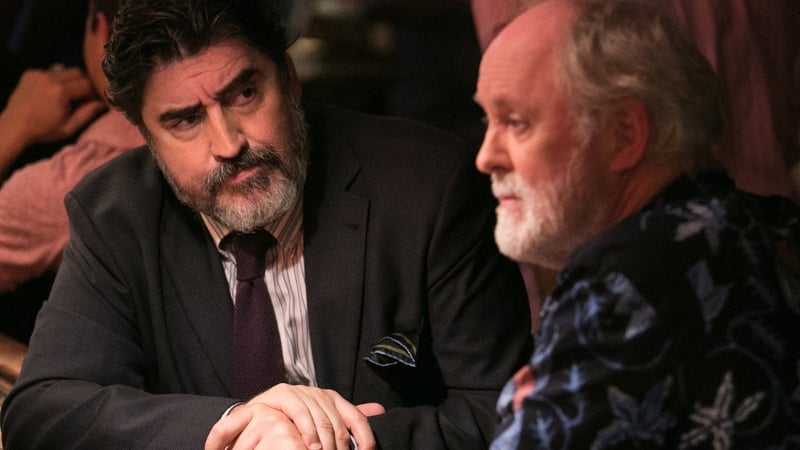
Yet the love of the title – strange, or otherwise – underpins this charming, thoughtful movie as a subtly diffuse theme. Seventy-one-year-old Ben (John Lithgow) and the younger George (Alfred Molina) have been an item for 39 years. Their wedding day is attended by family members and friends and back at their apartment, Ben sings a cheeky blues song, while George, a music teacher, plays boogie woogie piano. Ben's niece-in-law, Kate (Marisa Tomei), makes an affectionate speech.
Then suddenly George loses his job as a teacher at a Catholic school because the bishop has heard about his gay marriage. Ben's pension is modest and George must find a new job, while eking out a meagre existence teaching piano classes.
They must leave their Manhattan apartment and look for something less expensive. In the meantime, Ben moves in with his nephew Elliott (Darren Burrows) and the aforementioned Kate. Despite their best efforts to accommodate him, he proves a bit of a nuisance.
Meanwhile, George moves into an apartment populated by a young gay coterie, people constantly coming and going at all hours. Separation from each other causes both George and Ben a great deal of unacknowledged trauma, which eventually comes to a head.
Yet the complicated saga is resolved in a manner which movingly transcends all the messy domestic aspects. The love of the title leaves a dazzling afterglow in the film's moving final scenes, which somehow jolt one's expectations.
Paddy Kehoe
