


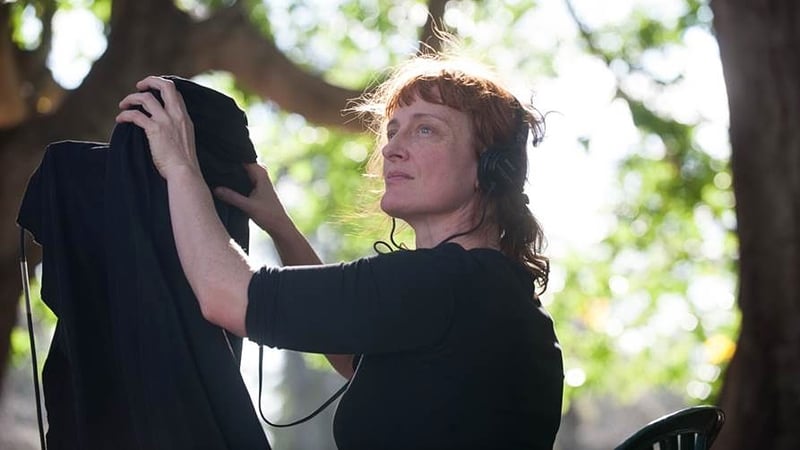
With the acclaimed psychological chiller The Babadook now in cinemas, Harry Guerin talks to its writer-director, Jennifer Kent.
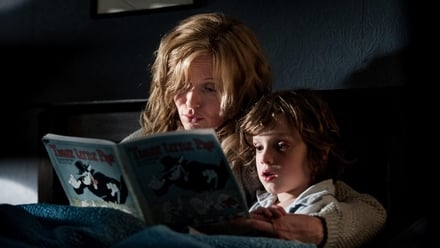
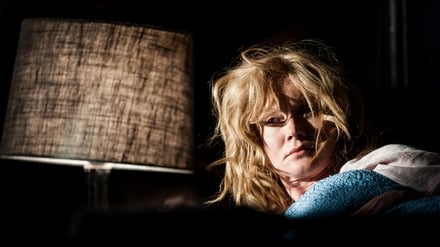
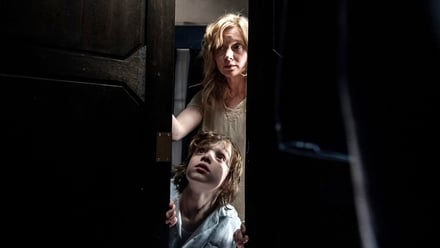
The film tells the story of mother and son Amelia and Samuel (Essie Davis and Noah Wiseman), lost in a seemingly endless forest of grief – with more trouble to come from a bedtime story.
Harry Guerin: Congratulations on The Babadook - a great debut with powerhouse performances and a mood all its own - can we put it in the genre called Things That Go Bump in the Mind?
Jennifer Kent: That's a good way to describe it. I certainly focused on the thoughts and feelings of those two characters in the writing of it. That woman's story and her descent into this nightmarish mental space was the most important thing for me. The performances are something I'm proud of; I was very fortunate to work with two extraordinary actors at the heart of this film.
It's a great 'What the...' title for a movie - it could be cuddly, it could have fangs - and it sticks in your head. Did you agonise over the title?
I didn't agonise over the title, but I think some other people have! It makes me laugh when I read that some people are p***** off by the title, or that they can't take it seriously. It doesn't phase me at all, because it's meant to be a childish sounding word, something that initially sounds innocuous, maybe even a little silly. But as the film progresses, we see that it's maybe not so childish after all…
I really wanted a word that a kid could have made up. But I didn't want it to be associated with other things; I wanted to create a new myth just for this story. The name came to me while I was working on the pop up book scenes in the film. 'Babadook' came to my mind and then the words in the pop up book sprang to life too, they started to rhyme. It all flowed on from there.
For me, the film was more about grief and loss and moving on than it was about terror. Did you do a lot of research on bereavement?
Not initially, no. I just tapped into my own losses in life, and also employed a bit of empathy to wonder how it would be for a person who'd had Amelia's traumatic loss. But once I got the script to a certain point, I thought I should do some research. I picked up a book on post-natal psychosis and was pretty stunned to see that a lot of the reactions, emotions etc that I'd imagined Amelia going through matched up with text book cases of psychosis. This really encouraged me to trust my own instincts about this character and have faith in what I'd already written.
I think we can probably all imagine what it would be like to go mad. And I suspect it's one of every human being's deep-seated fears. I think that might be why the film is touching a nerve with some people. Madness is pretty frightening
Was it hard to capture that sense of anger that is in loss - both in the script and on camera?
Again it was something I felt into instinctively. I don't tend to work in an intellectual way. I've had many years of actor training and professional acting experience. An actor's job is to put themselves into the skin of a character. So I'm very used to doing that, and I have a lot of empathy and compassion for the characters I write. I found it easy to imagine that rage Amelia would have felt after such a huge loss. We all think of sadness in these situations. But rage is there in equal measure.
Have you had people say they felt more sad than scared by the story?
I have had some of the most moving responses to Babadook, yes. People who've suffered a lot of loss themselves who've felt very affected by the film, for them it was quite cathartic. I had one young guy who'd lost both of his parents (in pretty tragic circumstances) before he was 18. He wrote to me and spoke of how true a portrait of grief the film was for him. I've had people come up to me after screenings deeply affected - and I don't mean just scared. People who've had mentally ill parents, some people who relate the story to addiction… This has meant a great deal to me. Those responses alone have left me feeling that the film was really worth making.
For me, you were saying you can only begin to heal when you admit you will never be fully better.
That's a really interesting reading of it, and a really valid one. I do tend to avoid boiling the film down to one thing; I like to leave that a bit open and let the film do the talking. That way people are free to get what they want from it. If I say 'the film is exactly about this' then if something else had a different reading, it reduces their experience, and I don't want to do that.
Many people are far more willing to believe the bad than anything good about themselves, and the stigma of being a 'bad parent' is just another stick for many fine people to best themselves with nowadays - and be afraid of. Was that in your mind while writing the film?
I am aware mothers (and I'm sure fathers) do this. And yes, I was aware that every mother I've ever met thinks they could be a better mother. You're set up to lose because how can we beat the ideals set up in the media and elsewhere? Mothers are the symbol of purity and perfection, right?
Initially I actually thought I'd be a little criticised for my portrayal of this flawed mother, that women in particular might find what she does to her child offensive. But in fact the opposite has happened. The women I've encountered have been relieved to see a flawed female character on the screen. One who is imperfect and human.
Your two leads are absolutely superb, and are equals in terms of performances. What was it like the first time Essie Davis and Noah Wiseman met and read together as Amelia and Samuel?
They are really superb, wonderful actors. We never did read together in that more conventional way: Noah was far too young - he was only six at the time of shooting. Reading the script would have made it stale for him. What I did instead was made sure we spent lots of time together before the shoot, just bonding, getting to know each other.
We started rehearsals three weeks before principal photography but we never read lines or acted out scenes. Initially I told Noah the story of the Babadook - G-rated version! - and he really got it and cared about it.
Once I'd spent that first week with him I brought Essie in and we hung out, they got to know each other. I had to teach Noah what acting was at the same time, it was a very gentle, gradual process. And occasionally we'd start to play games that involved these characters of Sam and Amelia. I wouldn't use the scenes but I'd do improvisations to create the right dynamic between them.
Then after a time we got Radek (Ladczuk, Director of Photography) in to film these improvisations, really so Noah got used to having a camera around him. It was organic and eventually a huge amount of trust developed between us all. That also included Noah's mum who was an extraordinary support and was there for the shooting of every single scene. It was an incredible experience working with those actors.
Your compatriot director Daniel Nettheim, who made another great film called The Hunter, said that you have to be careful with child actors because there's not a lot of technique to fall back on and you can only ask them to do so much. But having seen Noah Wiseman in this film he seems to operate on a completely different level to his peers.
Noah had a lot of natural talent. It was very rewarding to see him grow as an actor in this part. But I will say I don't think I could have directed him in this film if I wasn't an actor myself. I went through every scene with him emotionally, we felt those scenes together. If he had to be angry, I would get angry with him. It was enormously satisfying - not the getting angry part! - but to watch this little boy grow in confidence and trust that he could play this role and be good at it. And he loved it, too, he still wants to do more!
The scene as Samuel where he screams and has the fit in the back of the car is absolutely riveting cinema, and truly unnerving. How hard was it to get that right?
Well… I had fits as a kid. I lived in a very hot climate growing up and I was very excitable - the character of Sam is pretty much based on me as a kid, but I didn't have the trauma! So I would get very excited and my brain would overheat and I would have febrile convulsions. So when we came to that scene, I told Noah that Sam was having a fit. He said 'what's a fit?' I said 'it's like when you…' I knew I was going to have to show him. So I got down on the make-up van floor and I 'had a fit'. Noah looked very serious at me afterwards, nodded and finally said 'OK!' Then we went and shot it. And he did it perfectly every time. What I was looking for in a child that young in the auditions was a willingness and an ability to be directed. Noah had that in spades, he was able to change and grow with direction. Just beautiful to work with.
Given that you trained as an actor, were you ever tempted to play Amelia?
Two words. NO WAY!
Some people might say they wanted to see more of the Babadook – why did you decide to limit his screentime?
Some people might say they wanted to see more. Some people might say they wanted to see less. It seems impossible to please on this score. Good thing I wasn't interested in pleasing people here! I really respect my audience but I don't second guess them. For me, it always felt right that the Babadook was something that was never fully clear and out in the open. Fear for me works off the unknown so it made sense to have that thing stay amorphous.
People say it's very hard when you're close to a project to really get a sense of it. When did you realise, 'I have something special here'?
I never thought of it that way. I just had this idea and I wanted to be as true to the idea as I could, get my ego out of the way and just try and serve the idea. I don't think it's helpful to be thinking of whether you've got something special or not: the focus for me was always on making sure I told that woman's story as well as I could.
It is really a 'spin out' now to have had the film so embraced - what a great response it's been for everyone who was involved. But even if it didn't resonate with people as strongly as it has done, I'd like to think I would still be happy with it. Because it's turned out to be the film I wanted to make.
Is it frustrating for you that some people may miss out on the film because they think it's an out-and-out horror or has the film done far more than in even your wildest dreams?
It is a little disappointing to me if people are deterred by the horror label. Because I think the film would appeal to some people who say they hate horror films. But ultimately I think the film will reach whoever it's meant to reach, whether it be in the cinema or on VOD, DVD etc. I am really happy with how far- reaching it's become.
So what's next?
I'm working on two of my own scripts. I also have a lot of scripts coming my way from the US - some from Europe and the UK -and I am reading them - most of them, not all! But whether it's my own work or another writer's script, I'm really committed to telling stories I believe in, ideas that go a bit deeper. I'm not completely saying 'no' to bigger budget films, but the story would have to grab me and not let go the way Babadook did.
Would you ever think about catching up again with Amelia and Samuel a few years down the line, or are the characters done for you now?
No, that's it! I'm adamant there's no more Babadook. And I own the sequel rights along with my producer, so that's not happening. I don't want any baby Babadooks out in the world! We are making a version of the pop-up book, though. I am really excited about that. It's something I feel has integrity and can add another facet to the story in the film.
