


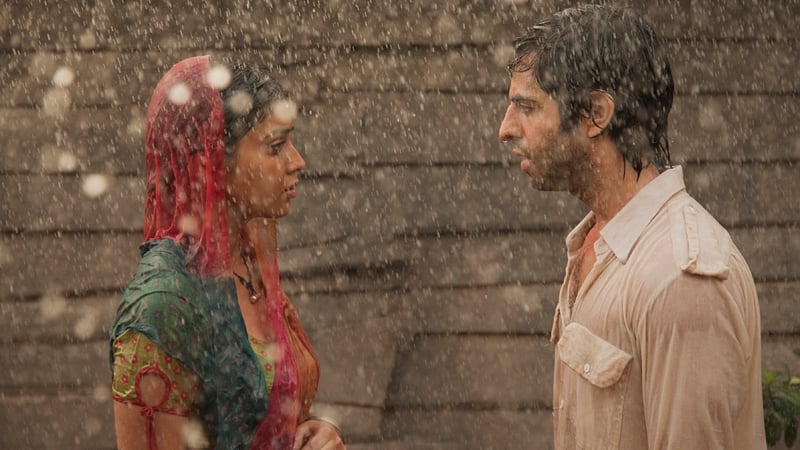
Fast-moving, colourful and passionate, Midnights Children is being enjoyed by cinema-goers since it opened on St Stephen's Day in this country. However, few will be aware of the real difficulties cast and crew encountered in what were particularly fraught shooting conditions.
Read our review of the film here
64 different locations had to be found or created, with design and costumes to fit societies covering five decades. 127 speaking parts were cast, with thousands of extras varying from street magicians to military generals.
Technicians had to set up and shoot over 300 plates for the computer-generated imagery. Given the real possibility of violent threats, or at the very least, street protests, it was elected to film in Sri Lanka, rather than India where much of the novel is set.
Producer David Hamilton has been explaining the extarordinary difficulties endured throughout the filming of Salman Rushdie's 1981 Booker Prize-winning novel.
Owners of precious furniture and artefacts had to be cajoled into lending their precious items. "There are no prop houses in Sri Lanka so most of this had to be done using personal contacts and many cups of tea, " reveals the producer.
Similarly, the makers had to source and secure period military equipment appropriate for both the Indian and Pakistani armies for the three wars depicted in the film.
Days were spent burrowing through Sri Lankan military stores to find the exact replicas of tanks, troop carriers, aircraft, helicopters, artillery, and all kinds of hand weaponry.
"After four weeks of difficult but peaceful shooting with all permissions and permits in hand, I received a letter demanding that I stop the shoot." says Hamilton.
Rushdie was then - and still is - a controversial figure. A so-called fatwa was issued against him by Ayatollah Khomeini in 1989. (This was effectively a death sentence - since dropped - for what was perceived as blasphemy in Rushdie's novel The Satanic Verses.)
He had been told that the Sri Lankan Ambassador to Iran had received a communiqué from the Iranian Government expressing their distress regarding the shooting of a film based on one of Salman Rushdie’s books.
"I spent the next 92 hours trying to get this (shut down) decision overturned while simultaneously putting together a contingency plan to move the entire production to South Africa, " recalls Hamilton.
There were serious financing implications resulting from the shut down. "We had to sell a bunch of personal assets, beg, borrow and contemplate stealing, although we stopped short of doing that. "
As a result of the shut down, Salman Rushdie himself was prevented from visiting the production, an event which everybody involved had been looking forward to.
"In the middle of the shoot we celebrated the 30th anniversary of the novel’s publication with a cake and a Skype visit on set with Salman. We stopped work, served the large birthday cake, and Deepa and I carried a computer around the set so that Salman could 'visit' all the cast and crew."
Director Deep Mehta has been based in Toronto for many years and Midnight's Children is a Candian production. Fortunately, the Canadian High Commission in Sri Lanka stepped in. "Without his tireless efforts on our behalf this film would not have been rescued, " says Hamilton.
The President of Sri Lanka, Mahinda Rajapaksat intervened and the shoot was completed without further political interruptions. However, as precautionary measures, the director and the actors felt they should stay in hotels under pseudonyms.
"We diverted any press that came our way to a German film that was shooting at the other end of Sri Lanka. We called the film Winds of Change and there was no evidence of Midnight’s Children in any of our documents or communications.
"All cast and crew signed non-disclosure agreements. We wanted no attention and actively discouraged blogging, Twitter, and Facebook postings while we were in Sri Lanka. We finished the shoot and got all the actors and crew out safely and all the footage back to Canada – intact." See the film at the IFI, Dublin.
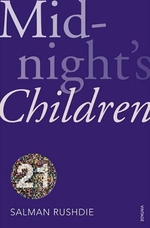
Midnight's Children, The Novel
This exuberant, fast-moving film should ideally be seen after reading the original 1980 novel, which was once again re-issued by Vintage last year in paperback. "The biggest changes from the book are that Saleem and Shiva are now inextricably linked throughout and Shiva is given greater prominence, " says director Mehta of the film, whose screenplay was written by Rushdie.
"The story builds towards the Saleem-Parvati-Shiva triangle. We also deleted the overall narrator (from the novel), and in its place Salman wrote a sparse, precise, evocative voiceover, which he performs – wonderfully."
