


The Secret Millionaire - I presume you had not gone incognito like this before, it must have been a pretty new experience?
Yea, a very unusual one. But as a company, we do a lot of corporate social responsibility - at our offices in Canada, or in the USA, the UK, Australia and here in Ireland, a big part of our ethos is to work within the communities. We created the Soul of Haiti foundation in 2007 with a number of other entrepreneurs, an initiative that came out of the Ernst & Young Entrepreneur of the Year network. We also do a lot of work with young entrepreneurs in the South-West of Ireland, through the Young Entrepreneur, the Endeavour and the Entrepeneur Experience programmes. But The Secret Millionaire was something completly different.
Unemployment, substance abuse, serious physical illness, depression and suicide - you come face to face with all of these problems as they manifest themselves in inner city Dublin in the programme.
The people whom I met with I wouldn't normally come across them and they wouldn't normally come across me. But in fact, the people working with the specific projects we met with are in fact more entrepreneurial than most people I know. They are working with zero help.
Did you spot any real or potential entrepreneurs?
I met with a guy who is working with disaffected youth in a really disadvantaged area. He is making garden allotments with them, and he's doing it by begging and borrowing to get bits of soil, blocks, plants. He's doing it with no resources, just his ability to make stuff happen, on a Community Employment Scheme, which means he gets his dole and no more. I would find a huge amount of connection with a guy like that. In a way, we're actually very similar, once you got beyond the first ten seconds of conversation, we got each other really quickly.
Suicide is a painful reality you come across in the programme.
There was a mammy - it could have been your mammy or my mammy - whose son died from suicide two years ago. She had never worked in the community, she had never worked as a figurehead or CEO or anything like that. But she created Suicide Awareness Dublin 15, a network of people without any experience. Again, she just made stuff happen with her co-founder who also lost her son to suicide two years ago. They are the new alchemists, they are creating something from nothing.
What did you pretend to be in the programme (before finally owning up, of course?)
The cover story was we were creating a documentary, looking at people doing good things in the community. I was an IT guy, who had been picked to do the documentary. It worked fine.
You lived in a bedsit for eight days. What was that like?
At night, when you were going home, you were conscious of how much money you had - 90 quid or whatever it was - for the week, to cover all of your expenses. So it meant that the normal way I would go in and out of things, I couldn't do.
You didn't even have uncurtailed use of a phone?
You were given a Pay As You Go separate phone, it wasn't even my own number. I had it so that the people whom I was meeting during the week had a number to call me on. That was good, because it meant that you were not distracted by a call about business or whateve, it was a complete immersion.
The least important aspect you say was the money you made available. Explain.
The funny thing is - and it might have been different for other people - but at the end when the `reveal' happened it was very emotional and it was massive energy, just incredible. But the least important part was the money, and it wasn't that people weren't grateful. The most important part was they were getting acknowledged for what they were doing. These people work under the radar all their lives - they don't do it for publicity, to get on TV, or papers or radio, they just do it because it's the right thing to do. They didn't know when I was ringing them back that they were going to get anything, because all I was doing was helping them with the gardens, going out rattling boxes, selling flags outside supermarkets for the Suicide Awareness Dublin 15 network.
The latter initiative is saving lives today, you say?
Without a doubt, they are doing it, without looking for money or acknowledgment, that was the real power of it. They work through a so-called a PIP process (acronym) - the first P is for Prevention, I is for Intervention and the final P is for Post-vention. There's a lady who seven months ago was a proud mum, a proud wife and a proud employee working in the IFSE. Then her husband died from suicide, her son was three months old at the time. The impact of that event on her was incredible. She now has somebody to go for coffee with whenever she wants. Now she is going back to work six months later and her life has been saved by these people.
The programme undoubtedly widened your own perceptions.
Coming into the programme, there were two things I thought we were doing - one was making a programme, the second was helping people. The third thing that caught me off guard was that it is also a journey for yourself, you are having to face things you wouldn't normally face about yourself, that you would probably hide and bury. That's the thing I wasn't expecting that I think it should come out fairly strongly.
You developed a great bond with one particular family.
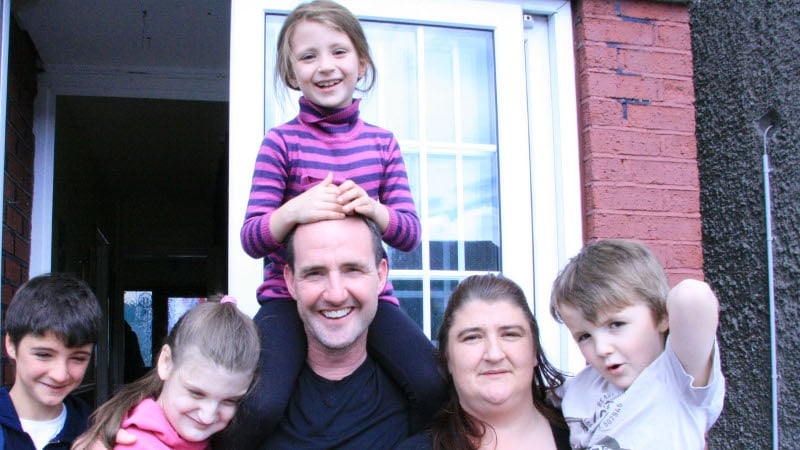
I was working with the Norris family, there's five kids. Mandy is 19, Demi is 15, she's got a severe mental and physical disability - Sam is 14, Róisín is seven year old and Adam is six and he's autistic. So you've got an autistic six-year-old and a disabled 15-year-old. So, there's a 14-year-old boy in the middle of that and he helps his mum care for the family. And when I asked Sam what would you change in your life, he thought about it really carefully and he said, `I wouldnt change anything.' That's a 14 year-old- kid teaching you stuff that you weren't expecting.
The Secret Milionaire begins Monday evening, 9.35pm, RTÉ One
