


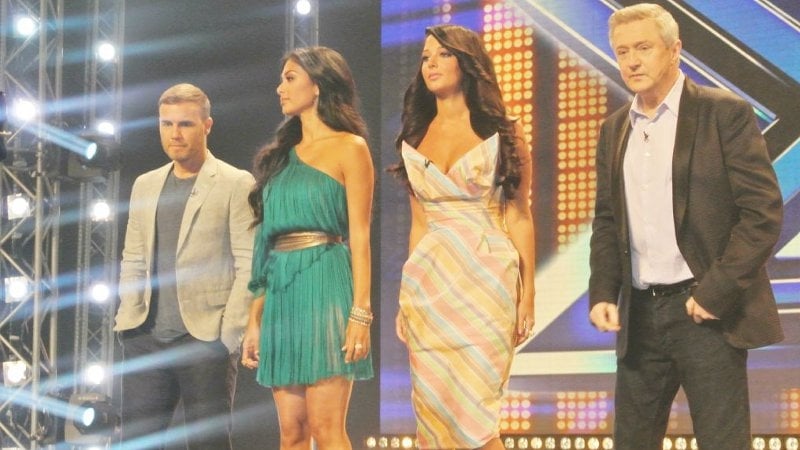
The X Factor returns this Saturday night. Alan Corr considers the show that is made by people with no interest in music for people with no interest in music
There are two types of people in the world – those who believe The X Factor is doing irreversible damage to the music industry and those who believe it is actually the saviour of the music industry.
Those of the former persuasion argue that Simon Cowell’s production line of idiot pop savants is denying our young folk exposure to real, genuine musicians and that record labels are too scared to sign anybody who hasn’t already been tried and tested in front of a TV audience of millions. Those of the latter persuasion will tell you that, given the perilous state of the music industry, The X Factor is, in fact, the only way new artists can get any exposure, recognition and a career.
Both arguments are wrong. The X Factor has never been anything other than a mindless and harmless karaoke show which doesn’t care one bit about the music industry but which is obsessed with TV ratings and advertising big bucks.
This Saturday night, it returns for its ninth season with the grim inevitability of back-to-school shopping lists, the sound of bickering in Leinster House, and the countdown to Christmas ads on telly (the very reason The X Factor exists).
The X Factor, unlike Dail Eireann, has been busy throughout the summer arriving in towns all over the UK to shoot the only entertaining part of the show - the audition stages. The X Factor has rolled across the UK like a modern-day plague cart with a call of “bring out your deluded pop star wannabes, bring out your deluded pop star wannabes . . . ”
Before I go on, let me declare a disinterest. The X Factor is not for cranky old music hacks like me. It is for the kind of TV audience that advertisers dream of – kids who are well-versed in compelling their parents to guilt buy; teenage girls besotted with the latest boy band (a phenomenon far older than a mere TV talent show); and twenty-somethings who think watching pop wannabes audition is somehow an act of clever irony. To be fair, The X Factor is one of the few shows on telly which is all-round family entertainment and it does it very, very well.
But The X Factor is made by people who have no real interest in music for people who have no real interest in music.
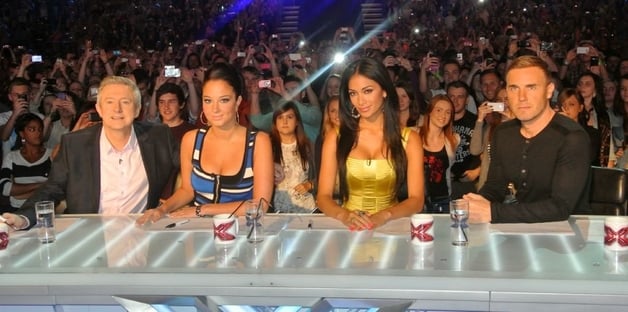
The new-ish judging panel
What of the judges? Gary Barlow is a fine pop songwriter and he's easily the most qualified to sit in judgement but his appearance on The X Factor has done far more for his own career than any of the wannabes that he's cast a cold eye over. Since last year, Barlow has miraculously been rehabilitated from his days as the fat one from Take That to the svelte, straight-talking demi-Cowell of the piece.
Tulisa from objectionable UK urban act N-Dubz has made a good job, like Cheryl Cole before her, of remodelling herself as a kind of people’s pop princess with an edge while new judge Nicole Scherzinger does at least have a very good singing voice. Who knows? Her knowledge of good singing voices might even come in handy during the new series.
And then there is Louis Walsh. Louis talks a very good fight in interviews – he is entertaining, funny, and catty. It is no great surprise that the man who gave us Linda Martin, Boyzone, Westlife and Jedward (the least unpalatable of all his acts) can will himself into believing that even the most awful of contestants have some sort of potential.
However, on The X Factor, Louis is too forgiving and too sympathetic. Maybe memories of his beginnings as a music agency booker are still fresh in his mind or maybe everybody does deserve a chance at stardom but we’d like see more of the entertaining, funny, and catty Louis on The X Factor this year please.

Rebecca Ferguson - easily the best X Factor contestant ever
But most importantly, the people who enter The X Factor don’t really have an interest in a music career either. How could they? Surely they’ve looked at the sorry fates of previous winners (sound of trumpet turning into sound of a fart) Steve Brookstein, Shayne Ward, Leon Jackson, Joe McElderry, and Matt Cardle.
All blokes doing essentially the same thing and so X Factor zealots will point to Leona Lewis as evidence of just how successful a winner can be. Lewis, who is the eh, quietest pop star I’ve ever met, had one decent song (Bleeding Love) and was nominated for three Grammys. Her third album has been delayed (again) until this October but I don’t see the world panting in anticipation. We are, however, happy to see the sassy and very good value Alexander Burke still making it as a pop star.
It seems that being an X Factor runner up is a far better career move. The pressure to succeed is less for a start. One Direction have freakishly managed to make a lot of money by doing very little, apparently JLS can still get arrested, Diana Vickers, at least, has a career in the West End and Jedward just might escape their built-in obsolescence.
But it is Rebecca Ferguson who deserves the most from her X Factor "journey". She was a runner up in 2010 and was by far the best contestant ever in the show's past eight years. She has already released a very good debut album and it is Ferguson who may yet prove to be the show’s greatest success story.
Maybe then The X Factor will have finally done something worthwhile for fans of good music and not just the people who enjoy good all-round family entertainment.
Alan Corr
