


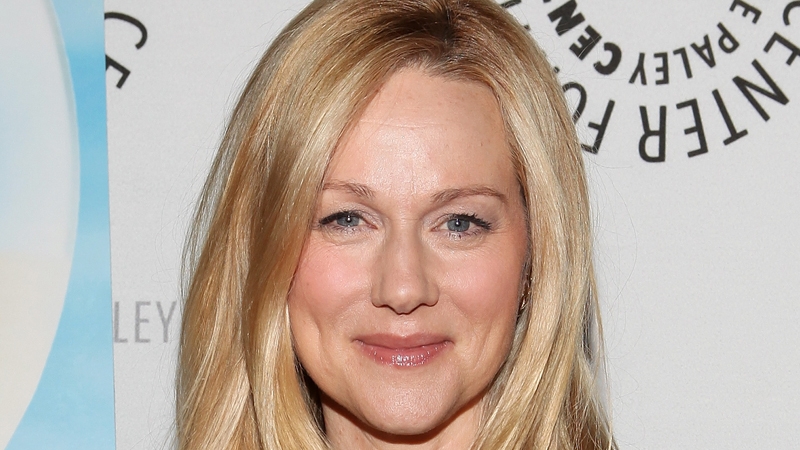
Laura Linney stars in The Big C, a new comedy-drama on RTÉ Two about a schoolteacher liberated by her terminal illness. John Byrne sets the scene.
What is it about US TV and cancer? While it’s great that shows coming from Stateside aren’t afraid to touch a subject that remains taboo for many people, it’s some coincidence that two of the best new series of recent years are both about terminally ill schoolteachers who change their lives when they discover that time is running out. In the superb 'Breaking Bad' (which has only surfaced on this side of the Atlantic on satellite channel FX, and has yet to go beyond season one), former 'Malcolm in the Middle' star Bryan Cranston plays Walter White, a struggling high-school chemistry teacher who is diagnosed with advanced (and terminal) lung cancer at the beginning of the series. In order to give his family some financial help, he befriends small-time drug dealer Jesse Pinkman (Aaron Paul) and begins producing and selling methamphetamine, or crystal meth, as it’s more popularly known.
As for 'The Big C'; that stars renowned Hollywood actress Laura Linney as Cathy Jamison, a 42-year-old suburban Minneapolis high-school teacher diagnosed with stage 4 melanoma. Now, while Linney’s character shares a lot with Cranston’s, the big difference is that the previously uptight Jamison decides to start living a little now that her days are numbered. Although it’s nowhere near as dark as 'Breaking Bad', 'The Big C' ultimately stands on its own merits, thanks to Linney’s ability to keep you from feeling manipulated by her character’s illness, and quirky characters that grow as the season gathers pace.
The cast includes Oliver Platt as Cathy’s child-like husband, Paul; John Benjamin Hickey as Sean Tolkey, Cathy's homeless and idealistic brother; and Phyllis Somerville as Marlene, Cathy's elderly neighbour. And they’re all fantastic. Later on, there are new characters as former 'Sex and the City' star Cynthia Nixon and Idris Elba ('The Wire', 'Luther') appear respectively as Sean’s old flame and Cathy’s new one.
At the Television Critics Association Press Tour in Hollywood, Laura Linney talked about the show and the impact playing a cancer victim has had on her.
What was it about this project that drew you to it and made you decide to do TV?
Laura Linney: Well, I don’t think of it as TV or not TV. It’s just good work and you go where the good work is. Also, the subject matter was running around in my head so often, about time and life, how much time you have, and the privilege of growing old.
What was your first reaction to this material?
The thing about death is that it’s honest. I go to things that have a core of honesty about them and there’s nothing more honest than death.
Was there a moment in the pilot script where you read it and thought, ‘I need to play Cathy’?
It wasn’t really about the character. It was more about what the show is attempting to do, and the challenge of knowing how difficult that was going to be to pull off. That was what was intriguing.
Have you taken anything you’ve learned about Cathy and incorporated it into your own life?
It has affected me more than any other job. I don’t know if it’s just because I’m filming so intensely. I’m in every scene and I film every day. But, I’m a little calmer than I normally am, and a little more relaxed. I’m in a state of wonder, all the time. In the first three episodes, she’s told no one that she’s sick, at least not in her immediate family.
Is that a hard concept for you to wrap your head around?
No, it makes sense to me. I get that. When you tell people, your world changes, your identity changes and people treat you differently. And then, not only do you have to deal with your own emotional response to what’s going on, but you take on everybody else’s emotional response. It’s a lot and she’s not ready to do that yet.
What might you do, in her circumstances?
Would you handle it like her? I think everybody handles things very differently and you can conjecture, but until you’re put in that situation, you really don’t know.
Have you talked to cancer survivors or cancer patients? Sure.
My mother was a nurse at Sloan-Kettering [Cancer Center in New York] when I was growing up, so I was very aware of cancer, as a young girl, and I remember a lot of her patients very well. I haven’t gotten into the nitty-gritty of the progression of the cancer and all that, just because the character is not there yet, but I certainly know a lot about melanoma. I can tell you a lot about melanoma.
Do you like Cathy?
Yeah, sometimes I like her, and sometimes I don’t.
When do you not?
She can be really rude. She doesn’t know who she is, and I have sympathy for her because of that. More than anything, she’s a woman who really doesn’t know who she is. She’s been functioning and not living, and I find that interesting. That’s where there’s a lot of potential for growth.
Did you see this show as more about a woman with cancer than a show about cancer?
When this script came to me, what hit me the most was the theme of time and what you do with time, the choices that we make, how we spend our time, the fact that we all have a limited amount of time and that it’s a privilege to grow old. That’s something that I think a lot of people have forgotten, in this very fast-paced world where youth is overly celebrated. That was meaningful to me. It was more what the whole story was about than just the wonderful character that’s there. Clearly, I thought it was something that I could spend some time with and would be challenged by, but more than anything else, for me, it’s about time.
John Byrne
