


Like all Best of . . . lists, this top ten invites discourse if not outright criticism. But that’s why we love them. Donal O’Donoghue lays his bets and takes his chances on our greatest living writers
William Trevor
Ireland’s greatest living short story writer has been compared with the very best (Anton Chekhov and Frank O’Connor) and rightly so. But Trevor deserves to stand alone, an exceptional and original writer who, in his 83rd year, is still writing with masterly elegance as ‘The Crippled Man’ in the recently published New Irish Short Stories proves. Through his long and prolific career, the Mitchelstown-born but Devon-domiciled Trevor has continue to plough the old sod through both short story and novel (the most recent, Love and Summer, is a cracker) and his work has been successfully adapted for the screen (The Ballroom of Romance and Other Stories, Fools of Fortune, Felicia’s Journey). Trevor’s world, like Chekhov’s and O’Connor’s, is distinctive, real and immediate but in the familiar there is a revealing strangeness.
* Read: The Stories of William Trevor (1983); Love and Summer (2009).
Colm Tóibín
Tóibín cut his teeth as a journalist before vaunting the gate into literature. The Blackwater Lightship won him his first Booker nomination (it was also drafted into the Leaving Certificate reading list) but it is The Master, an unfalteringly beautiful imagining of Henry James in the twilight of his career that is Tóibín’s best work to date. It too was nominated for the Booker but failed to triumph. Tóibín’s short story collection, Mothers and Sons, includes the haunting ‘A Long Winter’, one of the most powerful stories Tóibín has ever written. This book’s theme of broken families was also taken up in his most recent collection, The Empty Family. Tóibín’s last novel novel Brooklyn, which begins evocatively in his home county of Wexford before emigrating to the New World, is a work of striking formal beauty. It bodes well for the future.
* Read: The Master (2004); Brooklyn (2009)
Seamus Heaney
Seamus Famous, as Clive James once tagged the man from Mossbawn, is probably the greatest living poet in English, certainly the most widely read, and he has been digging in the turf and tradition of his country for nearly half a century, from his first published work, Eleven Poems (1965), to last year’s stirring and triumphant collection, Human Chain. When the Derryman won the Nobel Prize for Literature in 1995, the address described him as a poet with ‘little time for the Emerald Isle of the tourist brochures’. Instead, with collections like The Spirit Level (1996) and District and Circle (2006), Heaney remains an alchemist, making magical the ordinary. And who else but Heaney could have translated Beowulf, the Old English epic poem that has endured the scorn of stand-up comedians and fall-down students, into a best-seller, when his version was published in 1999.
* Read: Death of a Naturalist (1966), Human Chain (2010)
John Banville
From the beginning, Banville looked to Europe rather than his native hinterland for sustenance even if his first notable novel, Birchwood, redesigned that stock Irish theme, The Big House. In his science tetralogy, the catalysts were the great minds and great notions of revolutionary scientists – Kepler, Copernicus, The Newton Letter and Mefisto, a circling of Dr Faustus with a brilliant mathematician at its devilish centre. With Nabokov at his shoulders, Banville then gave us the brilliant The Book of Evidence, a tale about a convicted murderer (and utterly untrustworthy narrator) called Freddie Montgomery. Montgomery resurfaces in Ghosts and Athena. Banville finally made it to the Booker podium with The Sea, which became an international best-seller. An exceptional stylist, the Wexford-born writer also writes crime fiction under the pseudonym, Benjamin Black.
* Read: The Book of Evidence (1989); The Untouchable (1997).
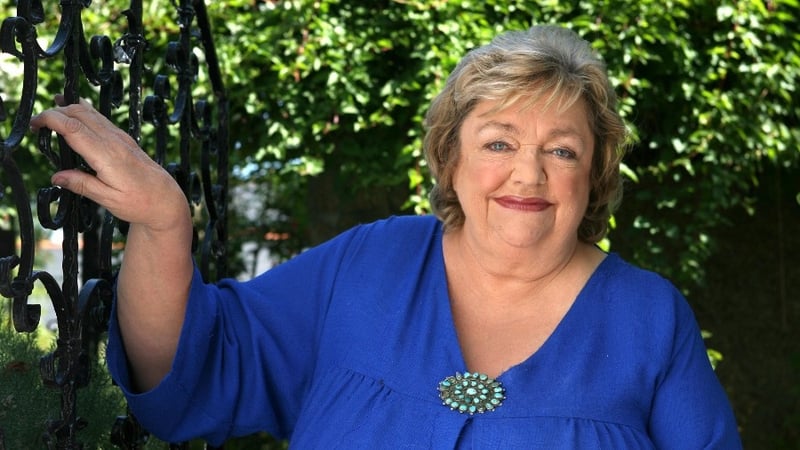
Maeve Binchy
What more can be said about Maeve Binchy, Ireland’s most popular and best-loved writer and a national treasure? We know that she can tell a yarn better than most and that she has a gift for writing stories in which people are neither villainously black nor heroically white but rather many shades of a human grey. We also know that she is relentlessly joyous because we can tell that from her books, the latest of which, Looking After Frankie, is a deceptively telling tale about single-parenthood, alcoholism and loneliness. The Dalkey-based writer, who started off in journalism, is one of Ireland’s most successful exports and unlike other institutions, she’s not likely to default. Long may she reign and write.
* Read: Circle of Friends (1990), Minding Frankie (2010)
Colum McCann
McCann, a Dubliner now living in New York, is regarded as the writer of the first great novel about September 11, the audacious collision of worlds that is Let the Great World Spin. But long before that, McCann wrote another novel about his adopted city that was also about the creative nexus of endings and beginnings. This Side of Brightness chronicled the life of those grafters and emigrants that dug and shaped Manhattan’s subway system and also dared death to give life to the metropolis’ skyline. In those books, as in most others (most notably Dancer, his imagined memoir of Nureyev), there is also a daring in his prose as he pushes the envelope. He is a tightrope-walker, always risking it all.
* Read: This Side of Brightness (2003), Let the Great World Spin (2009)
John Connolly
Connolly is credited with creating the hybrid genre of gothic noir and has carved out his bloody fictions in the landscape of Maine – the place where his best-known creation Parker, lives, loves and kills. From the beginning of his literary career, the one-time journalist was making headlines, when his compelling debut Every Dead Thing, which brought the world-weary Parker into the world, scored a massive advance (rumoured in excess of €1 million) and then scooped a prestigious Shamus Award for Best First. Since then, Charlie Parker has been fighting demons – both personal and otherwise – right up to last year’s The Whisperers, which used the Gulf War as a launch pad to unleash hell. One of his best works though is The Book of Lost Things, a strange trip into the forest of childhood.
* Read: Every Dead Thing (2000), The Book of Lost Things (2006)
Edna O’Brien
The indomitable O’Brien, now in her 81st year, has just published her 21st work of fiction, the short story collection, Saints and Sinners. For more than five decades, the Tuamgraney woman has bestrode the Irish literary landscape (‘the advance scout for the Irish imagination’ as Colum McCann once described her) and still continues to stir controversy, long after The Country Girls was burnt at the religious stake in her home county of Clare. All grist to the mill. In recent years, O’Brien continued to stir the pot with such critical works as House of Splendid Isolation (about the relationship between an IRA gunman and a widow), Down by the River (echoes of the X case) and In The Forest (loosely based on the Brendan O’Donnell tragedy). Also a writer of short stories, plays and poetry, O’Brien is unlikely to go gently into the night.
* Read: The County Girls (1960), In The Forest (2002)
Patrick McCabe
If only for the startling The Butcher Boy, the man from Clones deserves his place on this list. McCabe’s distinctive and unique idiom – bog gothic as one critic coined – paints an otherworld that is bleak and hilarious and frequently both. If his output is uneven, his last novel, The Stray Sod Country reclaimed his inimitable knack for creating a literary borderland, a place dancing with music and madness that is somewhere between this world and another. Fed and watered on comic books and Irish pop music, McCabe rewires these early influences into his writing. The Butcher Boy, with its unforgettably unhinged narrator, Francie Brady, was short-listed for the Booker Prize, as was his 1996 novel, Breakfast on Pluto. Both were made into movies, directed by Neil Jordan and if you look carefully, you’ll spot the author himself.
* Read: The Butcher Boy (1992), The Dead School (1995)
Roddy Doyle
Is Roddy Doyle the Woody Allen of Irish literature? Some of his critics have carped that his best work is behind him, which translates as he’s just not that funny any more. His Barrytown trilogy (The Commitments, The Snapper, The Van) with its zinging street vernacular, was successfully translated onto the screen. Then came the one that bagged the Booker (Paddy Clarke Ha Ha Ha) in 1993. One of his most remarkable characters, Paula Spencer, stepped into the light with the 1994 BBC TV series, Family. Spencer got her own novel in 1996’s The Woman Who Walked Into Doors (1996) and then the sequel, Paula Spencer, ten years later. In the company of Henry Smart, Doyle has taken us through 1916 Dublin, Jazz era Manhattan and the early days of Hollywood with his trilogy, The Last Roundup.
* Read: The Snapper (1990), The Woman Who Walked into Doors (1996)
Ten Great Irish Books You Must Read Before You Go
Gulliver’s Travels by Jonathan Swift
Dracula by Bram Stoker
The Picture of Dorian Gray by Oscar Wilde
The Playboy of the Western World by John Millington Synge
Guests of the Nation by Frank O’Connor
Dubliners by James Joyce
At Swim-Two-Birds by Flann O’Brien
Krapp’s Last Tape by Samuel Beckett
Strumpet City by James Plunkett
Amongst Women by John McGahern
