


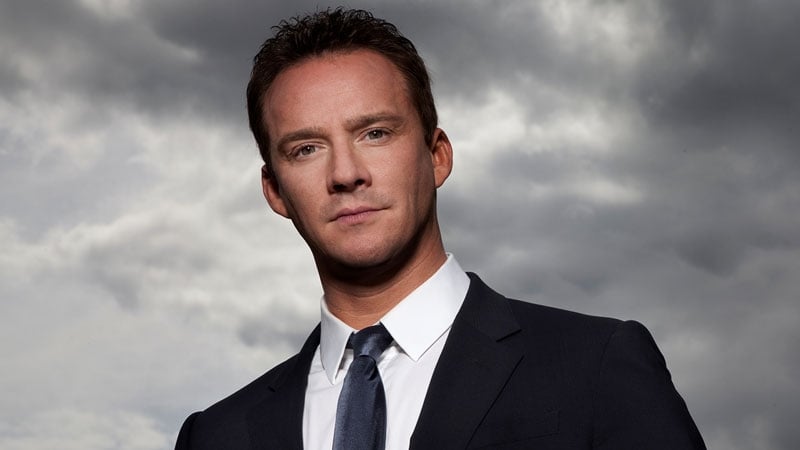
The return of Russell Watson after battling cancer is one of 2010's rare good news stories, and his new collection, 'La Voce', does all the things a comeback album should.
Recorded in Rome and powered by a celebration of life, it's an eclectic mix of everything from Mario Lanza favourites to the theme from 'The Godfather' to the original Italian version of the Dusty Springfield classic 'You Don't Have to Say You Love Me'. The tenor tells Harry Guerin about the music, moving on and living in the moment.
Harry Guerin: I know everyone you asks you the same question: How are you?
Russell Watson: I'm much better now, a lot stronger. I'm just enjoying life at the moment, enjoying my career as well, which is taking off nicely again. [I'm] Enjoying being with the people that matter to me and maybe just getting a bit more out of life as well than ever before.
Has recovering from illness made you more patient or allowed you to look at the stress of life in a different way?
RW: I think so, yeah. When you've been through turmoil in your life it puts a different perspective on life overall. I'm probably not as intense now as I was a few years ago as a result. It's like when people say to me, 'What are your ambitions? Where do you see yourself in four or five years?' I've got to be honest, I struggle with that concept of thinking so far ahead these days because probably as far away forward as I go is about a week or two. I'm not over-focussed on the future, more the moment.
Listening to your new album, 'La Voce', it struck me that it's so full of life; you're belting it out for everything you have.
RW: Aw, thank you. There's a real sense of that. I recorded it with Ennio Morricone's orchestra, the Roma Sinfonietta. When I walked into the room I got this real sense of, I don't know, it was like, 'Wow'. I had such appreciation for where I was and what I was doing. I remember the day very clearly; the first song we did was the theme from 'The Godfather'. When the orchestra struck up playing I remember thinking, 'God, I'm so lucky to still be doing this after all I've been through. I'm so lucky to still be here.
I'm so lucky to be still making records, still selling concert tickets and still singing after the events of the past few years'. That realisation hit home and I think as a result of that that emotion is encapsulated throughout the record. Someone who's not just singing words off a hymn sheet, so to speak, but who's actually singing for their lives, basically. There's a real sense of joy in the music, I think.
It sounds like the orchestra is willing you on: 'Come on man, you're back!'
RW: I'm glad you spotted that because that's the benefit of working in the same room with the orchestra. There's a real sense of connection between the voice and the orchestra. That connection is a rare commodity these days because most records now seem to be made in a studio in a sanitised environment where the music is made in Bristol, the drums are played in Bradford, the guitar's played in London and then somebody stands in a studio when it's all done and mixed and they sing the vocals over the top of it. It's not a particularly organic way of making music. With this record in particular there's a real sense, a real organic sense, that you feel the music is happening at that moment in time.
It's old school.
RW: That's the flavour my producer Mike Hedges really tried to get. There's no computer trickery on there - what you hear is what I delivered. It's not like a lot of the kids now: they go in the studio and they sing and they go through the process and all the jiggery pokery that goes on to make them sound wonderful and perfectly in tune, so they almost sound robotic in some senses. There's none of that. It's completely free, it's completely organic and if there are a couple of notes that dip under the scale they were left for, y'know, artistic reasons.
But that should be the beauty of a record: it's not meant to be a clinical thing.
RW: No, it's not, but that's what I think in many respects has happened to modern music. Making records has become a clinical process: 'How well can we tune this, how well can we polish this, how well can we refine this, how much can we make this sound as perfect as it possibly can?' And, y'know, I get that, but in many respects it doesn't [work]. You listen to an old Nat King Cole record and then you listen to - no names mentioned - a modern recording of a pop [song] and I guarantee you that the one you'll listen to and go, 'Oh wow, that's lovely' will be Nat King Cole. You very seldom listen to music now and go, 'Oh wow, that's lovely. That's beautiful'. It's more like, 'Oh, that's nice. That's good. I like that tune, that's catchy'. That's what we say now but very few people listen to modern music these days and go, 'Oh, that's lovely. What a beautiful piece of music. Aren't the strings fantastic?' Because it's so clinical now it can only be, 'Well, that's a nice tune'.
The story of what happened to you and how you've come back from it is an inspiration for other people. With serious illness, whether it's a loved one or the person themselves, there is an element of being in a tunnel where the only thing you can see is the illness.
RW: The thing is once you've been through that of course you never forget it, but by the same rule I think there comes a point in your life where you naturally start to feel like, 'I'm moving on'. And I guess for me as somebody that's in the public eye, the first thing that people generally want to talk about is, your health. It was three years ago now and I seem to be doing very well with my health and fitness, and certainly with the singing. I've just got to the point now where I want to draw a line under it - these are the experiences I took from that awful point in time, that dark tunnel, but I've come out the other end. And, it's actually quite sunny today.
'La Voce' is out now on Sony.
We have copies of 'La Voce' to give away. To be in with a chance of winning, just answer this question:
What orchestra did Russell Watson work with on the album?
Send your answer, name and address, marked 'Russell Watson Comp', to entertainmentonline@rte.ie. One entry per person.
Harry Guerin
