


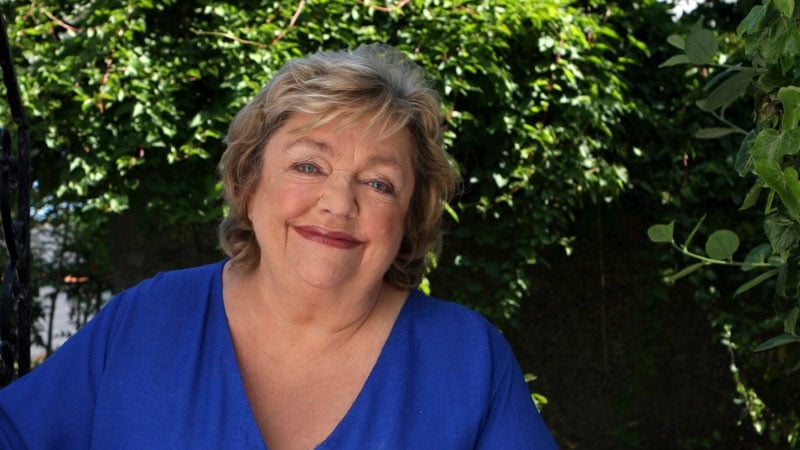
The book is Light a Penny Candle, the author is Maeve Binchy and first time around it was borrowed from the Walkinstown Library in 1980something.
The book: The copy I first read was a hardback library book with, I think, a picture of a red head and a blonde woman facing each other beside the Irish Sea. My current copy is a second hand paperback, published in 1992 and much creased by previous owners.
What a wonderful beginning. The first book picked from my shelves for rereading was an absolute joy. Before the awful phrase 'chicklit' was invented this type of book used to be known as a sweeping family saga, although that phrase doesn't do it justice either.
It has what Stephen King would call a 'what if' premise, what if a 10 year old from London is sent to live in a small town in Ireland to escape the Blitz during the Second World War. Only child Elizabeth travels to a small town a couple of hours from Dublin and encounters Aisling and her large rambling Irish family, a group of people who seem extraordinary to her, but quite normal to the rest of us and their lives continue to be intertwined long after the war is over and she returns to the UK.
Looking back, I’m amused at how much I understood about the Blitz, London and evacuation when I first read this at the age of about 14. A childhood spent reading Noel Streatfeild and 'Goodnight Mr Tom' meant I was well used to children being plucked from their parents and sent to live with strangers and I didn’t think there was anything strange about children travelling on their own across the Irish sea.
What also occurs to me this time round is Binchy’s capacity for alternating voices and points of view, including, very effectively that of a child.
"Elizabeth had thought it was ‘vaccination’ when she heard it first. It was another long word with dangerous associations. Father had laughed and put his arms around her, and Mother had smiled too. No, they assured her, evacuation was being sent to the country in case bombs fell and hurt children. But why couldn’t the parents come to the country too, Elizabeth had wanted to know. Father had said he had to work in the bank, and Mother had sniffed; and suddenly the nice smiling bit, the short happy bit when she had mixed up the words was gone. Father said Mother could go to the county as she had no job. Mother had replied that if she had a job she wouldn’t have remained on the bottom rung of it for 15 years."
But the girls grow up and so does the story, which takes place in both Ireland and London over the next two decades. It focuses on Aisling and Elizabeth but everyone in the family and extended family gets either a supporting role or a walk on part. Eileen, the Irish Mammy, Tony the alcoholic husband and Johnny the caddish boyfriend sound like clichés, but with Binchy something fresh always emerges. In ‘Light a Penny Candle’ you are not just a stern Irish Daddy, you are also the man who collapses into tears at the death of his son, and you are not the nasty step father all set to break up a family, you are in fact one of the most sympathetic characters in the book and, towards the end, pivotally supportive.
The book begins during World War 2 and ends as the 1960s dawn but other than the odd mention of ‘trunk calls’ and resistance towards married women in the work place, the second half of the book doesn’t read like a period piece.
You can still meet Aislings and Tonys, Elizabeths and Johnnys every day. When I first read the book I identified with the teenagers, and wondered at the mess the older people made of their lives. Now I’m older than the characters are at the end of the story and can empathise with some, but thankfully not all of what they through. I remember disliking the ending first time around and on rereading I still find it overly melodramatic and, well, just plain unfair. Did she have to heap quite so many of the sorrows of the world on one duo? And did all of the male characters really have to be quite so awful? But that’s a minor quibble, belonging to the closing chapters only. The rest of ‘Light a Penny Candle’ is a joy.
Gripping, gorgeous and highly recommended.
Right, that was an easy beginning. Next up I’ll be going to the unread section of the bookshelf and tackling Jack Kerouacs’s ‘On The Road’.
Talk to you at the other end.
 Sinéad Crowley
