


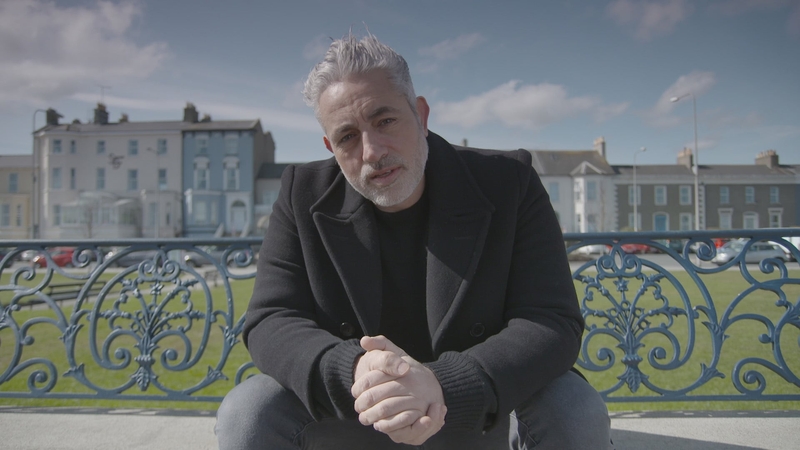


RTÉ presenter and star of 50 Ways to Kill Your Mammy Baz Ashmawy found fame as a loveable son and prankster. But in his new documentary, All Bets Are Off, which airs tonight, Baz delves into the dark, heartbreaking and complex reality of problem gambling in Ireland.
Here he talks exclusively about the stories that shocked him, the need for compassion towards those with addiction and calls for more regulation of the gambling industry.
Getting Switched On
A friend of mine had brought [gambling addiction] to my attention, saying that she felt that there was no attention regarding gambling and we had a big conversation about it. And it’s weird, it’s like when you have a child first, or your partner’s pregnant, and you start to notice children all the time, babies, prams, and you just become switched on, I suppose. I started to become very aware of how much gambling was around me - how many betting shops, how many ads. And I said I’d really like to make a program on this, because I don’t know much about it myself.
I never really thought about [the gambling industry], it’s part of our DNA being Irish. We all remember putting on our first bet, maybe at Cheltenham or whatever, and I’d never really thought much about it. But then I started to learn all these statistics they have - we’re the third biggest losers in the world when it comes to the bookies, and we’re the biggest users, as well, online in the world. We spend more per head here than anywhere else in Europe and that kind of blew me away.
"There’s a lot of collateral damage when you’re a problem gambler and with that comes shame, and shame makes people not want to talk about it."
Then I started to realise that we’ve never even done any studies here regarding gambling. All this information has come from abroad. Our legislation in Ireland, it hasn’t changed since the 50’s. So you’re talking 62 years ago, which is just insane. And then you realise that the key problem with gambling addiction is the silence. Nobody talks about it. As well as [stigma], a lot of these people have committed fraud. Lying and stealing and cheating, that’s all part of gambling addiction. You make up excuses, you borrow money, you say your car’s broken down to your friends, you borrow their money, you steal money. You live a complete lie, and with that you lose a lot of friends, you upset a lot of people. There’s a lot
of collateral damage when you’re a problem gambler and with that comes shame, and shame makes people not want to talk about it. If nobody talks about, then there’s just no problem, that’s what society thinks, when the truth is far from that.
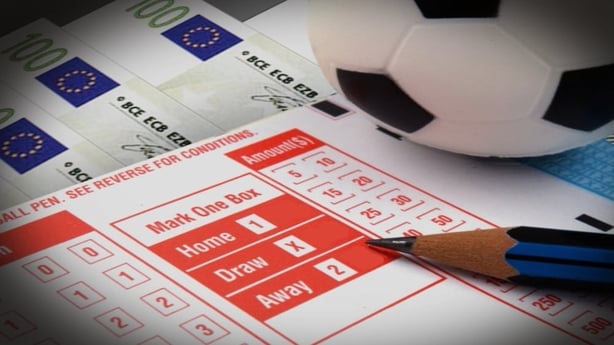
On one side, I found [researching these stories] really, really heartbreaking, they’re so shocking. Then on the other hand everyone I spoke to were probably in recovery, they were all people who had come out the other side of it. So that was good, that shows the positive side. But [the stories] really blew my hair back. It was amazing, in a shocking way.
So who is to blame?
It’s not a finger point thing, everyone’s entitled to make money, but the gambling industry makes billions. Their turnover is between the three biggest [industries], something like €1.7, €1.8, €1.9 billion they made last year. There are no laws on advertising here, there is no national framework from the Government to support
people who suffer from the disease and something needs to be done. We’re way behind [internationally], Ireland is the world’s last. Someone needs to have a serious conversation about [ethical gambling]. If you talk to people, everyone knows the damage of sugar, you have to make legislation around it and show calories in our food. The same with alcohol consumption, with being online too much, smartphones, all of that.
But nobody warns anyone about gambling. It’s everywhere yet it’s invisible. And everyone’s staying schtum about it. Nobody’s saying anything and because nobody’s saying anything it’s just going on and on. My fear is that it ends up like the tobacco industry in the 50’s where everyone’s just [saying] ‘yeah, yeah, yeah, it’s fine’. I imagine in 50 years’ time we’ll look back at this and say, how the hell was it ever like that? It’s madness.
"I think the documentary will make you sit up and go ‘wow, we do need to do something’."
You wouldn’t let any [industry] regulate themselves, but money talks. It’s a big industry, [but] as a society you’ve got to start caring for people. That’s what matters, it’s people. It’s not all about profit. You can look at it a couple of different ways but I think the documentary will make you sit up and go ‘Wow, we do need to do something, look at all these people’. I mean, this isn’t just a handful of people, there’s thousands. People think it’s just men, it’s not it’s women as well.
What would have happened in the past is, if you’re a problem gambler, you might use two or three bookies in a day, because you’d be embarrassed to have someone know how much money you’ve lost in one day. So you might split your bets over a couple of different bookies, so as to soften the shame of it. But now, you don’t even need to leave your home, you have it all on your phone.
All fun and games?
This is the way it is, 90 per cent of people have a bet at Cheltenham and enjoy it. They can go to the races, they can go to Vegas and do these things and have a bit of fun. But at least one in 10 people have a problem with gambling, and there needs to be an education. There needs to be more information, there needs to be framework to support people who suffer from the disease, and it is a disease. Since 2013, it’s been officially listed as an addiction. It’s a chemical reaction in your head. You can’t pinpoint it all on one person because you’re responsible for yourself, but at the same time there has to be an education. As a parent you need to know that this is a real thing, you need to keep an eye on your kids, your friends, your family. If your friend suffers from an alcohol problem you’ll see them fall and stumble, and the same with drugs. With gambling, you can’t see any of that. When you hit rock bottom with gambling, my God, it’s usually really bad.
"You want to make a change, make a difference, it’s your industry, maybe you should do something about it."
[Gambling businesses] are very very clever. This is a big business, taking in the billions every year. But it’s a business and you need to be disciplined, people need to be disciplined, because otherwise it can be very dangerous. It can destroy lives and families and it does everyday. But I don’t think you can point it all at the industry, although the industry makes a lot of money. Maybe they should cough up a bit to support the collateral damage. I think a third of their money comes from problem gamblers. I think it’s better than a stupid slogan on a bookies window. You want to make a change, make a difference, it’s your industry, maybe you should do something about it. Why should the taxpayer do something about it? I’m no expert, but that would be my thoughts on it.
Is there hope for families
Absolutely, 100 per cent [there is hope in rehab]. There’s hope for families, they can mend. Addiction is a hole in people, it’s a sadness, it’s something they fill with alcohol or drugs or with gambling. And through therapy and mindfulness and support, you can fix any of those things. It’s your job in society to help the vulnerable and help them get better. It’s not something to sneer and laugh at. [Addiction] can happen to anybody. The way people are, they don’t give a shit about something until it happens to them or someone they love, and the way the epidemic is at the moment, it will happen to them or someone they love.
Even now when I meet people, everyone’s got a gambling horror story. It’s only going to get worse. So we’ve got to be responsible and we’ve got to care. Ireland’s a great place and we’re great people, and one of the greatest things about us is how laid back we are. But also one of the worst things about us is how sometimes we let things walk all over us and don’t do anything about it. We can’t do that. We’re in control of the ropes, and we’ll decide how much leash we give to renegade industries.
To catch up on 'All Bets Are Off', watch now on RTÉ Player.
