



The problem with the works of German author W.G. Sebald is that anyone who cites his influence is immediately heralded as a genius.
One need only take a few photos on their camera phone, overlay their text with some interesting anecdotes they found on Wikipedia and slap a few pseudonyms over a thinly-veiled autobiography, before the literary press are calling their book 'important' and ‘original’.
How many more Iowa workshop autofiction experiments will we have to endure before we collectively admit how boring it all is? How many more stories about ayahuasca retreats, Brooklyn polycules, bad experiences on dating apps and psychogeographic rambles around an adopted city?
I'll admit I was worried when certain American critics started invoking Sebald to describe Doireann Ní Ghríofa’s work. It seemed to me that her debut novel (memoir? history? translation?) A Ghost in the Throat was doing something far more interesting than any mere acolyte, and that by reducing it down to the sum of its influences, any later work would be condemned to fill the same mould.
I needn’t have worried. While Ní Ghríofa’s new book, Said the Dead, is every bit as formally promiscuous as her first, the author has made several refinements to her style in the intervening years. The incessant chattering of ghosts feels like a feat of literary alchemy, and the time-fluid way that Ní Ghríofa dramatizes the hidden history of a women’s mental institution in Cork feels more akin to Virginia Woolf’s Orlando than to anything written by Sebald.
"‘No change’. ‘No change’, ‘no change’," Ní Ghríofa observes about how women’s lives were recorded in the Victorian era by male doctors. "Years were lost to such repetition, while precious minutes were passing in the archive."
If A Ghost in the Throat redrew the boundaries of the contemporary Irish memoir, Said the Dead stands apart as a work of postmodern necromancy.
Ní Ghríofa does an interesting thing to subjectivity here. By insinuating her gaze into everything it touches - every shard of broken glass, every live character, every ghost who comes swimming up from the pages of the dusty archive at the book’s centre - the experience of reading Said the Dead feels not only universal, but inevitable.
The boundaries between reader and author, subject and object, fiction and non-fiction, are so frequently blurred that the constant jockeying between past and present becomes as natural to the story as language is to conversation.
"In the archive, reading was never a neutral act," Ní Ghríofa writes. "No matter how gently she might open a book, a tear torn decades before might grow a little more."
Said the Dead, like all the author’s work, is philosophical without being cold-hearted, immersed in History without being conservative, emotionally generous without being sentimental, and quietly furious without being didactical. Doireann Ní Ghríofa is surely one of our most important writers, and it does both her and us an immense disservice to tether her work to anything other than its own phenomenology.
If A Ghost in the Throat redrew the boundaries of the contemporary Irish memoir, Said the Dead stands apart as a work of postmodern necromancy. Nobody currently writing is pulling off sorcery like this. Nobody—not even Sebald—could make these dead speak so convincingly.
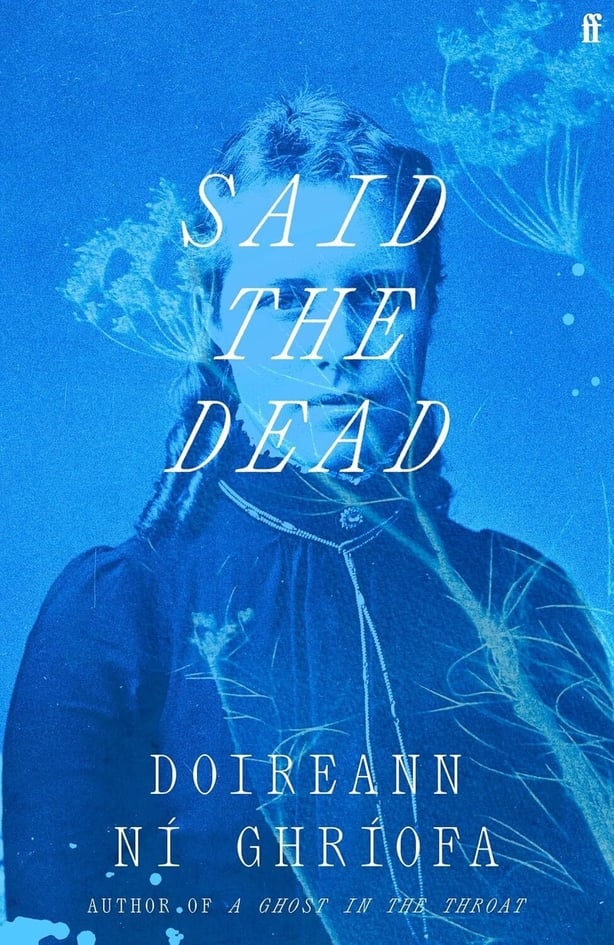
Said the Dead is published by Faber
