


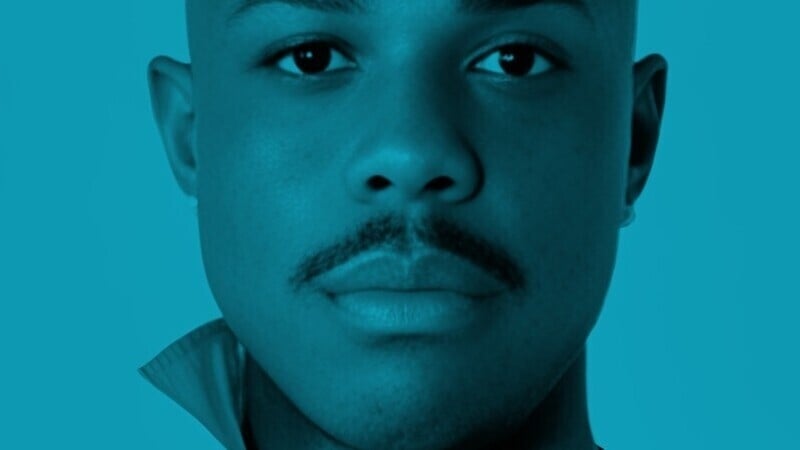
Poet and broadcaster Vincent Woods marks the 20th anniversary of Louth Contemporary Music Society, ahead of LCMS's Coming Together festival this June, unfolding across five concerts in two days, 'tracing connections between past and present, protest and prayer, fragility and power'.
'It was on a dreary new year's eve/the shades of night came down.’
‘Sean South from Garyowen’ is belting out in a border pub in the late 1970s. We’re on the one road, and every man, woman and child has stood with the men behind the wire. I have a distinct memory of a baby’s bottle white and small amidst a spree of pints, bacardis and ash trays on a low formica-topped table; cigarette smoke is drifting, dense and pungent, though we barely notice it, just breathe it in and carry on. The men’s toilet with its long urinal is where all the big boys hang out, the same joke cracked time and again by more than one of the regulars. Into this pub and all the others in town come a few men selling ‘An Phoblacht, Republican News’; almost everyone feels obliged to buy a copy.
Pianist Michael McHale performs The Croppy Boy at the We Sing for the Future festival in 2021
‘Come Out Ye Black and Tans’ is another stalwart song here; the lyric sung with extra relish because the Killeshandra referenced in the lyric is only a short journey away. And I remember a woman singing ‘James Connolly’ with huge passion, adapting the original lyric to her own reading of history: ‘God’s curse of you England/You cruel-hearted bastard,’ and a small cheer rises up from the crowd.
Some of those memories – the sounds, smells, feelings – returned recently when I heard a group called Rake the Ashes play a Sunday afternoon gig in a pub in Rathmines in Dublin, The old republican standards seemed to enthral the packed emporium – the singer was good. A Cockney-Donegal woman beside us relished it all. Róisín told us her name proudly and raised her hot whiskey in salute. I noticed that the young crown never applauded the musicians – it was if they were listening to a recording and it was all a soundtrack to their Sunday fun. I wondered if they applaud Kneecap, or is there room for applause and close listening?
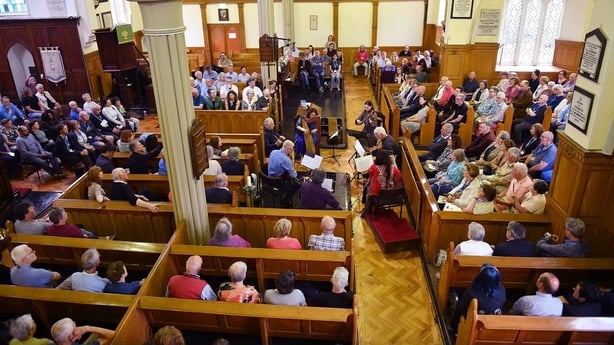
and secular spaces in Carlingford, Dundalk and Drogheda'
‘And the leader was a Limerick man/Seán South from Garyowen.’
It set me thinking about how song and music hold time and emotion - hardly an original theme; but also about how some music can perpetuate old myths and prejudices, can flatten the curving, complex lines of history into lines, rhymes, notes that make it all simple, heroic, thirst-quenching. And we seem to like our ballads as a kind of aide-boire as much as an aide-memoire. We drink, therefore we are.
How do we listen to the past?
How do we make music that reflects division, war, violence, death, murder, hatred, blind love, reconciliation, forgiveness, hope, determination?
I look for inspiration to Louth Contemporary Music Society…
Watch: SEE HEAR (2021) by Mareike Yin-Yee Lee and Marc Sabat, performed by the Harmonic Space Orchestra, for the Louth Contemporary Music Society's We Sing for the Future festival
When Sam Melville was writing in Attica prison in 1971, the six counties of the north of Ireland were in violent political upheaval. Bernadette Devlin toured America, meeting civil rights activists, including Angela Davis and the Black Panthers. Bobby Sands, aged seventeen joined the IRA. Internment was introduced in August that year and ‘The Men Behind the Wire’ became an urgent, angry call to solidarity. Led Zeppelin gave their first performance of ‘Stairway to Heaven’ in the Ulster Hall in Belfast. Paul Muldoon published his first poetry collection, ‘Knowing My Place’. Dundalk was an edgy border town where you kept your head down and your opinions to yourself. Who could have imagined that five decades later County Louth would be synonymous with excellence and questing in contemporary music, that most of the world’s great modern composers would have visited Dundalk or Drogheda, or had their music performed there; that many of the would have written new compositions for an organisation – LCMS – that began as one man’s dream, built out of nothing more (or less) than determined optimism, a vision of what could be, a way of giving something back.
I have listened to the dazzle and silence of music in sacred and secular spaces in Carlingford, Dundalk and Drogheda; shared the held breath and communal concentration of LCMS audiences through concerts and performances that have been almost religious in their intensity. This coming together of people always feels like a kind of healing, a truce in the face of mundane daily conflict and survival, a glow of invisible light. There is a simple, profound clarity at work here at all times, a quiet building of contemplative concentration, a reaching towards shared understanding and an acceptance of mystery. In such spaces, reconciliation seems possible.
Ensemble Resonanz perform Frederic Rzewski's Coming Together
Frederic Rzewski was quick to spot the power of Sam Melville’s words and how they might move gracefully into music, how the transformative energy of repetition and musical pattern would bring them to a wider audience and unmoor them from the specific moment and place to float in time and universal space.
How we need such artists. How privileged we are that LCMS brings them to us, crossing borders into a different country.
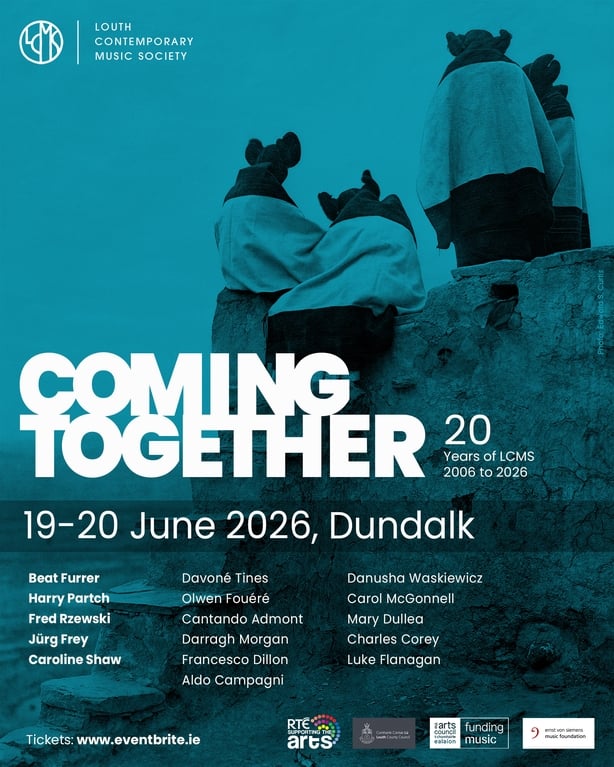
Louth Contemporary Music Society's Coming Together Festival runs 19–20 June 2026 at various venues across Dundalk - find out more here
