


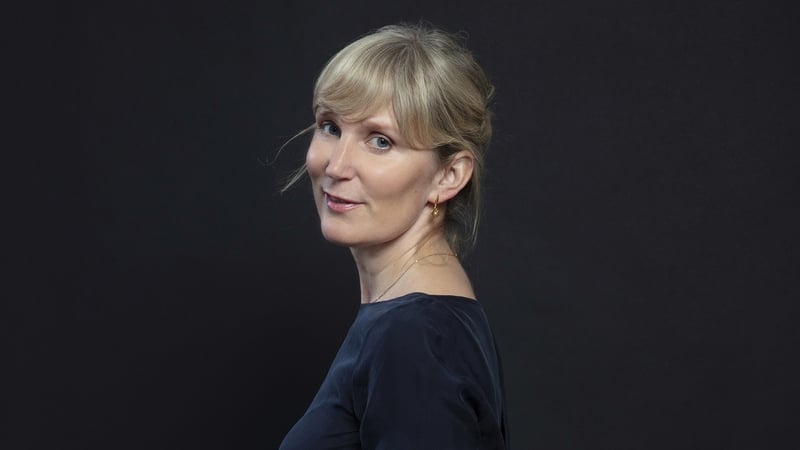
We present an extract from Lisa Harding's acclaimed novel The Wildelings, a vivid and compulsive story of obsession, control and guilt, set in Nineties Dublin.
Jessica and Linda have been best friends since the first day of school. Both girls are from very different broken homes – and beautiful, wilful Jessica has always ensured their survival. Now eighteen, the two have come to Wilde – an elite university in the heart of Dublin, far away from their troubled childhoods. Jessica thrives immediately, and, with the faithful Linda at her side, finds herself at the heart of a new circle of friends.
But then Mark enters the picture. A philosophy student a few years older than them, he has strange and compelling ideas about self-discovery. When Linda and Mark start dating, Jessica is disturbed by the change in her friend – and how quickly she seems to have fallen under the charismatic man's control.
Fresher's week: the world experienced at a heightened level of intensity, everything filtered through a hormonally charged lens. I moved through the college grounds as if I were a star in my own movie, and Wilde – with its fairy-tale cobblestones, Gothic buildings, giant trees, its metropolitan location in the centre of town, its romantic reputation as educator to luminaries such as Beckett, Bram Stoker and Oscar (its most famous playwright namesake) – was the perfect setting for any number of narratives to play out. A rarefied, insular world, its ancient quadrants facing inwards, in stark contrast to the haphazard, depressed city outside its walls.
I imagined a camera was trained on me as 'leading lady’ and Linda in her supporting role as ‘best friend’, a percussive rousing score following us as we walked about, drunk on all that beauty, twitching our tail feathers.
We need your consent to load this rte-player contentWe use rte-player to manage extra content that can set cookies on your device and collect data about your activity. Please review their details and accept them to load the content.Manage Preferences
Listen: Author Lisa Harding talks to Oliver Callan
I was chosen as number one of the ‘ten top fillies’ on the list of appetising freshers that first week of college. The all-male-staffed magazine named HUP! rated fresh intake and I made the grade – Linda, surprisingly, made it onto the list too, just about, at number ten, repeating a pattern we had established in school: number one and number ten. Top of the list: ‘Pert but slappable.’
Something about landing in that place that was so alien to us and finding ourselves the objects of so much attention made us indescribably horny. That the two of us were ranked in the top ten newcomers deemed worthy by the HUP! boys seemed extraordinary in the face of all the other long-legged, shaggy, sophisticated stunners walking about. ‘See?’ I said to her on our first night, lying on my single bed in my tiny room, ‘We are something special.’ We almost tongue-kissed we were so overcome with emotion. I stroked her baby-fine hair, with its auburn streaks, and battled a desire to yank it.
We spent the whole of that first week scoping out new talent and the opportunities for meeting said talent. The males here were a different species to the ones in school. Linda and I already had each other, but Wilde offered the possibility of expanding our sacred duo.
The old Front Square was a riot of societies all vying for the newbies’ attention. Stalls were set up shakily on the cobblestones, all at skewed angles, adding to the general air of rakishness. We lingered at the rowing society table, even though we had no intention of joining, but the guy behind the desk was exotic (a perfectly acceptable term then) and beautiful – not a word we would ever have associated with a boy before. Dublin in the early nineties was still teeming with the white and pink variety, yet here there were heavenly creatures, sophisticates from other worlds. We had fallen into another dimension. This boy was called Rico, imagine? I pictured the girls in our school dying. Rico invited us along to the rowing soc’s first social gathering in two days’ time. We would ‘be there, or be square’, I heard myself saying, so suburban, before my cheeks flared red, which was not something that usually happened to me. I could feel Linda studying me with interest. ‘F**k off,’ I whispered to her. She just smiled back, as if the whole thing were the loveliest dream ever.
We passed by the debating society table, where students were espousing their opinions in shrill, earnest voices. ‘Corduroy-wearing, self-important, patronising, ugly posturers,’ I said to Linda, after we were out of earshot, feeling strangely provoked. She thought this was hilarious. I think I felt diminished. By their confidence and their certainty.
The array of choice was dizzying: the science fiction society, the jazz society, the historical society, shooting, diving, fencing, swimming, theology, expressive dance, judo, aikido, musical society, mime, fencing, a cappella, bel canto, contemporary dance, and other, more obscure ones including the ‘toy train’ society. There was a notable lack of anything to do with sexuality or gender, not even a nod to feminism, let alone identifying oneself as non-binary, or fluid, or trans, or anything other than straight. But then, back then, it was thrilling to be a number on a list, ranked by your body parts. There were, of course, undercurrents at play that we had no language for, and there was experimentation, but hidden, unless it was of the hetero type that could be bragged about: two girls and one guy. No doubt it was this prevailing macho culture that fostered the emergence of a character such as Mark, who was, on the face of it, so different to the HUP! crew – an ‘enlightened male’ who modelled himself in direct contrast to them, as well as to his own chauvinistic pr**k (his words) of a father.
*
When I try to describe Mark now and commit him to paper, the main thing I remember is a bizarre state of attuned attention that I experienced around him. How the air seemed to shift and rearrange itself around his presence, and how hard I had to work not to look into his eyes. He was not handsome in the way that Jacques and Jonathan were – his shoulders were too narrow, mouth drawn too tightly, hair leached of pigment, hands and feet too large, his skin milky, as if he had spent his early childhood in dark rooms. Yet, those blue, blue lenses through which he viewed the world were electric portals to other realms. He carried himself with an air of f**k you – it wasn’t charisma in the normal sense of the word, but something sort of dark-sexy. He made us, his inner circle, feel permanently horny, turned on, tuned in. Which is irresistible when you are eighteen and unmoored. He could sense the stuff pulsing beneath the veneer of ‘cool’. He could smell it and he fed off it and he fed it back to us, until we were gorging on the undercurrents of hurt we hadn’t even been aware we were carrying.
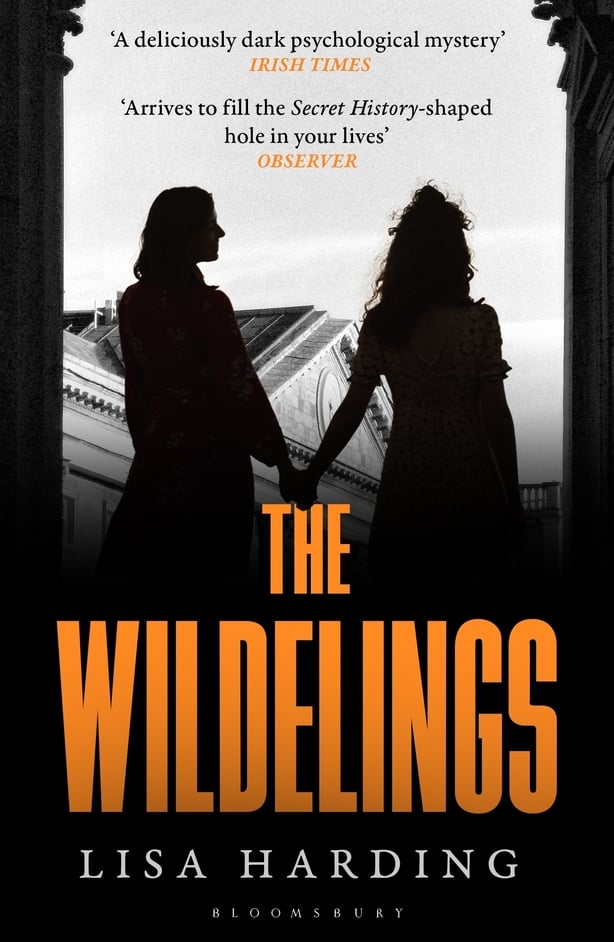
The Wildelings is published by
