



My late grandmother had a favourite phrase for people who seemed too good to be true: Street angel, house devil.
She tended to be wary of the clergy and warned her daughters to never be left alone with a male physician for examination without a nurse present.
To some, this might seem excessive, but it is only as the years passed and a litany of horrors came to light from church sex abuse scandals to the treatment of young women at the hands of the Magdalene Laundries that I realised how right she was.
Because predators usually do not hide under the cover of night waiting to make their move. Instead, they're in church pews, school hallways and community centres, or sometimes gently whispering in your ear…
We need your consent to load this rte-player contentWe use rte-player to manage extra content that can set cookies on your device and collect data about your activity. Please review their details and accept them to load the content.Manage Preferences
Listen to the first episode of Pirate Predator
Peter Mulryan is a documentary maker and journalist who has worked for RTÉ's 2FM and the BBC.
He is a storyteller with decades of experience who has won the prestigious Prix Europa award for Best European Radio Documentary for his work on Message in Bottle, an RTÉ Documentary On One collaboration about American GI Frank Hayostek, who threw a note from a troop carrier in 1945, which was found eight months later in Dingle by Breda O'Sullivan.
But there's one story Mulryan has never been able to finish telling, something that started back in the 1980s, over 40 years ago, while he was working on a project about pirate radio.
This story, with the help of a leading figure of the unofficial airwaves, would form the basis of Mulryan's book Radio Radio.
When the book was published in 1989, Mulryan was living in London. When he returned to Ireland years later his source, once an icon of Irish pirate radio, had been convicted of paedophilia.
Who is the elusive figure? A man named Eamon Cooke.
And if you do not know that name, you're not alone.
While others have tried to tell this story before, so many details have been omitted or survivors' voices excluded, but now, with the help of RTÉ Documentary On One and, of course, its loyal listeners, in the new podcast Pirate Predator Mulryan is going to get to the bottom of this horrifying tale involving serial abuse, Irish radio, mysterious deaths and connections to the IRA.
To learn more about the podcast ahead of its release today, I asked Mulryan a few questions about life as a documentary maker, the importance of telling this story and the history of pirate radio.
What brought you to the world of documentary making?
I've been making documentaries since I was in college - in fact, this project started as a college project back in the 1980s. So this story that started over forty years ago reaches its conclusion (with this podcast).
Back then, I was a mouthy teenager who decided to write a book on pirate radio in Ireland. This first brought me into contact with Eamon Cooke of Radio Dublin fame.
I interviewed him many times for that book, Radio Radio, which was published in 1989. By then, I was living in London, so unaware of what happened next. When I returned to Ireland, Cooke was a convicted paedophile.
Why this story?
From pirate to paedophile - how did that happen? The question has been rumbling around in my head for well over 20 years.
Can you talk a little bit about the history of pirate radio and why it was so important in 60s/70s Ireland?
If you were young back in the 70s, Ireland was a cultural wasteland. One TV station, one radio station, pirate radio was a glimpse into an alternative reality; one glimpsed in movies or on TV, where everything didn’t close at 11pm.
Remember this was the era of disco in the US and punk in the UK - what did we have? Dickie Rock.
Did you meet Cooke before the allegations against him surfaced? If so, what was your impression of him, and how did you feel once you learned the truth?
I interviewed Cooke many times in the 80s. He was weird, never made eye contact. I figured he was on some kind of spectrum, as he was quite a brilliant engineer. However, it does haunt me that, like everyone else, I heard the allegations and just ignored them. Everyone did. It was a different time.
We need your consent to load this rte-player contentWe use rte-player to manage extra content that can set cookies on your device and collect data about your activity. Please review their details and accept them to load the content.Manage Preferences
Listen: Pirate Predator - Peter Mulryan talks to Today With David McCullagh
There’s a lot of sensitive and complex content in this story - how did you reach out to sources, particularly victims and their families and get them to trust you and the team?
This is a hard one, because it’s about gaining trust. That can only happen on the victims or survivors’ terms. It takes time and can’t be rushed so usually involves several meetings and lots of care. Even then, it’s sometimes not successful as people decide they’re not able to speak out, for a variety of reasons. RTÉ Documentary On One has a great reputation, so that helped in that people knew at the very least knew this series would care for them, and what they had to say.
Why did you or how did you come in contact with Doc On One about this story?
I had worked with the team before; this felt like a natural fit.
Why should people listen to the podcast Pirate Predator?
I thought I knew the story I was going to tell - turns out I didn’t know the half of it! This story is so bizarre and sad on so many levels. It really does call into question how we lived our lives in the past.
Also, there are many stories of institutional abuse in Ireland - that’s not the case here - this is against the backdrop of a really popular radio station - we don’t generally expect to see stories like this in media settings.
Certainly not away from institutions - I think this shows that abuse can happen anywhere as long as people look the other way.
What do you hope to achieve by telling this story?
If you Google Eamon Cooke, it’s all about Philip Cairns - that alleged connection is something we do of course examine and scrutinise in the series and we do come to a sort of conclusion on it, but I primarily want to put the focus on the children we know Cooke abused, hundreds we believe. These are the victims and survivors living with the life-long impact of Cooke’s horrific actions and abuse. We know too that so many never got justice and were never heard. We hope this series will at least the reveal the full extent, as best we can uncover, of what Cooke did to a generation of Irish children.

For readers who do not know, Philip Cairns was 13 when he went missing on 23 October 1986 while making his way back to Coláiste Éanna, in Rathfarnham in Dublin, where he was a first-year student. Six days after he disappeared, Philip's schoolbag was found dumped in a laneway metres from his home on the Ballyroan Road in Rathfarnham.
Listening to this story makes you question who you can trust. Cooke was a pillar of his community as well as a husband who misled so many - what do you think this story says about human nature?
I wouldn’t say he was a pillar of the community - he kept to himself. He was a very clever, manipulative man. In a way, that’s how abusers get away with it - they are smart and controlling. Cooke could manipulate and threaten children - and adults - isolate them from their support structures, and so control them.
How big was Cooke’s pirate radio station in 70s/80s Ireland?
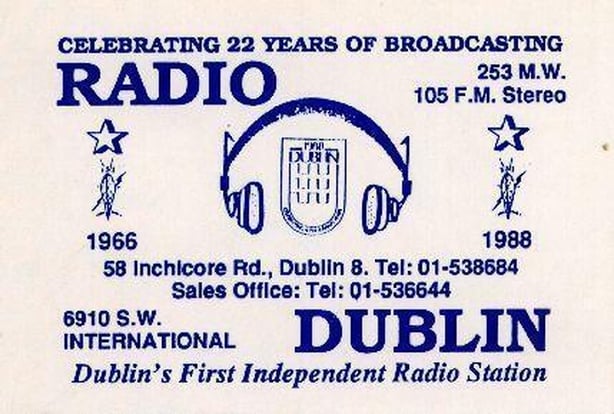
Huge. It’s hard to underestimate just how powerful and influential Radio Dublin was in the late 70s. It was a cultural phenomenon, a lightning rod for all the pent-up frustrations of teenagers living in a country still in the past. Remember, the generation born in the 60s are the ones who voted in divorce, same sex marriage, abortion, etc.
Just listening to the first episode, it feels like you can see the evolution of a criminal or abuser from Cooke’s childhood onwards. Do you agree?
Yes - but that’s what hindsight does.
What is the one piece of advice you’d give to aspiring storytellers or anyone who wants to make a documentary?
Just go for it. Fashions come and go, but storytelling is eternal - it’s one of the things that makes us human.
How did 1970s/80s Ireland differ from 2026?
Night. Day.
Where did Cooke’s nickname 'The Captain’ originate?
Everyone had ‘handles’ or false names, as it was illegal to run a pirate station. I guess this comes from Captain Cook. He actually put himself out there as the self appointed - and anointed - Godfather of Irish Pirate Radio - I think it was he who named himself ‘The Captain’ - another insight into the type of individual he was.
Allegations came to light in the late 70s but nothing was done - how did this go on for so long? How did he hide in plain sight for over half a century?
That is a good question. I think he had powerful friends in high places.
What was the biggest challenge in making the series?
The biggest challenge in making a documentary like this is that many people don't want to talk. I can understand why, too. So gaining trust and moving slowly are very important. It's also critical we don't retraumatise survivors - in the end, this is a project for me - but it's their lives.
Music plays a huge role in any podcast - can you talk about the role of music in this series?
Music is very important because music is very telling of a time and place. You should talk to our composer, Kerry woman Alma Kelliher, as she has done a great job weaving the sounds and feel of the 70s into a music track for the 21st century.
Q:What would you like to say to people listening who may have information on this story?
If you have any information, please feel free to talk to us. You can talk off the record and remain anonymous. It is important to record what happened, as every day passes, events slip further into the past.
Already, many people connected to this story have died, so making a permanent record is crucial so survivors get to tell their story, we have a permanent record and a warning for the future.
Readers can listen to the first episode of Pirate Predator now, with new episodes dropping weekly - click here to learn more.
NB: This series features scenes of child sex abuse. If affected by any issues raised, please visit rte.ie/helplines
TIPS: If you have any information or knowledge about Eamon Cooke please send them through to documentaries@rte.ie or you can leave an anonymous tip here
