


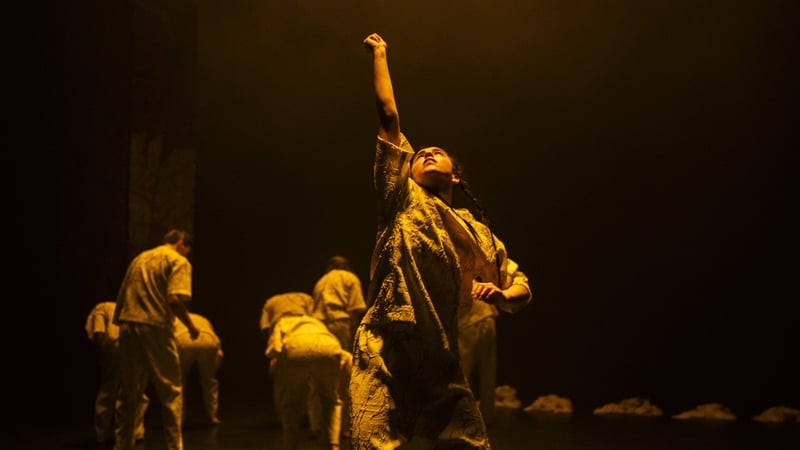
The Fifth Sun, a new work by choreographer Mufutau Yusuf for Luail – Ireland's National Dance Company will premiere as part of Dublin Dance Festival 2026.
Inspired by the tradition of Irish keening, The Fifth Sun unfolds as both a eulogy and a renewal, reflecting on humanity's past, confronting our turbulent present, and leaning cautiously towards an uncertain future.
Below, Mufutau Yusuf explores the genesis of a work that aims to 'reflect the richness and diversity of how grief is lived across cultures and time.
Where did the title for this piece come from?
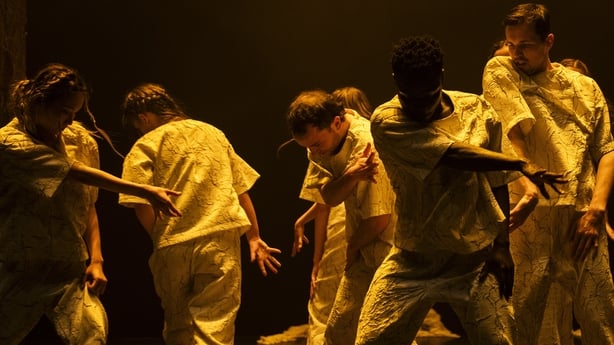
The title The Fifth Sun is borrowed from an element of Aztec cosmology, which portrays a world marked by fragility and temporariness. This is shown in the work’s atmosphere and subtle references to recent global crises. I feel there is a collective need to grieve and connect within an unstable, ever-changing world and the piece attempts to convey this. The piece itself draws on various references on themes of grief, mourning, and lamentation across cultures, and engages particularly with Irish keening, questioning how contemporary society makes space for grief.
Do you think people in contemporary society are able to acknowledge grief and loss?
I think while there are moments for collective mourning, in response to global crises, there is generally limited space for sustained, embodied expressions of grief.
Much of how we grieve as a society becomes private and insular, society demands that we rush toward resolution, that we move on rather than holding or remembering in a communal way. I think creates a disconnect between the depth of what is felt and the ways that grief can be expressed.
The work responds to this by creating a space for grief to exist openly, physically, and collectively, without needing to be resolved, rushed or contained.
Do you think society was better at acknowledging grief and loss in the past?
It’s difficult to say that society was "better" at acknowledge grief and loss in the past, but there were perhaps more visible, communal structures for acknowledging grief, such as shared rituals and practices like Irish keening.
At the same time, this doesn’t mean grief was easier or fully resolved, there have always been silences and constraints around loss. In an Irish context, there is both a strong cultural history of mourning and, at times, a tendency to suppress or contain emotion.
Through your research do you think there are other cultures who are better at acknowledging grief?
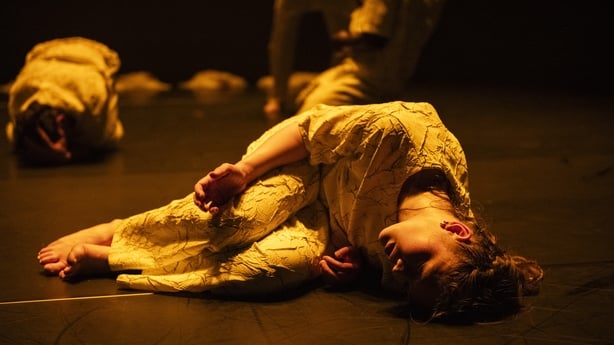
I think each culture has developed its own languages and rituals to cope with loss, some more visible or collective, others quieter and more internal. What I’ve been drawn to is the many ways grief can be carried, expressed, or held over time. The piece emerges from that curiosity; an attempt to trace these different textures and to reflect the richness and diversity of how grief is lived across cultures and time.
Where did the idea for the keening soundscape come from and what other mourning references are used and why?
The idea for the keening soundscape came from a desire to reconnect with vocal expression that allows grief to be released through the body. Keening, with its raw, organic and free-flowing quality, opened a way to move beyond language into something instinctive and shared.
I also drew from physical mourning practices such as chest beating in parts of the Middle East, swaying in Irish and Mediterranean traditions, and stamping or rhythmic grounding gestures in various West African contexts. These embodied actions frame grief as physical and communal.
What feelings or emotions do you think this will bring up for the audience?
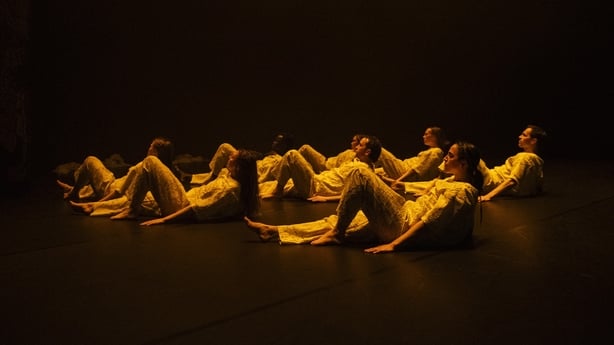
I hope the audience will experience a range of emotions. The piece is at times quiet, and reflective. Other times, the physicality of the work can feel intense and immediate, creating a sense of connection and catharsis through the body in motion. In that tension, something releases, as if grief is briefly held by everybody in the room, witnessed rather than stifled or contained.
The Fifth Sun is at Samuel Beckett Theatre from 14th-16th May, as part of Dublin Dance Festival 2026 - find out more here
