


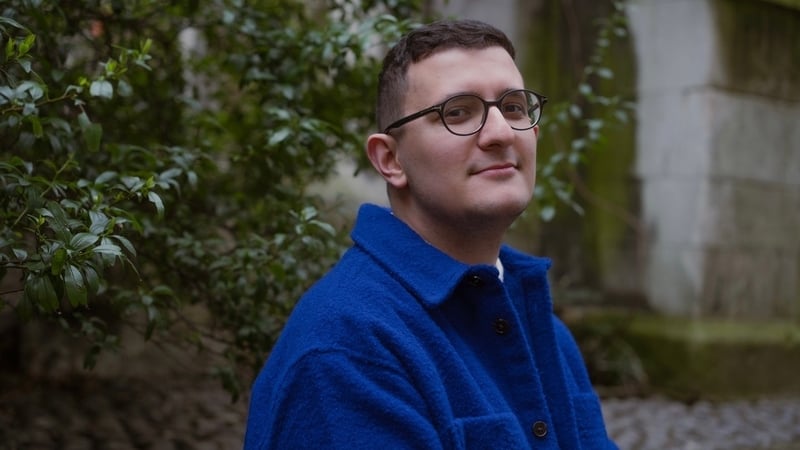
We present an extract from The Steps, the debut novel by Juliano Zaffino.
Derek's childhood sweetheart Sophie and her children, reeling from tragedy, move from Canada to his home in England. There they attempt to forge a life together – but their new family is shadowed by grief, myth, and a lingering sense of the uncanny.
This extract, taken from the very beginning of The Steps, introduces us to Derek, his new partner Sophie, and her five strange children.
It was a resurrection story, no other way to describe it. In any of its tellings it did not seem real, and yet that did not make it unreal. This was the first story told about Jules, the quietest of the De Luca children, who had without trying amassed his own unique mythology: he had come back from the dead. Of all the stories Sophie told Derek and others about her children, this was the most frequent, and the most revered. When he was eighteen months old, Jules fell off the bottom step of a staircase and died.
We need your consent to load this rte-player contentWe use rte-player to manage extra content that can set cookies on your device and collect data about your activity. Please review their details and accept them to load the content.Manage Preferences
Listen: Juliano Zaffino talks The Steps with RTÉ Arena
It was during the summer holidays. They were living in Canada, the family still together but only half-formed, when he fell, unattended, and stopped breathing. His heart had given out. His mother, just out the shower, heard the recognisable thump. Her children had slipped and tumbled enough for her to know it wasn't a serious sound. But out the bedroom window she saw only the older kids playing, Angelo and Ema. Watching them, at least supposed to be, was their father, probably asleep, certainly not present. Just as she was wondering where Jules was, she noticed it had become very quiet inside the house, the kind of quiet that three young children didn’t usually allow for. She ran for the door, still dripping, towel falling to the floor behind her.
Poor Jules and his frail little heart. He’d been born with a defect; that was also part of his mythos. Sophie, still naked and trailing water, saw him at the bottom of the stairs and, descending, unpausing, shock-defying, screamed. Her baby wasn’t breathing anymore. The story gets murky here – someone, not her, called 911, and they scrambled all first responders. Sophie was clutching her baby to her wet skin when a fireman arrived and resuscitated the boy. Jules was reborn, mythologised forever.
Derek had the softest spot for Jules, from the day he first met Sophie’s five children. There’s a photo from that day, a film print, which would forever stay somewhere prominent in the house, no matter what rearrangements were made. In it, Derek has one arm around Jules, and Jules, in a purple stripey top, is grinning, laughing even, and leaning into the man who would soon become his stepfather. Jules, who was normally so serious, face in a book, gazing morosely as if at a party he was never invited to. He reminded Derek of his own awkward youth, and Derek loved Jules even more for it.
The other De Lucas were a harder sell. Derek anticipated a world of trouble with the eldest, Angelo, who was just about a teenager. Though he was Sophie’s golden boy he had an undeniable mean streak, and Derek had no idea what to do about it. Derek himself, in his youth, had been less like Angelo than the boys that the Angelos of the world picked on. He saw these impulses in the boy: lashing out wildly and indiscriminately, shoving his siblings, screaming in rage until his voice caved in. At times, as much as it shamed him, he was afraid of Angelo. But other times he saw Angelo attend dutifully and unthinkingly to his mother, bringing her a glass of water when one of her headaches set in, carefully drawing curtains to keep the light out, gently patting her arm. He could be vicious, but rarely towards his mother.
Ema, Sophie’s second, was a tomboy, and the only person apparently willing or able to knock back against Angelo’s bouts of near sociopathy. Derek liked her, but there was a coldness. She had this angle to her gaze, always, so that no matter who she was speaking to, no matter their relation to her, their relation to the world, or even the undeniable fact of their height, Ema managed to look down on them. Derek imagined his own mother would have called her 'haughty’. But really Ema was smart, which Derek admired, and self-sufficient, for which he was grateful, and mostly looked out for the younger ones. Especially Jules, the weakest, the middle child.
Elio was two years younger than Jules, and initially something of a mystery to Derek. He was the only one whose name had ever slipped Derek’s mind. He even seemed to be aware, almost painfully so, of how easy it was to overlook him. There was a kind of plainness: a nondescript boy who probably would, in time, grow to be a conventionally attractive man, but not too confident in himself or his looks. He had talent – early on Derek had spotted him furiously sketching a horse in a field, and told him he was very good, that he should keep drawing. Derek had thought it strange, at the time, that Elio looked not at him when saying thank you for the compliment, but straight at his mother. Sophie only smiled wanly in reply.
The baby of the brood was little Biagia, four years old, sweet and smiling and silent. Although he would come to love and respect Biagia greatly in time, something about her silence unsettled him at first. He was as guilty as the others of using the word ‘slow’ to describe her, even if only in his mind. Jules alone had never used that word, never seemed to even think it.
Derek married Sophie in 2005, quietly, not long after Sophie and the children moved over from Canada. Sophie De Luca, who once had been Sophie Waller, was Sophie Stephens now. Sophie had been born in England, she told her children, and wanted to return home. It was their home too, she wanted to remind them, as much as any place could or would ever be their home. And we’ll be living with a very nice man who will be your stepdad, but you don’t have to call him Dad, you can call him Derek, if you want to. And they did.
The Steps is published by Tramp Press
