



Ever dreamed of being a journalist but unsure where to start in an age where anyone can publish, algorithms shape visibility, and AI can generate copy in seconds?
In a new series, Roe McDermott explores the human elements AI can't replicate, and the slow process of discovering what you think - qualities that still make writing matter.
In this instalment, Roe explores modern approachs to writing criticism.
One of the quiet tragedies of contemporary culture is how often our engagement with art is flattened into a verdict. Thumbs up or thumbs down. Five stars or one. "Good" or "bad." A tomato that's fresh or rotten. We are encouraged to believe that criticism is a kind of consumer guidance system: a way of telling you what to like, what to skip, what’s worth your time, what’s worth spending your money on. In that model, the critic’s job is to arrive at a correct judgement, preferably one that can be skimmed in a sentence and shared on social media.
That’s not why I write criticism, and it’s not why I read it.
I’ve worked as a film critic for Hot Press magazine for fifteen years, and I also write book reviews and art features. To me, the power of criticism is not in its conclusions, but in its conversation. The real gift a good critic offers is not a verdict, but a sensibility: a way of noticing, a set of questions, an emotional and intellectual pathway through a work of art. Criticism, at its best, is not about closing meaning down; it’s about opening it up.
Listen: Roe McDermott discusses 1980s kids' classic The Neverending Story for Juvenalia
This is where the myth of objectivity has done particular damage to arts writing. We’re told, implicitly and explicitly, that the most valuable criticism is neutral, detached, "balanced"; that the critic should stand outside the work, weigh it up, and deliver an assessment uncontaminated by personal feeling. But art is not a lab experiment, and critics are not instruments. Art is made by humans to be experienced by humans, and humans are subjective creatures. Pretending otherwise doesn’t make criticism stronger; it makes it dishonest.
When I respond to a film or a book, I’m not responding from nowhere. I’m responding from a body, a history, a set of beliefs and lived experiences that shape what I see and feel. That doesn’t invalidate my response to a piece of art - it’s the entire point of it.
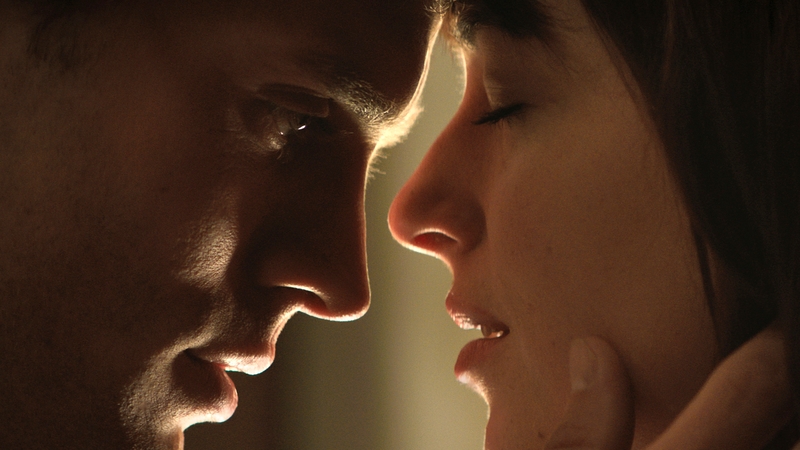
I remember going to a public screening of Fifty Shades of Grey in order to write a review, and feeling a deep sense of alienation sitting in a packed cinema as the audience laughed and sighed at scenes I found viscerally uncomfortable. I wasn’t responding simply to the film as an abstract text; I was responding through my own history of navigating abusive relationship dynamics, through my understanding of how coercion and control are often disguised as romance, through the sickening familiarity of seeing harm aestheticized and minimised on screen. My discomfort wasn’t incidental to my criticism - it was the criticism. It told me something about what the film was doing, who it was asking the audience to empathise with, and what kinds of experiences it rendered invisible or trivial.
Art is inherently emotional. It is designed to make us feel something - pleasure, disgust, recognition, longing, rage, confusion.
Could a different critic have had a different response? Of course. That doesn’t mean one of us was "right" and the other "wrong" (though Fifty Shades of Grey is, of course, objectively terrible and anyone who says otherwise shouldn't be trusted.) It means the work landed differently depending on where we stood. And naming that location - emotionally, politically, experientially - is not a failure of criticism. It’s how criticism becomes legible.
This is particularly important when you consider who has traditionally been allowed to occupy the role of "objective" critic. Film criticism, like so many cultural gatekeeping roles, has historically been dominated by straight white men. That dominance doesn’t just shape which films are reviewed, but how they’re interpreted. When a narrow set of experiences is treated as universal, criticism loses vital perspectives. Stories about gendered violence, queerness, disability, race, or marginalisation can be flattened or misunderstood not because critics are malicious, but because they’re writing from a world that doesn’t require them to notice certain harms or resonances.
The absence of those perspectives isn’t neutral; it leaves criticism poorer, blunter, less truthful about how art actually moves through the world.

Some of my favourite criticism reflects this understanding by refusing the narrow confines of the review altogether. Writers like Maggie Nelson, Leslie Jamison, Hilton Als, Jia Tolentino, and Zadie Smith use art - including film - not as something to be rated, but as something to think with. Their work reminds us that criticism can live in essays, hybrids, meditations, and cultural autopsies; that responding to art is often less about evaluation than about inquiry. I teach a course on Art & the Personal Essay, where we explore exactly this approach: how paintings, sculpture, films, reality television, pop songs - high art, low art, and everything in between - can be used to explore personal experience. In that context, art becomes a language for understanding desire, shame, power, joy, grief, and identity; something we don’t just judge, but use to make sense of our own lives. Reviewing art is one way of engaging with it, but exploring how art reverberates through our personal histories is another - and often a more revealing one.
Art is inherently emotional. It is designed to make us feel something - pleasure, disgust, recognition, longing, rage, confusion. To write about art without attending to that emotional exchange is to miss half the work. Emotion is not the enemy of analysis; it’s often the entry point into it. Discomfort can signal a moral tension a film refuses to interrogate. Joy can reveal a rare alignment between craft and care. Boredom can point to aesthetic stagnation or misplaced ambition. These reactions are data: they tell us how the work operates on a human nervous system.
To me, the power of criticism is not in its conclusions, but in its conversation.
When critics acknowledge their emotional responses, they do something generous for the reader. They don’t just say "this is what I think"; they model how to think and feel about art with attention and articulation. They give readers language for their own responses, including the ones that don’t match the critic’s conclusions. You might read a review I’ve written and think, 'I didn’t feel that at all’ - but by seeing how a critic responded to the film and why, you may have a clearer sense of what you did feel, and why.
This is where criticism becomes relational. When a critic gets personal - not confessional for its own sake, but precise about their sensibility - they create a relationship with the reader over time. You begin to understand what kinds of work are likely to provoke them, delight them, anger them, or leave them cold. That knowledge helps you decide not just whether you’ll agree with them, but whether a particular piece of art is something you need, want, or very much want to avoid. A critic’s subjectivity becomes a navigational tool, not a flaw.
And this matters profoundly in the age of AI. Machines are excellent at producing summaries and consensus takes. They can tell you what a work is about, how it was received, what themes are "commonly identified." What they cannot do is have a relationship with art. They cannot feel implicated, disturbed, transformed, or seen. They cannot sit in a cinema and feel their stomach drop as the room laughs at something that feels like harm. They cannot trace a line between a scene on screen and a memory in their own life, and then ask what that collision reveals.
Human criticism is valuable precisely because it is partial, located, and alive with doubt. Because it risks saying: this is how it landed on me, and this is why. That risk - of disagreement, of exposure, of being wrong - is the price of meaning. And meaning, not verdicts, is what keeps art worth responding to, and journalism worth reading.
Exercise: Responding to Art
Notice the Feeling
Choose a piece of art that stirred something in you - attraction, discomfort, boredom, delight.
Name the feeling as precisely as you can.
Find the Connection
Ask: ‘Where might this response be coming from in my own life?’
Write a short paragraph linking the artwork to a personal experience, belief, or memory.
Articulate the Insight
Finish this sentence: "Thinking about this work helped me understand…"
The aim isn’t to decide whether the art is "good" or "bad," but to practice using your response as a way of making meaning.
Next: Pitching your voice to editors
Read more from our Get Creative section here
