


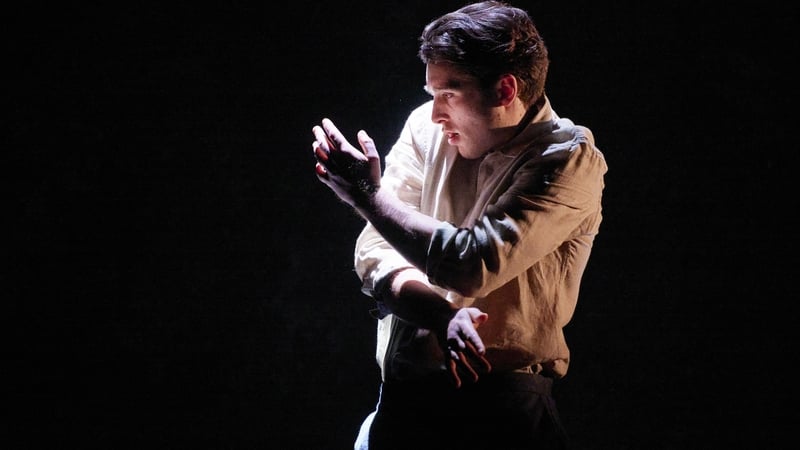
Acclaimed playwright Frank McGuinness discusses his new play Do You Come From Gomorrah?, currently running on the Peacock stage at the Abbey Theatre, in conversation with Professor P.J. Mathews.
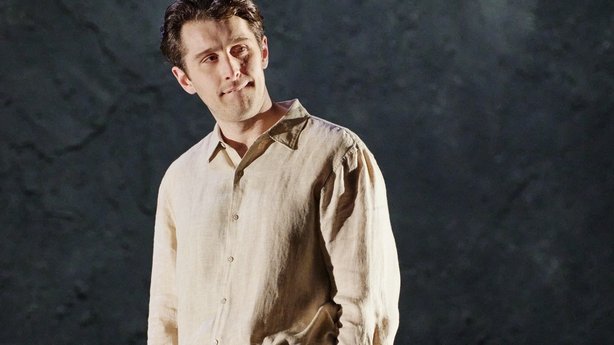
Performed by actor Ryan Donaldson, Do You Come From Gomorrah? is described as 'a memory play, one man's elegy to a younger self who survived impossible circumstances'. It's another indellible piece of theatre from the author of seminal plays like The Factory Girls, Observe the Sons of Ulster Marching Towards the Somme and Someone Who'll Watch Over Me.
Performed by actor Ryan Donaldson, Do You Come From Gomorrah? is described as "a memory play, one man's elegy to a younger self who survived impossible circumstances." It is another indelible portrait from the author of seminal plays such as The Factory Girls, Observe the Sons of Ulster Marching Towards the Somme, and Someone Who’ll Watch Over Me.
P.J. Mathews: Do you come from Gomorrah? is an extraordinary piece of writing. It's a deeply moving play. There's so much to think about it, but one thing, and I haven't said this to you … would it be unfair of me to say, in some ways, this play is a very interesting epilogue to Observe the Sons of Ulster?
Frank McGuinness: I’m probably too close to it at the moment to give that kind of precise definition as to what it is. It's dealing with the loyalist experience, but from a radically different angle, so telling a radically different story. I think there's no way that I can divorce it from that culture or from that world. But Sons of Ulster was a massive panorama of the experience of loyalism, and specifically of experience of loyalism in the chaos and confusion of World War One and centering on the horror and disintegration of the Battle of the Somme. This is a very deliberate narrowing of focus. It's a very deliberate attempt to tell a tale that is meant to unsettle, that is meant to upset, that is meant to record a rage, which I think is still profoundly present in the imagination of Ulster Protestantism. The play took years to evolve. It took a very much longer time than Sons of Ulster did for all its smaller size… years. I couldn't find a form. It started as a short story and then I realised this is not working at all as a story. I'm not a short story writer. I try… I had a collection, but I don't find it an easy form, and then it kept changing its title, but it was always one voice. It was always of a working-class, contemporary man looking back on his childhood and his adolescence. It never changed from that, but it did take a torturous route to get it to where it is, and I think that's maybe because I am confronting certain terrors in my own background as much as in his background. But is it the companion piece to Sons of Ulster? Well, everything is a companion piece to Sons of Ulster. I don't like the word epilogue because it seems like an ending and at my age I have to be very careful talking about endings … (laughs). No, I don't think it's an epilogue to Sons of Ulster. I don't think it's a continuation of it. I think it's a new imagining of a cultural dilemma and a cultural phenomenon. But I would like to think that it's not an epilogue, it's not a beginning, it's different. It's its own man. You have to avoid putting too clean a definition on the form of the play. And as I say, it took so long to resolve this form that that's why I am nervous or reluctant to identify it in certain ways. There's no question but that certain identities are examined in it that were examined in different form in terms of Sons of Ulster, but it's a different world, it’s a different history.
We need your consent to load this rte-player contentWe use rte-player to manage extra content that can set cookies on your device and collect data about your activity. Please review their details and accept them to load the content.Manage Preferences
Listen: Do You Come From Gomorrah? reviewed on RTÉ Arena
P.J. M: Yeah, it’s a different history. And maybe I'm saying that because I see perhaps some elements of the young Pyper in the in the speaker here, although he's working class. He doesn't have the same swagger… but in terms of the contradictions and the forces and the pressures that he has to encounter. But getting back to the form, and I think that's really fascinating, the form that you found is by reference to the story of Sodom and Gomorrah, there's so much of The Bible in here. Was that an unlocking of something for you in terms of how the story should be told?
F McG: Well, the Bible was a crucial influence on Sons of Ulster. My main research for that, and I did a lot of research for it, was to read the whole Bible. And the Bible is the central text of Ulster Protestantism, it's the cornerstone of that culture. And I really wanted to play with that spiritual inheritance, that literary inheritance, and I didn't really want to call it Sodom, so the alternative was Gomorrah. And part of me is playing with the whole idea of the tradition in Ireland of the Gate and the Abbey, with Mac Liammóir and Edwards at the Gate and Lady Gregory and W.B. Yeats at the Abbey… you know, Sodom and begorrah (laughs), and that's a kind of playful reference. I don't think you can use Gomorrah in the Irish theatre without begorrah… (laughs). Because this play so rooted in Protestant working-class culture, begorrah really couldn't be used. So, Gomorrah became a good reference for it, with all the mess that Gomorrah involves and the confusion, the whole horror of the history of Sodom and Gomorrah. So that's where that comes from. It’s the Bible again, as always … me and me pals in the Old and New Testament are riding again (laughs).
P.J. M: Well, you know, it works supremely well, even down to the ending where, the speaker escapes 'caked in salt’… don't look back and all of that. It's really, really powerful.
F McG: Well again, it’s me… there's a contradiction. He does look back and he doesn't look back. So, he gets away though, yeah, he gets away from it, and that's his liberation.
A tremendous lesson to be learned for the whole of our cultures, North and South, is that you can't take your eye off what's been done to your children.
P.J. M: That's bringing us to the kernel of the story, which I found really deeply, deeply moving… and that is the will to overcome the malevolent impediments to human becoming and fulfilment, which to me is really what the play is about, specifically the unspeakable suffering of gay life in the repressive darkness of the past. This poor boy becoming a man in the shadows, in abusive spaces, his vulnerability to exploitation and cruelty, and the violent rape at the centre of the play. It is deeply unsettling, as you say, but yet, it is a story of escape and liberation, even though the liberation piece is yet to come. But I found it deeply moving.
F McG: There are moments of terrible violence in it. The more I read of the experience of children in education in the 60s, 70s and 80s, the more I realise how exposed we were to the insanity of violence. And the treatment that the boy receives is something that I saw myself being done to other people. And I lived in terror. I lived in fear. So I know what it is like to be absolutely cowed by that culture, and that is why I think I use the play as a metaphor for the trauma that I went through and that I continue to go through, and if I have to theatricalise it, if I have to dramatise it by inventing a story, as I do invent - this is a complete work of fiction - then I am still, at the same time acknowledging how difficult it was for me to experience that, and how I live constantly with the aftermath of it. That is why I think it was so difficult to find a form, so difficult to find a story for what I wanted to do in the play. And you know, it was a tremendous eye opener for me to realise that wealth did not protect you in this country, North or South. You know, parents who struggled to send their children to good schools, their children were exposed to this violent madness, and probably they were living lives of deprivation so they could afford it, but it didn't save their boys or their girls from the horror of what was happening. And a tremendous lesson to be learned for the whole of our cultures, North and South, is that you can't take your eye off what's been done to your children. You really can't, because it was allowed to happen and it was allowed to happen in the South. It was allowed to happen in the North, and the consequence of it is generations of deeply disturbed people.
P.J. M: Well, as you're speaking there, I'm thinking of the power of the play again, in terms of your decision not to go down the ‘documentary’ route, which you never do in your drama. But it gets back to the earlier point of why this is a brilliant piece of art, because it allows us as an audience to deal with these issues in a way that enables us to transact them and to process them without necessarily being taken on a particular known route or being taken on a particular experience. There's something much more universal about this, even if it has its origins in a specific experience that's yours or that can relate or be parallel to other specific experiences in Kincora or in institutions in the South. Again, I'm merely pointing out the obvious, which is the power of this piece as a work of art. And one of the things that I picked up on is, the constant references to the unspeakable: ‘I can't speak’, ‘my lips are sealed’, and yet the very act of writing this play blows it open in a very cathartic way. Is that something that you were conscious of in the writing process?
F McG: Oh, I was actually, yes. Even though this is a one-man play telling one story, I very deliberately involved as many worlds as possible, as many voices as possible to be communicated through the single voice of the speaker, of the young man. And that way I could tell, if you like, a whole compendium of experiences. That way I could escape from, the restrictions of the documentary or from the realities of history, and go into something surreal, go into something metaphorical, go into something more unsettling. And I want it to be a deeply unsettling play. I want it to be an exposure of something terrible. And I think that, you know, we kind of lost a knack for getting access to ‘the horror, the horror’, you know, and what happens to the child is, is unspeakable. So, what are we going to do? What duty do we have? Well, speak about it, defy it, defy them. They wanted to be unspeakable. Those who afflicted this cruelty. They wanted to get away with it. And the only way to stop them getting away with it is to say, I know what happened. I saw what happened. I have a friend, Patrick Doherty from Malin Head, who's written a book about our experiences of our school called This is Patrick, a very good book about Carndonagh published last year. I'm very proud of the fact that he did it, because, in a way, it kind of released me to do the play. There's no connection between them, actually, other than our friendship. But it is the fact that people are speaking, the fact people are talking, and this play is a continuation of that outburst. It's not really a conversation. It's an outburst of rage, of sorrow, of grief, at what they got away with, but they didn't get away with it. They didn't, actually and they shouldn't have.
Do You Come From Gomorrah? runs on the Peacock Stage at the Abbey Theatre until the 16th of May. For tickets and futher info go here
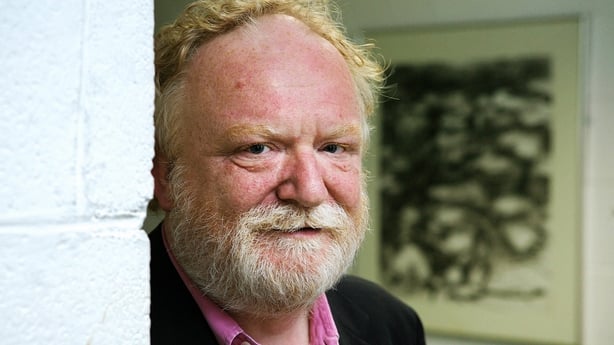
Frank McGuinness is an award-winning Irish playwright, poet, and novelist. P.J. Mathews is a Professor of Irish Literature, Drama and Culture at University College Dublin and Director of the UCD Creative Futures Academy.
