


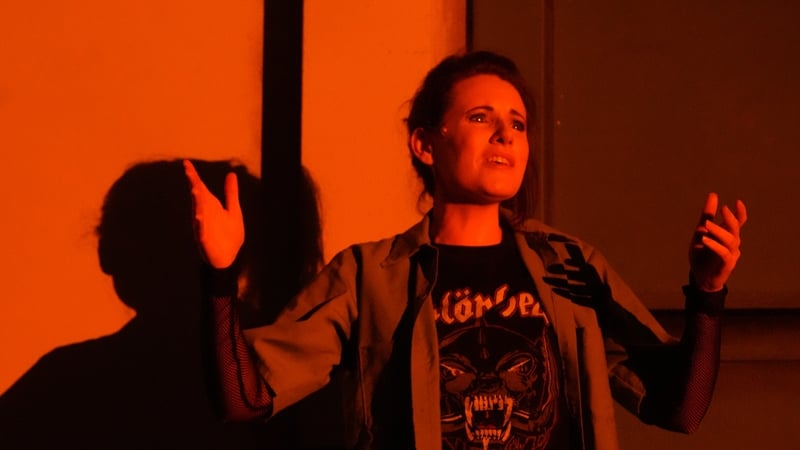
Ahead of Irish National Opera's nationwide tour of Vincenzo Bellini's Norma this May and June, the production's director Orpha Phelan tells us how opera can 'help us understand ourselves better'.
I'm often asked why, in a world torn apart by war, injustice, inequality and disease, opera matters. Shouldn’t we be spending less on the arts and more on science? My answer is always the same: while science asks if or how we can do something, the arts challenge us as to why we are doing something. Science and the arts are equally important and a civilised society cannot survive without both.
Watch: Wexford Festival Opera Live presents Le Trouvère by Giuseppe Verdi
Call me biased, but I believe that at its best, there is nothing better than opera. The most complex and ambitious artistic collaboration on earth, opera brings together a unique blend of several art forms – music, visuals, theatre, storytelling and choreographed movement – all wrapped up in one powerful experience. I can’t think of anything else that can combine such a variety elements, so seamlessly.
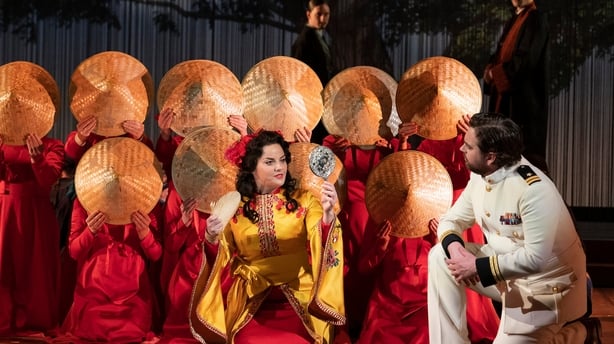
Opera sometimes gets a bit of a rough ride from its critics. Granted, in the past, one or two good singers wafting around in pretty dresses might have been deemed enough to keep an audience entertained. But now we have come to expect so much more: thought-through concepts and direction, design which is intrinsic to the dramaturgy (not just an add-on), not to mention compelling acting (gone are the days of superficial melodrama). Performance is always down to personal taste, so no one production ticks everyone’s boxes. But if you’re new to opera, and you choose to go to see one, your life might just change forever.
Newly composed, or 500 years old, a good production will speak to aficionados and newcomers alike because most of the themes in operas are not only timeless, but universal.
The majority of operas performed around the world date from over 100 years ago. They give us an insight into political, social and philosophical ideas of the time and are, in a way, a powerful historical record. But we don’t go to see them in a museum; they are renewed with every production and performer, so they are living, breathing, evolving works of art. While it’s always interesting to see operas from long ago, it’s also exciting to see composers and librettists use a centuries-old artform while continuing to push artistic boundaries today.
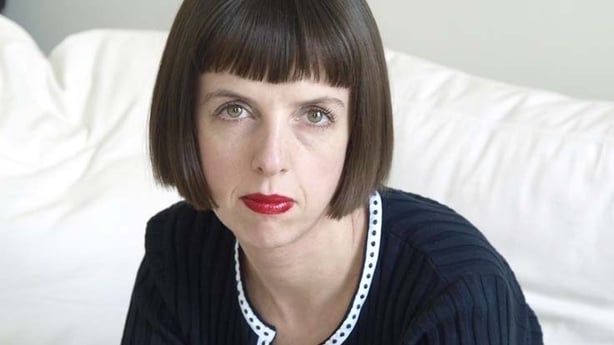
Newly composed, or 500 years old, a good production will speak to aficionados and newcomers alike because most of the themes in operas are not only timeless, but universal. Whether the stories are about gods, aristocrats, politicians, fishermen, factory workers or nuns, the emotions explored are human and help us understand that we all have much in common with people from various walks of life, across all eras.
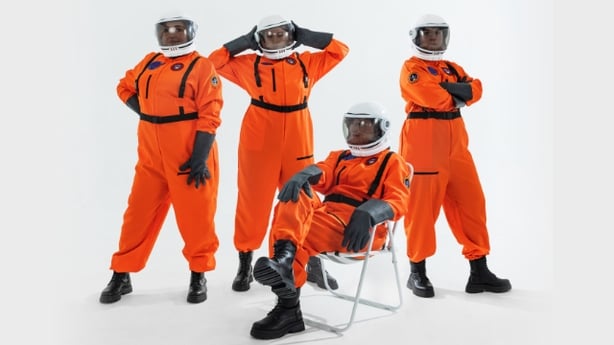
All of the arts can cover the full gamut of human feelings from love and jealously to grief and desperation. But in opera, because of its unique blending of several creative forms, these human emotions are amplified beyond any expectation. On a good night at the opera, it can feel like a singer’s voice is projecting these emotions straight into our hearts. Once our heads play catch-up, opera can help us understand ourselves better and give meaning to our existence.
INO's tour of Norma will run from 24 May to 6 June 2026, visiting Dublin's Gaiety Theatre, the National Opera House in Wexford, and Cork Opera House - find out more here
