


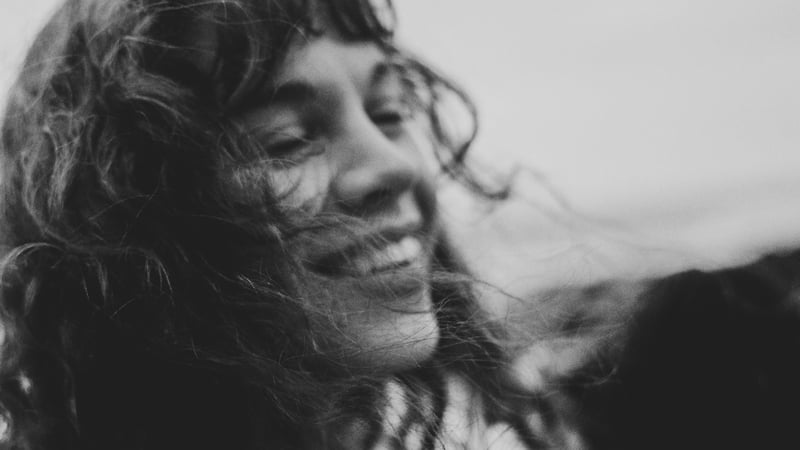
At the end of January, my wife and I went to Prim's Bookshop in Kinsale to listen to the brilliant Susan O’ Neill. When she began to play, the room stilled in that rare, collective way. No phones raised. No chatter bleeding through. Just attention — shared, quiet, and complete. It was an intimate gig, candlelit and wine-filled, and afterwards we left altered, the moonlit sky a little closer. There was a buzz to what was left of the night, like the very air around us hummed. Drinking a pint of Guinness after I said to my wife: I feel nourished.
Since then I have been thinking a lot about nourishment, not in any dietary sense, or tracing steps, protein counts, but in what feeds the soul, what replenishes us. The world is relentless right now, and to be online in any sense is to be caught in a constant state of urgency – algorithms that attack, that reward agitation rather than attention. To stop scrolling is to feel like we are missing something important – the very essence of importance has been altered, diluted. And often we consume so much and absorb very little.
I often feel depleted after spending too long on my phone and it made me ask myself: What actually nourishes us? Not numbs us, quietens us, distracts us, but fills us, restores us?
For me, it is the quiet, a turning back, almost imperceptible, towards smaller, slower forms of cultural life. Why is it that when we travel we allow these other versions of ourselves be enriched by what a new city or place can offer? We visit more galleries, losing ourselves to art that quietens our thoughts, we go to gigs spontaneously, we appreciate the opera, the ballet (yes Timothée), we visit sites of beauty, we become, almost instinctively, more attentive — more open to being moved. And yet here, at home, in Ireland, we walk past galleries, skip plays, always thinking, next time.
What that small room in Kinsale offered — briefly, quietly — was a glimpse of an alternative rhythm. One where attention narrows instead of fragments.
We forget, well I certainly do, that we live in a country where culture is not scarce or distant, but embedded — in cities, certainly, but just as much in villages, in small rooms above pubs, in community halls, in places that don’t announce themselves loudly but are quietly, consistently alive with music, art, and conversation. There is always a book launch, always a local gig.
It is more difficult, I know. There is the planning, the babysitters, the traffic, the overpriced taxi, and often it is easier to throw on Netflix, or worse, doomscroll the evening away, so that we may feel more informed, but certainly not more nourished.
What links these experiences — the gig in a small room, the unhurried walk by a river, the afternoon in a gallery, the shared silence of a listening crowd — is not just that they are "offline," but that they resist measurement.
The experiences don’t translate easily into metrics or posts. They are difficult to capture without diminishing them. And so, they exist slightly outside the systems that dominate so much of our attention.
There’s a temptation to romanticise this — to frame it as a return to something purer, simpler. But that’s not quite right either. These moments aren’t valuable because they reject modern life, they’re valuable because they rebalance it.
Nourishment resists quantification by its very nature. The moment you begin to score it, you risk turning it into another form of productivity, another thing to get right. It is not about liking, or sharing, or reels or going viral. It is inward, quiet, and solitary. We are, many of us, looking for ways to feel less depleted by the end of the day. Less stretched across too many inputs. Less caught in the loop of consuming without absorbing.
What that small room in Kinsale offered — briefly, quietly — was a glimpse of an alternative rhythm. One where attention narrows instead of fragments. Where experience deepens instead of accelerates. Where, for a while, nothing is being asked of you except that you listen. And that was, it turns out, more than enough.
About The Author: Patrick Holloway is a prize-winning writer of fiction and poetry. His debut novel, The Language of Remembering was published in 2025, and his second novel, Interlude is forthcoming in 2027.
