


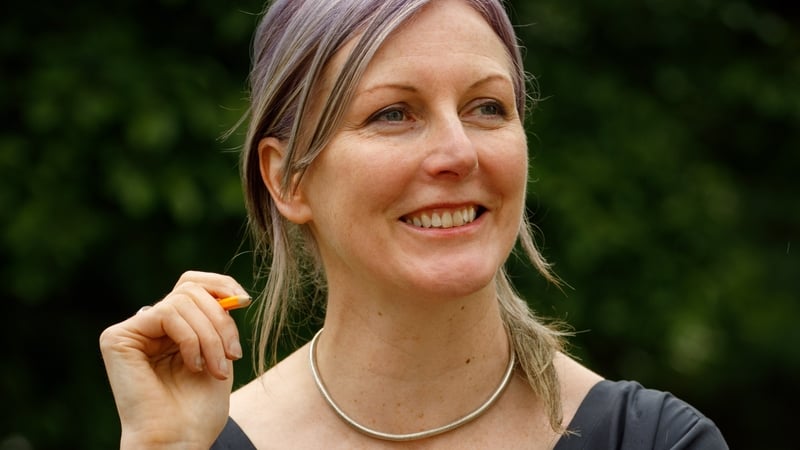
We present Sky An Iris, from Four Night Seas, the new short story collection by Niamh McCabe.
Set across liminal landscapes, Four Night Seas features characters navigating emotional or existential thresholds – grieving, seeking meaning or reconciling with the past. Exploring themes of memory, solitude, loss, and the mysterious rhythms of nature and human connection, this collection blurs the line between the internal and external world, inviting us into spaces of beauty, melancholy and subtle transformation.
Sky An Iris
Three barrettes jut from Eily's mouth. Bathroom light humming in the dawn, she coils her plait into a silvered black bun at her nape. Her teenage son Cassius stands behind her, watching her in the mirror, covering one eye with his hand, then the next.
That what you’re wearing to town, Cass? Yep.
How ’bout your jeans instead of your shorts?
You’re a big boy now.
Nah.
Well, tie back your hair and go eat some muesli. Don’t forget to screw the lid back on good and tight.
Her phone bleeps full charge from the hall stand below. She heads downstairs, pushes her arms through her husband's coat slumped damp over the banister where he left it earlier when he came in from tending the mare. It’s still warm. She tips her fingers in the holy water font by the front door and sprinkles the framed photograph above it: her mother and father holding hands across a gleaming tractor engine at the Galway Ploughing Championships. She inherited the house and land from them after they died within three months of each other. The youngest sibling, she’d been the only one who promised not to leave.
Outside, the motion-detector light flashes on, illuminating the pea-gravel farmyard and the colour-coded rows of recycling bins where a slurry tank used to be. The air is still weighted with night; she feels it, ice across the forehead. Sinking her chin into the coat’s musky collar, she pulls out the cart then fetches Bessie from the plywood stall in the garage beside her husband’s car. Two of the mares look out the stable doors as she walks the doe-eyed ass to the yard and hitches her to the cart. She secures bit in mouth, the animal rolling its tongue over the chilly metal. In the dark dawn sky, shafts of car light shoot across rushes in waterlogged fields: neighbours striking out to Roscommon for work, or on to Galway to their cloud-computing jobs in IBM, Oracle, SAP, Cisco. Narrowing her eyes, she evaluates the heavy clouds in the distance, then pats the animal's rump before bending to inspect each oiled hoof.
She’s never learnt to drive. That particular freedom, she’s decided, is not for her. She understands this puts pressure on her husband. She’s told him she just could never picture herself behind a wheel, reversing, indicating. And if she can’t picture it, she can’t do it. Her will is strong, he knows enough not to challenge it. Both of them having been brought up on the land, he accepts her preference for the dependable strive of a working animal, the simple dialect of whistles and clicks, snorts and whinnies.
Since early adulthood, since just before she met him, she has struggled to trust any car’s set mechanism, has considered their machinations daunting. The language itself unnerves her – coolant, clutch, alternators, the mystery of batteries, of spark plugs. To steer, to aquaplane, the stark rev of engine in the stillness of a country lane, the slick acceleration, the slip-slap of wiper blades on a sodden stormy morning, the dry hum of heater, the navy flash of school uniform, the slither of braking tyres, a thin scream.
The trip to Roscommon this morning is unavoidable; she needs to sell her week-old chicks at the artisan market. There are always fresh-faced young couples, IT recruits eager to start a self-sustaining life in the country, beginning with a chicken coop which they'll learn is no deterrent to foxes or minks. Whatever chicks Eily has left, she’ll sell quarter-price as fresh feed to the Captive Raptor Research Centre on the Roscommon–Sligo border.
She has watched over the eggs in her henhouse incubator, has hearkened to the little beaks tip-tip-tapping from inside their shells. She has moved each of the newly hatched to the receiving box above, warmed with an infrared bulb. She has fed to the pigs the eggs that remain silent, holding every one of the shrouded puzzles up to the light before throwing it into the swill bucket.
At seven days old, the hatched need to go. In the henhouse beside the stables, Eily packs the chirping chicks into two cardboard boxes and carries them out to place them in the cart. His hair hanging lank over his face, Cassius stands by the cartwheel, kicking the spokes, listing at each strike:
Silkies. White an' black.
Phoenix. Silver an’ gold.
Rhode Island Red. Red.
Born too early, born too late, it’s held Cassius shouldn’t have been born at all. Why had he come, five weeks premature, to a delighted Eily, a first-time mother at forty-five? To a father who’d spent years yearning for a child he knew could never happen, knew it even before, still childless after their third wedding anniversary, the doctor took him out of earshot and explained to him about fickle genetics, about the treason of hereditary infertility, about how he should consider carefully before deciding whether to tell his fragile wife.
After the birth, it had been a slow dawning for them: Cassius wasn’t going to follow the template. At three, he struggled to walk, to feed himself. At five, only his parents could comprehend him. At eight, it was understood he could never attend school, never sit in line, never use a pen without smearing the page with shocks of indigo, never understand a computer keyboard or join in song without slapping hands to eyes, wailing. On his last journey home from school, he’d recited the classroom songs, cocooned beside his father in their car. He was homeschooled from then, trailing his parents around their organic farm.
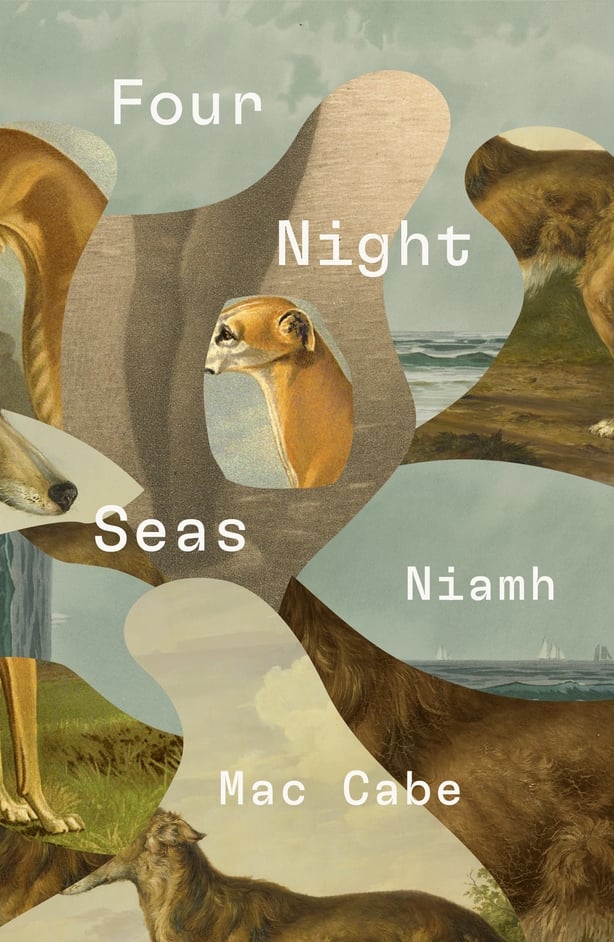
Four Night Seas is published by Lilliput Press
